Anglera + DataFeedWatch
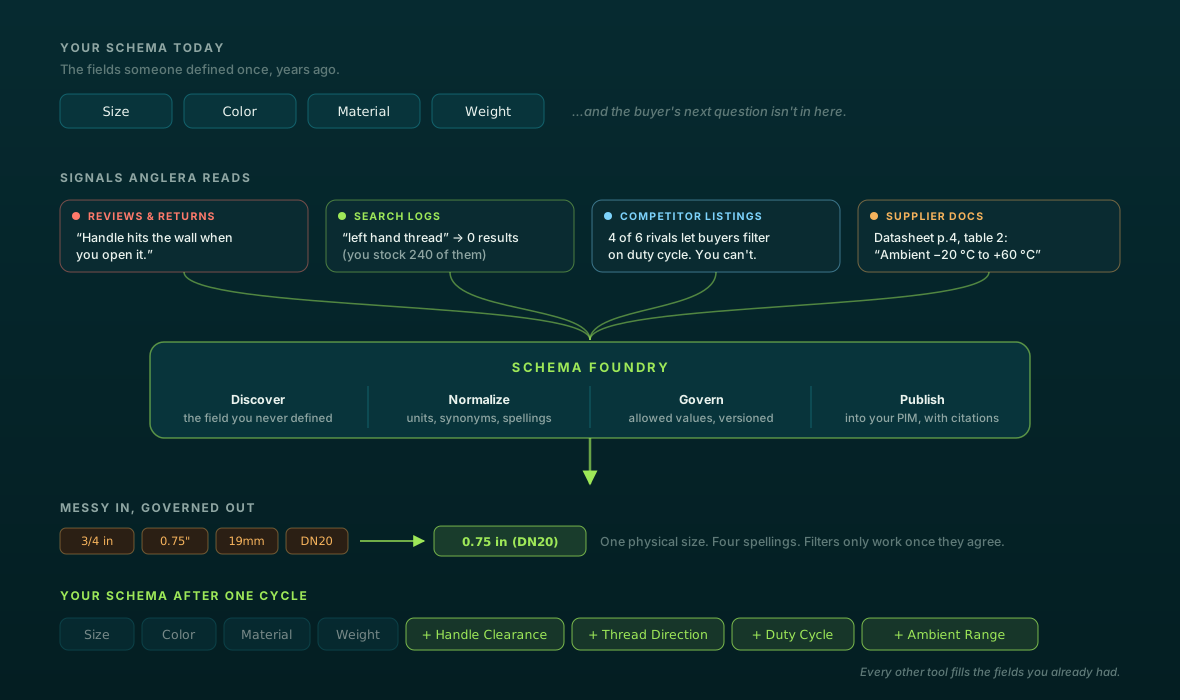
DataFeedWatch assumes your product data is already clean and complete — it moves whatever you have into channels. Anglera does the upstream work DataFeedWatch skips: it reads buyer signals to determine what shoppers actually search and compare, then rewrites, fills gaps in, and scores every SKU before anything gets syndicated. For B2B distributors and manufacturers whose supplier data is incomplete or inconsistently formatted, Anglera enriches the content so that when DataFeedWatch (or any syndicator) pushes it out, the data actually converts. These tools are sequential, not competing — Anglera enriches first, DataFeedWatch distributes after.
What DataFeedWatch does
DataFeedWatch (acquired by Cart.com) is a product feed management and optimization platform that maps, transforms, and syndicates product data to shopping channels like Google Shopping, Facebook, and marketplaces. It helps e-commerce merchants reformat and push their existing catalog data to advertising and retail channels without touching the source catalog.
Pricing: Starts at ~$64/month for up to 1k SKUs; scales to ~$200/month for 5k SKUs across 2 shops; enterprise plans for 100k+ SKUs. 15-day free trial available.
DataFeedWatch vs Anglera, side by side
| DataFeedWatch | Anglera | |
|---|---|---|
| Core function | Maps and syndicates existing product data to advertising and shopping channels (Google, Facebook, marketplaces) | Enriches, cleans, and scores product content using buyer signals before it reaches any channel or PIM |
| Where it sits | Between your catalog/PIM and outbound channels — a distribution layer | Upstream of the PIM and any syndicator — an enrichment layer that writes back to the source of truth |
| Buyer-signal enrichment | Rule-based field mapping and AI title/attribute fill based on existing data; no buyer-signal intelligence | Enrichment is driven by how buyers actually search, compare, and decide — not just reformatting what the supplier sent |
| Data quality input assumption | Assumes catalog data is largely complete; best when source data is already accurate | Purpose-built for incomplete, inconsistent, or supplier-raw data — fills gaps from web signals, crawls, and AI reasoning |
| Primary customer | E-commerce merchants and agencies running paid shopping ads across many channels | B2B distributors, retailers, and manufacturers enriching large SKU catalogs for search and buyer readiness |
| Time to value | Fast setup for feed syndication once data is clean; ongoing manual rule maintenance as catalog changes | ~30-day implementation; enrichment runs continuously and automatically as SKUs are added or updated |