Anglera + EDICOM
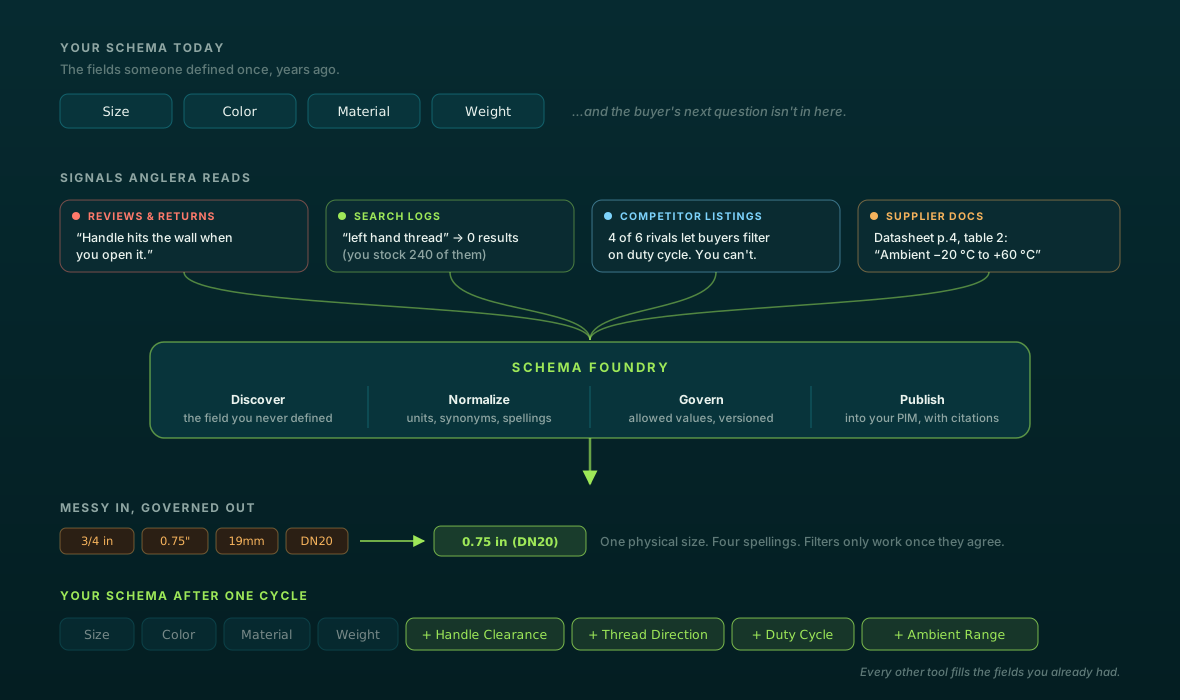
EDICOM moves data — it does not improve it. Once a supplier publishes a product record into EDICOMData, that record arrives at the retailer exactly as it was: thin descriptions, missing attributes, supplier-centric copy that ignores how buyers actually search. Anglera sits upstream of syndication, analyzing buyer signals to enrich, score, and complete every SKU before it ever enters the GDSN pipe — so what EDICOM delivers is content that actually converts, not just content that complies with GS1 schema. The two tools are complementary: EDICOM handles the transport, Anglera handles the intelligence.
What EDICOM does
EDICOM is a global B2B integration platform specializing in EDI, e-invoicing, and GDSN product data synchronization. Their EDICOMData product is a GS1-certified Data Pool that lets suppliers publish product information once and syndicate it in real time across the Global Data Synchronization Network (GDSN) to retailers and distributors worldwide.
EDICOM vs Anglera, side by side
| EDICOM | Anglera | |
|---|---|---|
| Core function | Syndicates product data across GDSN and EDI networks — moves records between trading partners | Enriches product data before syndication — fills gaps, rewrites copy, scores completeness against buyer signals |
| Content quality | Passes through whatever the supplier provided; no enrichment or quality improvement | Detects thin or missing attributes and enriches them using buyer-signal intelligence, web research, and AI |
| Buyer-signal alignment | Not in scope — GDSN schema compliance is the quality bar, not how buyers search or compare | Enrichment is driven by how buyers actually search, compare, and decide — not just what the supplier submitted |
| Manual effort | Suppliers still manually prepare and upload product data (Excel or structured files); EDICOM automates the transport, not the prep | Automated enrichment and scoring reduces manual data prep; ~30-day implementation, no ongoing data-entry headcount needed |
| PIM / stack fit | Integrates with ERPs and PIMs as a syndication layer; does not write enriched data back to the PIM | Reads from the PIM, enriches, and writes back — the PIM stays the system of record and gets better data |
| Use case | Best for companies that need compliant, standards-based data exchange with many trading partners via GDSN or EDI | Best for companies whose product content is incomplete, inconsistent, or not winning at the digital shelf — regardless of how it gets syndicated |