Anglera vs EKOM AI
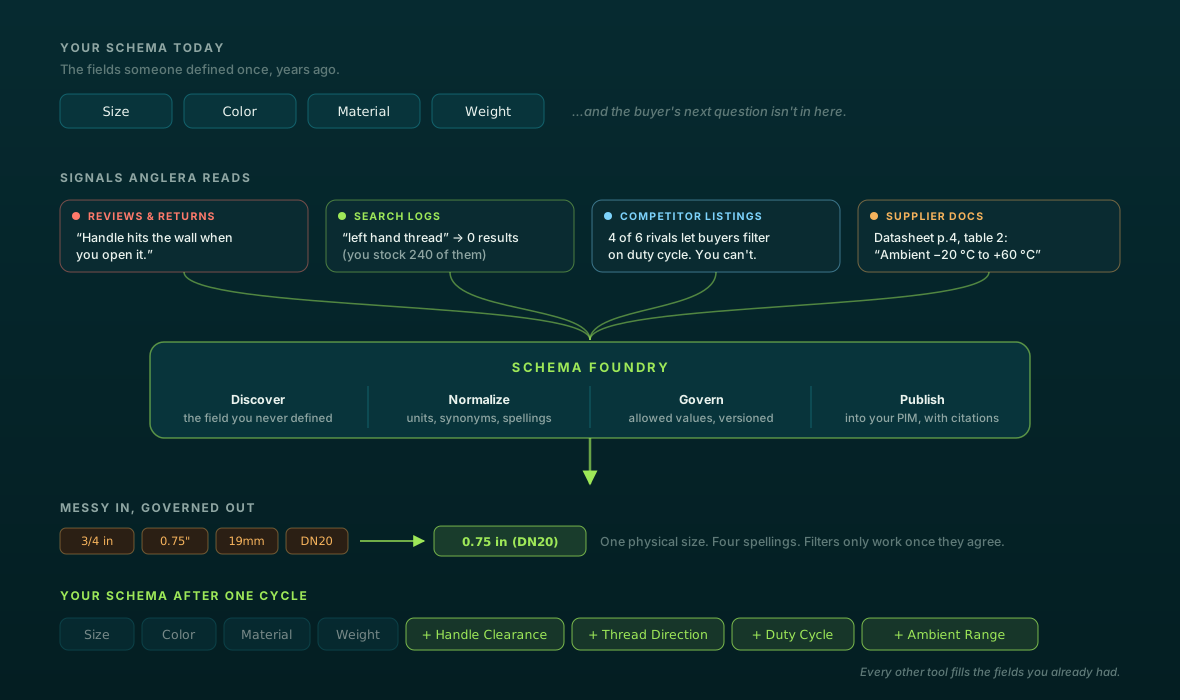
EKOM's evidence-chain approach is a genuine strength: it catches cross-field conflicts, cites a source and confidence score for every value, and reformats feeds when a marketplace changes its required attributes, which matters if your core pain is internal systems that disagree. But EKOM is early and broad: founded in 2022 under AGYL AI alongside the Writerly copywriting product, with a small 2024 round led by Victorum Capital, and its positioning has moved from AI content tooling to a Shopify PDP optimizer to today's resolution layer in under two years, spanning everything from lipstick to circuit breakers. Its loop is source-arbitration-centric, deciding which existing value is correct, while Anglera's enrichment starts from real buyer signals, meaning how B2B buyers actually search, compare, and specify, which is what fills the spec gaps that block quotes, listings, and findability in the first place. Anglera is built solely for B2B distributors, manufacturers, and retailers with 50,000 to 500,000 plus SKU multi-supplier catalogs, is not a PIM, and writes finished results back to the Akeneo, Salsify, or inRiver instance you already run, with implementation in about 30 days. If your main problem is arbitrating conflicts between internal systems, evaluate EKOM seriously; if you need the catalog enriched to what buyers actually ask for, at B2B scale, from a vendor whose entire roadmap is that problem, pick Anglera.
What EKOM AI does
EKOM, from Nashville-based AGYL AI, calls itself a resolution layer for product data: it reconciles conflicting product records across a customer's PIM, ERP, supplier feeds, and spec documents into one evidence-cited record, then distributes that record in each channel's required format across Amazon, Walmart, Mirakl, Shopify, BigCommerce, Salesforce Commerce Cloud, and partner EDI and API feeds. It reads existing systems in place with no migration, flags cross-field conflicts with confidence scores for human approval, and serves brands, retailers, and distributors in both consumer and B2B verticals. It also ships a self-serve Shopify app (launched February 2025) that optimizes titles, descriptions, SEO fields, alt text, and FAQs for AI search and buying agents.
Pricing: Enterprise product is sales-led with no public pricing (the CTA is Request a catalog analysis). The Shopify app is free to install with purchased optimization credit packs that never expire, and third-party software listings show earlier plans at 109 and 495 dollars per month.
EKOM AI vs Anglera, side by side
| EKOM AI | Anglera | |
|---|---|---|
| Primary output | A single resolved product record with cited evidence for each value, distributed in each channel's required format | Buyer-search-aligned structured attributes, normalized values, taxonomy, and spec completeness written back to your PIM |
| Who it's built for | Brands, retailers, and distributors across consumer and B2B verticals, from Shopify merchants to enterprise catalogs | B2B distributors, manufacturers, and retailers with 50,000 to 500,000 plus SKUs and messy multi-supplier data |
| Buyer-signal enrichment | Search and demand signals are one inference tier among many; heritage is keyword-trend tracking for PDP content | The core of the product: enrichment against how buyers actually search, compare, and specify products |
| PIM integration | Reads PIM and ERP in place with no migration and writes resolved values back; Akeneo and inriver appear in integration listings | Purpose-built write-back to Akeneo, Salsify, inRiver, and other PIMs; the PIM stays your system of record |
| Company maturity | Founded 2022 under AGYL AI; small round led by Victorum Capital in 2024; positioning has shifted several times since launch | Focused exclusively on AI enrichment for B2B product data since day one |
| Time to value | Sales-led catalog analysis and first-pass profiling for enterprise; self-serve credits on the Shopify app | About 30-day implementation against your existing PIM and catalog |