All comparisonsAn alternative to MerchKit

Anglera vs MerchKit

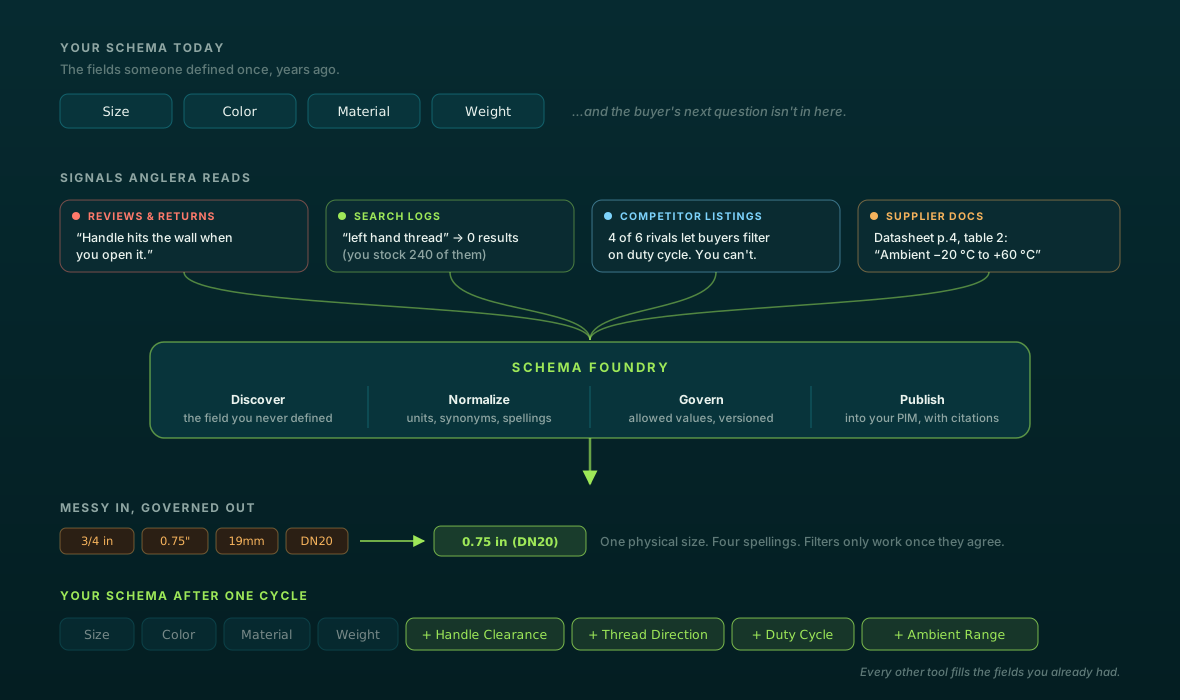
Merchkit is a credible, fast-moving entrant: it onboards supplier files quickly, writes per-channel content, and syndicates to consumer channels and AI shopping engines, with a low-friction 999 USD entry plan. But it is a 2024 pre-seed startup (2M CAD raised) whose center of gravity is channel syndication and marketing content for retail storefronts, and its entry tier caps at 1,000 SKUs a month on a single channel. Anglera is built for the other end of the problem: B2B distributors and manufacturers with 50,000 to 500,000+ SKUs of messy multi-supplier data, where the hard work is attribute extraction, normalization, taxonomy, and spec completeness rather than listing copy. Anglera enriches against real buyer signals, how buyers actually search, compare, and specify products, and writes structured results back into your existing PIM (Akeneo, Salsify, inRiver) instead of becoming another catalog layer to maintain. If you need to push a small-to-mid catalog onto Shopify and Amazon fast, Merchkit fits; if you need a large, complex B2B catalog made complete, consistent, and specifiable inside the PIM you already own, in about 30 days, Anglera is the safer pick.

What MerchKit does

Merchkit is an AI-powered product catalog platform that ingests product data from CSVs, PDFs, images, spec sheets, and APIs, enriches attributes and generates channel-optimized content, then syndicates listings to Shopify, Amazon, Google, and AI shopping engines. It targets B2C and B2B retailers, brands, and distributors with catalogs from 500 to 5M SKUs. Listed integrations include Shopify, WooCommerce, BigCommerce, Commercetools, Salesforce, Akeneo, and Salsify.

Pricing: Public pricing: Core plan at 999 USD per month covers up to 1,000 SKUs updated monthly on one channel with one seat; Growth (up to 10,000 SKUs) and Scale (unlimited) are custom-priced. A 5,000 USD four-week go-live onboarding package is also offered.

MerchKit vs Anglera, side by side

MerchKitAnglera
Primary outputChannel-ready listings and optimized feeds syndicated to Shopify, Amazon, Google, and AI shopping enginesEnriched, normalized structured product data, attributes, taxonomy, specs, written back to your existing PIM
Who it is built forB2C and B2B retailers, brands, and distributors from about 500 SKUs up; entry plan covers 1,000 SKUs on one channelB2B distributors, manufacturers, and retailers with 50,000 to 500,000+ SKU catalogs and messy multi-supplier data
Buyer-signal enrichmentSEO and per-channel conversion optimization of titles, descriptions, and contentEnrichment against real buyer signals: how buyers search, compare, and specify products
PIM relationshipNot a PIM either; connects to Akeneo and Salsify but operates as its own catalog and syndication layerNot a PIM by design: an AI workforce that does the work and writes results back to Akeneo, Salsify, inRiver, and others
Catalog complexityStrong supplier-file ingestion from CSVs, PDFs, and images; claims supplier catalogs live in hoursAttribute extraction, value normalization, taxonomy, and spec completeness across large multi-supplier B2B catalogs
Time to valueSelf-serve start in hours to days; optional 5,000 USD four-week go-live packageRoughly 30-day guided implementation at full enterprise catalog scale

See it on your own SKUs.

A 30-minute walkthrough on your categories and your supplier data.

Book a demo