1WorldSync vs Feedonomics
These two platforms are often mentioned in the same category — both move product data from a brand to downstream destinations — but they solve different distribution problems. 1WorldSync is the world's largest GDSN data pool, built for CPG brands and manufacturers that need GS1-compliant, regulator-grade product content flowing to grocery chains and major retail trading partners. Feedonomics, owned by BigCommerce, is a managed-service feed platform for brands that need their catalog transformed and optimized across 300+ ad channels and marketplaces.
The choice is rarely a straight swap. A manufacturer sending nutritional data to Kroger or Albertsons through GDSN needs 1WorldSync. A brand running Google Shopping, Amazon, and TikTok Shop campaigns likely needs Feedonomics. Large CPG companies with both a supply-chain compliance requirement and a performance-marketing operation frequently run both, covering different surfaces of their distribution stack.
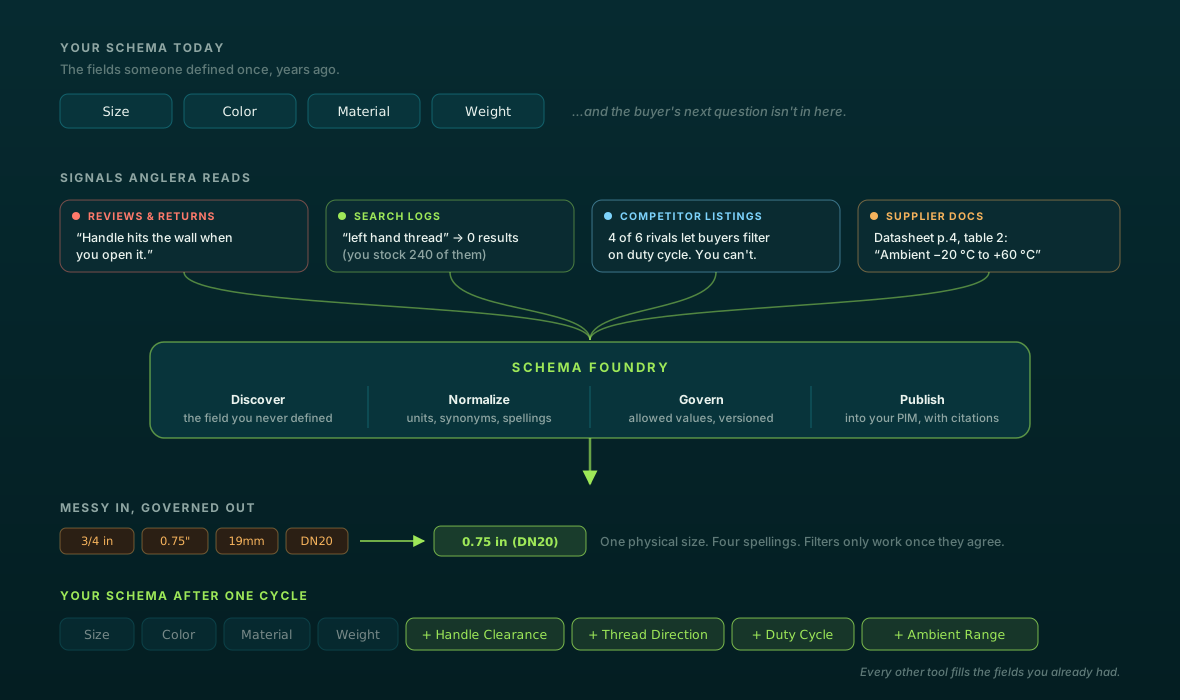
What neither platform does is create the enriched, complete product content that performs well once it arrives at those destinations. Both assume the data you bring in is already accurate, structured, and channel-ready. In practice, it rarely is — which is where the enrichment question becomes important regardless of which platform you choose.
| 1WorldSync | Feedonomics | Anglera | |
|---|---|---|---|
| Primary purpose | GDSN data pool and product content orchestration — creates, validates, and distributes GS1-structured product data to retailers and trading partners at regulatory grade. | Feed transformation, optimization, and syndication — transforms your existing catalog into channel-native formats and pushes it to 300+ ad channels and marketplaces. | AI-driven attribute enrichment, gap-filling, and buyer-signal scoring — writes the enriched record back to your PIM so every downstream destination receives your best data. |
| Who it is built for | CPG brands, manufacturers, and private-label suppliers that distribute through GDSN-connected retailers — grocery, big-box, drug, and club stores — especially in the US and internationally. | Retail and D2C brands running performance-marketing campaigns who want a managed team handling feed setup, channel optimization, and ongoing error resolution on their behalf. | B2B distributors, manufacturers, and retailers with incomplete or inconsistent catalogs — regardless of which distribution platform sits downstream. |
| Distribution reach | GDSN network spanning 60+ countries; the de facto standard for major US grocery chains. 14,000+ brands and manufacturers currently connected. | 300+ channels including Google Shopping, Microsoft Ads, Amazon, Walmart Connect, Meta, and TikTok Shop. Optimized for ad auction and marketplace performance. | Platform-agnostic. Anglera enriches data inside your PIM and writes it back — ready for 1WorldSync, Feedonomics, or any other destination you route to. |
| Data standards and compliance | GS1/GDSN schema, Global Product Classification (GPC), and regulatory attribute sets (nutritional, allergen, hazmat). Built to satisfy retailer compliance validation rules. | Channel-native feed formats: optimized titles, image requirements, GTINs, and custom labels tuned for ad performance. Not designed for GS1 compliance or supply-chain integration. | Fills attribute gaps, normalizes values, and scores completeness against your target channel's requirements — works within any schema, including GS1 structures. |
| Service model | Platform plus account management. Onboarding and ongoing validation typically require internal product data expertise or an implementation partner. | Fully managed service. Feed specialists handle onboarding, optimization, and error resolution on your behalf — the core of their value proposition. | Approximately 30-day implementation to production enrichment. Automated enrichment runs on schedule with human-in-the-loop review at key checkpoints. |
| Pricing | Not publicly listed. Mid-market estimates: $500–$2,000/month. Enterprise: $25,000–$90,000+/year. Implementation fees: $10,000–$100,000+. Large enterprise contracts can reach ~$1M/year. | Custom quote only. Varies by SKU count, channel count, and service tier. No revenue-share model. | Contact for pricing. Scoped to SKU volume and enrichment depth. |
How to choose between 1WorldSync and Feedonomics
Choose 1WorldSync if your primary distribution path runs through GDSN-connected retailers — grocery chains, big-box, drug, or club stores — and you need GS1-compliant product content that meets each retailer's exact data requirements. It is the right choice if you are a manufacturer operating across multiple countries and need a single authoritative data pool that trading partners can pull from directly. The platform's scale and compliance infrastructure are unmatched for CPG and supply-chain-grade distribution. If a Kroger or Albertsons buyer is asking for a GDSN sync, 1WorldSync is the practical answer.
Choose Feedonomics if your revenue depends on performance-marketing channels — Google Shopping, Amazon Sponsored Products, Microsoft, Walmart Connect, TikTok Shop — and you want a managed team handling feed optimization and error resolution rather than building that capability in-house. Feedonomics is especially strong when SKU count is high, channels are many, and you need specialists accountable for channel performance rather than just data movement. The no-revenue-share pricing model also tends to align incentives well for brands scaling ad spend.
If you operate in both worlds — a CPG brand with a DTC or marketplace presence is the clearest example — you may legitimately need both platforms covering different slices of your distribution stack. They are not substitutes for each other.
Whichever you pick, the data still has to get done
Neither 1WorldSync nor Feedonomics enriches your product data. Both platforms assume the catalog you bring in is already complete, accurate, and properly structured. In practice, that assumption fails often: attributes are missing or inconsistent, copy written for one channel underperforms in another, and items fail retailer validation rules because key fields were never populated.
That is where Anglera fits, regardless of which platform you choose. Before your data enters 1WorldSync's data pool, Anglera fills attribute gaps, normalizes values to GS1 structures, and surfaces items likely to fail retailer compliance validation before they are submitted. Before your catalog enters Feedonomics, Anglera enriches titles, bullet points, and structured attributes using buyer-signal scoring — so the feed specialists are optimizing clean, complete data rather than working around gaps that should have been caught upstream.
Anglera is not a PIM and not a syndication platform. It is the enrichment layer that runs upstream of both: your PIM holds the record of truth, Anglera does the work of cleaning and enriching it, and whichever distribution platform you have chosen receives the strongest version of your catalog. Implementation takes approximately 30 days, and enriched data writes back to your existing source of truth rather than creating a parallel system to maintain.
Frequently asked questions
Can 1WorldSync and Feedonomics be used together?
Yes, and many large brands do. 1WorldSync handles GDSN compliance for retailer EDI and supply-chain connections; Feedonomics handles ad channel and marketplace feeds. They serve different distribution surfaces and are not mutually exclusive.
Does Feedonomics handle GDSN or GS1 compliance?
No. Feedonomics optimizes product feeds for ad channels and marketplaces using channel-native formats. It does not connect to the GDSN network or produce GS1-compliant data packages for grocery or big-box retailer compliance systems.
Does 1WorldSync optimize ad feeds for Google Shopping or Amazon?
No. 1WorldSync is built for GDSN-connected trading partners, not performance-marketing channels. Its structured data outputs are designed for retailer compliance and supply-chain integration, not ad auction or marketplace optimization.
Where does Anglera fit if I already use one of these platforms?
Anglera runs upstream of both. It enriches and quality-scores your product data inside your PIM before that data flows into 1WorldSync or Feedonomics — so the catalog entering your distribution platform is complete and channel-ready rather than patchy.
How long does it take to get Anglera running on my catalog?
Approximately 30 days from kickoff to production enrichment running on your catalog. Anglera writes enriched data back to your existing PIM or ERP rather than requiring a new system of record.