Constructor vs Describely: Which One Actually Improves Your Product Data?
Constructor and Describely are solving different problems, which makes the comparison less obvious than it looks. Constructor is an enterprise search and product discovery platform — enrichment is one feature inside a larger product built around behavioral personalization of search results, recommendations, and browse experiences. Describely is a purpose-built content generation tool: AI-written product descriptions, titles, bullet points, and meta tags at scale, with a pay-as-you-go model accessible well below enterprise budgets. The two tools rarely occupy the same shortlist.
The question worth asking is what problem you are actually trying to solve. If on-site search conversion is the priority and you have the budget and traffic volume to justify an enterprise contract, Constructor is in the conversation. If you need to generate or repair written product copy across a large catalog without hiring more copywriters, Describely is the more direct answer. Constructor sells you a search engine that includes enrichment; Describely sells you enrichment and content generation that does not include a search engine. That distinction matters when you are building a business case.
What neither tool is designed to do: enrich structured product attributes and write them back to your PIM. Constructor's enrichment improves tagging inside its own index. Describely's output is primarily human-readable copy for ecommerce storefronts. If the goal is richer, structured product data living in your source of truth — specifications, classifications, compliance fields — that is a job neither platform was built for.
| Constructor | Describely | Anglera | |
|---|---|---|---|
| Core function | AI-powered search and product discovery platform. Enrichment is a supporting feature that improves attribute tagging inside Constructor's own index — not a standalone enrichment product. | AI content generation tool for ecommerce. Creates product descriptions, titles, bullet points, and meta tags at scale. Content generation and enrichment is the primary product, not a feature inside a larger platform. | Standalone enrichment layer that works independently of any search or content publishing tool. Enriches structured attributes and copy against buyer signals, then writes results back to your PIM. |
| What enrichment actually means | Tags product attributes to power faceted search, filtering, and browse within the Constructor index. Not designed to generate long-form copy or enrich your PIM record. | Generates human-readable copy — descriptions, titles, bullets, meta tags — and can infer missing attributes from a SKU or product title. Output skews toward written content rather than structured data fields. | Enriches structured product attributes — specifications, classifications, compliance fields, buyer-signal scores — the data that feeds PIMs, search platforms, and syndication tools equally. |
| Data portability and ownership | Enriched attribute tags live inside the Constructor index. If you switch search providers, that enrichment does not travel with you. | Generated content is yours to export and publish wherever you need it. Native connectors to Shopify, WooCommerce, and Wix push content directly to those storefronts. | Writes enriched data directly back to your PIM — Akeneo, Salsify, Plytix, or a custom system — so the enrichment is permanently part of your source of truth regardless of downstream tools. |
| Target buyer | Enterprise ecommerce teams where on-site search and product discovery directly drive measurable revenue. Requires the budget, traffic volume, and engineering resources to justify an enterprise search platform. | eCommerce teams from SMB to mid-market that need to produce or fix catalog copy at volume without growing a content team. Accessible to small teams and large ones; pricing does not require a procurement cycle to start. | B2B distributors, manufacturers, and retailers enriching large catalogs of structured product data and writing it back to a PIM or ERP. |
| Pricing model | Custom enterprise contracts. Estimated $150,000–$300,000/year based on interaction volume. Not accessible for mid-market or smaller teams without a full sales cycle. | Pay-as-you-go starting at $28/month; data enrichment priced at $0.55 per product (10-product minimum). Enterprise plans available. A team can start today without talking to sales. | Contact for pricing. Designed for mid-market to enterprise teams enriching catalogs at scale; priced per SKU enriched rather than per seat or interaction volume. |
| Implementation and time to value | Enterprise implementation involving search index migration, clickstream instrumentation, and catalog integration. Timeline is measured in months, not weeks, and typically requires dedicated engineering resources. | Fast onboarding through native connectors to Shopify, WooCommerce, and Wix. Small teams can generate content within hours of signing up; no implementation project required. | ~30-day implementation. Connects to your PIM, maps your attribute schema, runs enrichment, and validates before writing back. No platform migration required. |
| Channel and ecosystem fit | Enterprise ecommerce search layer sitting between the product catalog and the customer-facing storefront. Does not natively serve B2B wholesale, marketplace syndication, or print channels. | Built specifically for ecommerce storefronts — strongest with Shopify, WooCommerce, and Wix. Less suited to complex B2B catalogs with deep attribute hierarchies or non-web distribution channels. | Channel-agnostic — enriches the PIM record that every downstream channel reads from, whether that is ecommerce, B2B portals, marketplaces, or print. |
How to choose between Constructor and Describely
Choose Constructor if on-site search personalization is your primary business problem and you have the budget to match. Constructor is built around behavioral clickstream data — every click, scroll, and add-to-cart teaches the engine how to rank results for the next visitor. Its enrichment feature improves search index quality as a byproduct of that core mission. Do not buy Constructor primarily for enrichment: it is a feature inside a search platform, not an enrichment product. A realistic starting point for this conversation is $150,000/year, and you will need internal engineering resources to instrument clickstream data correctly.
Choose Describely if your primary gap is written product content — descriptions, titles, bullets, and meta tags — and your storefront runs on Shopify, WooCommerce, or Wix. Describely is genuinely accessible: $28/month to start, $0.55 per product for enrichment, no sales call required. It is particularly useful when you have a large catalog of thin or missing copy and need to close that gap without hiring a content team. Keep in mind that Describely's strength is copy generation; if your primary need is structured attribute enrichment — specifications, dimensions, classifications — its attribute inference is a useful starting point but not a substitute for a dedicated enrichment platform.
A few signals that clarify the choice:
- If improving search conversion rates is the KPI and you have significant ecommerce traffic, Constructor is the right category of tool.
- If reducing catalog content gaps and improving SEO are the KPIs and you are on a major ecommerce platform, Describely is the more direct fit at a fraction of the cost.
- If neither on-site search nor ecommerce copy is the core gap — specifically, if the problem is incomplete structured attributes across a B2B catalog feeding a PIM — neither Constructor nor Describely was designed for that job.
Whichever you pick, the data still has to get done
Both Constructor and Describely assume your product data is in reasonable shape when you hand it to them. Constructor builds a search index from the attribute tags on your products — thin, inconsistent, or missing attributes degrade facet quality and personalization from day one. Describely generates better copy when the input SKU data is solid; asking it to infer product details from a bare item number produces mediocre output. Both tools make the most of what they receive, but neither fixes the underlying data before processing it.
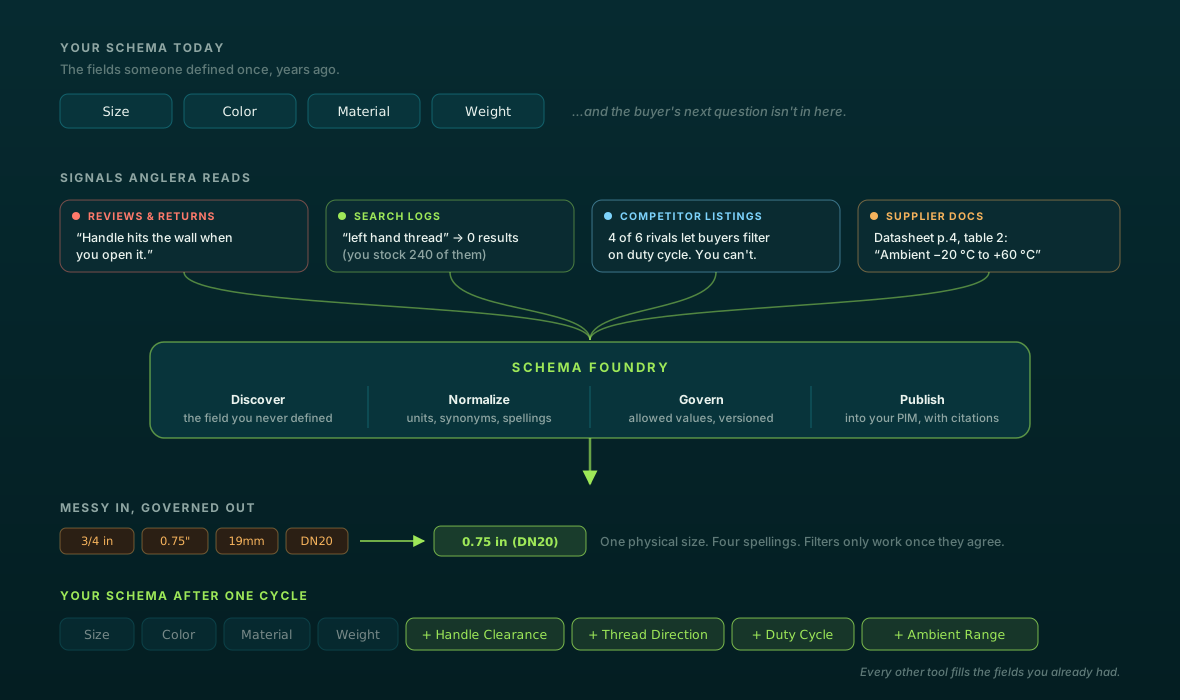
Anglera fills the upstream gap. It connects to your PIM, enriches every SKU against buyer signals — how your customers actually search, compare, and filter — and writes clean, structured attributes back to your system of record before any downstream tool processes them. If you then run Constructor, it indexes richer, more complete data. If you run Describely, it generates copy from a stronger foundation. The enrichment Anglera runs improves what every downstream tool receives, including tools you add later. Implementation is ~30 days with no platform migration required.
Frequently asked questions
Are Constructor and Describely actually competitors?
Not really. Constructor sells an enterprise search platform where enrichment is one supporting feature among many. Describely sells AI content generation and enrichment as its primary product. A buyer choosing between them is usually evaluating a specific question: which enrichment approach — Constructor's attribute tagging or Describely's copy generation — better fits their catalog problem. Budget alone often resolves the comparison: Constructor requires a six-figure enterprise contract; Describely starts at $28/month.
Does Constructor's enrichment write data back to my PIM?
No. Constructor's enrichment improves attribute tags within its own search index to power better faceting and personalization inside the Constructor product. If you change search providers, that enrichment does not travel with you. It is an index-quality feature, not a PIM enrichment tool.
Can Describely handle structured attribute enrichment for B2B or industrial catalogs?
Describely can infer missing attributes from a product title or SKU, which is useful for filling basic fields on consumer-facing ecommerce products. For B2B catalogs with deep attribute hierarchies — technical specifications, compliance data, industrial classifications across thousands of SKUs — its attribute inference is a starting point rather than a complete solution. It was not designed for complex structured data models or PIM write-back workflows.
How does Anglera complement Constructor or Describely?
Anglera works upstream. It connects to your PIM, enriches structured product attributes against buyer signals, and writes the improved data back to your system of record. Constructor then indexes richer attribute data, which improves search quality. Describely generates copy from more complete product records, which improves output quality. Either way, Anglera improves what every downstream tool receives — including tools you add later — in roughly 30 days with no platform migration.
What is the real cost difference between Constructor and Describely?
The gap is substantial. Constructor requires a custom enterprise contract with an estimated average of $150,000–$300,000/year, plus the engineering investment to instrument clickstream data. Describely starts at $28/month with enrichment priced at $0.55 per product — a team can start today without a procurement process. For a mid-market catalog of 10,000 products, Describely's enrichment would run roughly $5,500 at the per-product rate, versus a six-figure annual commitment for Constructor.