Constructor vs. Zoovu: An Honest Comparison for 2026
Constructor and Zoovu occupy overlapping but meaningfully different territory. Constructor is built from the search engine up — its core value is converting searches into revenue by learning from behavioral signals, and enrichment exists to make that search index more complete. Zoovu is built from the product data layer up — enrichment is bundled into every plan as the foundation that powers its search, guided selling configurators, and AI shopping assistant. Same broad category, very different center of gravity.
That difference matters when you are deciding which to buy. If your primary pain is search conversion and you already have a reasonably clean catalog, Constructor is purpose-built for you. If your primary pain is catalog chaos — incomplete attributes, no guided selling, B2B buyers who can't find the right SKU — Zoovu addresses more of the stack in a single contract. The honest answer is that neither tool is universally better; they are built for different lead problems.
One important note before comparing: both platforms enrich product data within their own ecosystem. Neither writes enriched attributes back to your PIM or master catalog. That gap is worth understanding before you sign, because it affects what happens to your data when you eventually migrate or add channels.
| Constructor | Zoovu | Anglera | |
|---|---|---|---|
| Primary purpose | AI-powered search, browse, and recommendations engine. Enrichment is a supporting feature that improves attribute tagging inside the Constructor index — not a standalone product. | End-to-end product experience platform. Enrichment is the foundation; AI Search, Guided Selling configurators, and an AI Shopping Assistant are layered on top. | Upstream catalog enrichment that writes clean, scored attributes back to your PIM or master catalog — before the data reaches either platform. |
| Enrichment scope and data portability | Attributes enriched by Constructor live inside the Constructor index. If you leave the platform or add a channel, those enriched tags do not travel with you. | Enrichment powers Zoovu's own suite. The structured data feeds Zoovu search and configurators, but portability outside the Zoovu ecosystem is limited. | Enriched attributes are written back to your source of truth — PIM, ERP, or data warehouse. The data is yours and available to every downstream system, not locked to any vendor. |
| Guided selling and configurators | Not a native feature. Constructor focuses on search and browse, not step-by-step guided selection for complex catalogs. | A core product. Zoovu's guided selling configurators are specifically designed for B2B distributors and manufacturers with large, technically complex SKU sets where buyers need help narrowing options. | Anglera enriches the structured attribute data that makes configurators work — complete specs, accurate facets, consistent taxonomy — regardless of which guided selling tool you use. |
| Behavioral personalization depth | Deep. Constructor's differentiation is clickstream-driven personalization at scale — search rankings, browse order, and recommendations all adapt to individual and cohort behavior in real time. | Moderate. The AI Shopping Assistant personalizes the buying journey, but the platform's personalization is less centered on raw clickstream depth than Constructor's core engine. | Anglera scores products against buyer signals to surface which attributes and products match demand patterns — input that improves both platforms' personalization quality. |
| Ideal buyer profile | Enterprise B2C or DTC retailers with high search volume, strong behavioral data, and a need to maximize search-to-purchase conversion. Less commonly chosen by B2B-first businesses. | B2B distributors, manufacturers, and B2C retailers with complex catalogs, guided selling requirements, or a desire to consolidate enrichment, search, and configurators into one vendor. | Serves all three profiles. Anglera's enrichment is catalog-side, not channel-side, so it improves the master data that feeds whichever discovery platform you run. |
| Pricing structure | Custom enterprise pricing. Estimated average contract value of $150K–$300K per year, scaled by interaction volume. No self-serve or mid-market tier known. | Quote-based, billed annually. Modular — enrichment is included in every plan; AI Search, Guided Selling, and AI Assistant are each priced separately. Scales with traffic and interaction volume. No public rates. | Flat enrichment pricing by SKU volume with a ~30-day implementation. No interaction-volume variable that scales unpredictably with traffic spikes. |
| Implementation scope | Primarily a search layer replacement. Integration centers on connecting Constructor to your catalog feed and front-end search UI. Significant lift if replacing an existing search platform. | Multi-product suite. Implementing enrichment, search, and configurators together is broader in scope, though a phased approach (enrichment first) is possible. | ~30-day implementation upstream of both platforms. Anglera connects to your PIM or catalog source and begins enriching before your Constructor or Zoovu project is complete. |
How to choose between Constructor and Zoovu
Choose Constructor if: Your primary lever is search conversion, not catalog completeness. Constructor is the right call if you are an enterprise retailer or marketplace operator with high search volumes, strong behavioral data to learn from, and an existing catalog that is reasonably attributed. You are essentially buying one of the most sophisticated behavioral search engines available — enrichment is a bonus, not the reason to sign.
Choose Zoovu if: Your primary pain is catalog complexity rather than search algorithm sophistication. Zoovu earns its place when you are a B2B distributor or manufacturer whose products are technically complex, whose buyers get lost without guided help, or when you want enrichment, search, and configurator tooling under a single contract and support relationship. The unified-platform argument is genuinely compelling when the alternative is stitching three point solutions together.
Where the two genuinely overlap: Both platforms target mid-to-large catalogs and both claim AI-powered enrichment. If you sit in that overlap — significant catalog, strong conversion focus, some B2B complexity — the decision usually comes down to whether guided selling is a must-have. If yes, Zoovu. If your sales model does not require guided selection and behavioral search personalization is the bigger prize, Constructor.
One thing neither platform replaces: A clean, complete master catalog. Both Constructor and Zoovu work better — and often promise more — when the underlying product data is already accurate and fully attributed. That is the step most buyers underestimate before signing with either.
Whichever you pick, the data still has to get done
Here is the gap that neither platform closes: your master catalog data is almost certainly incomplete, inconsistently attributed, or missing values before it reaches Constructor or Zoovu. Both platforms acknowledge this and both have enrichment capabilities — but the enriched attributes stay inside their own systems. Constructor tags attributes to improve its own search index. Zoovu enriches data to power its own search and configurators. If you switch platforms, add a marketplace channel, or syndicate to a retailer, you start from the same raw catalog you started with.
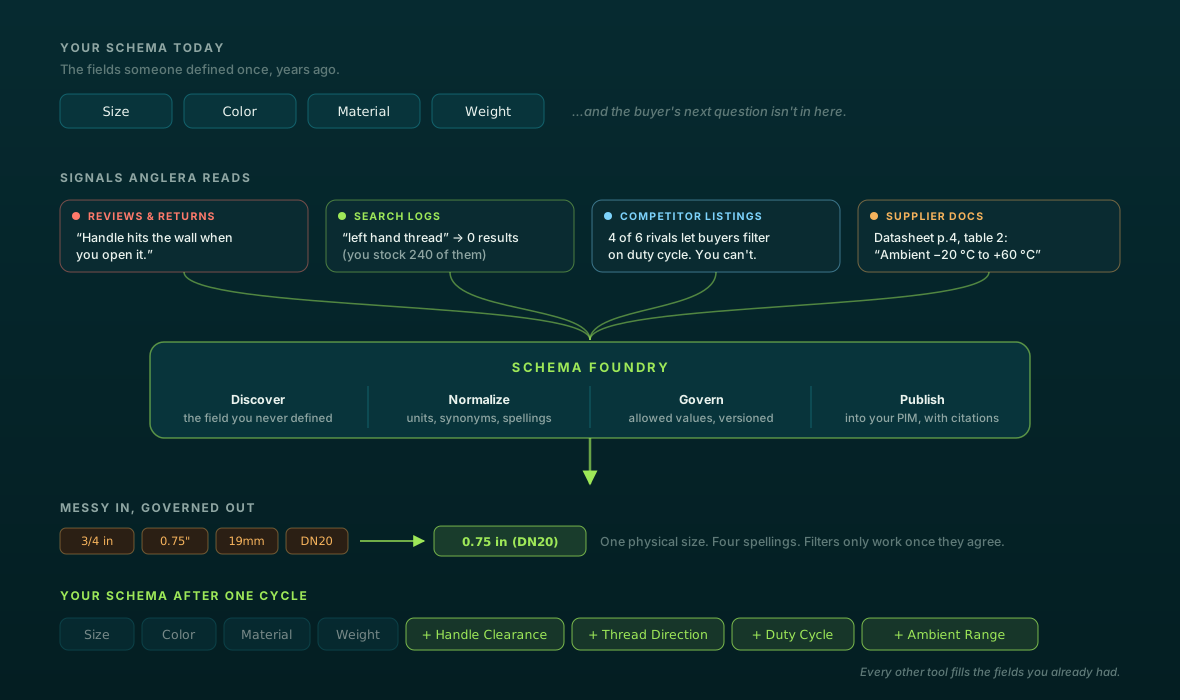
Anglera works one layer upstream. It connects to your PIM, ERP, or product data source, enriches every SKU against buyer signals, cleans and standardizes attributes, fills missing values, and writes the results back to your source of truth. That means Constructor's index and Zoovu's platform both receive better data — more complete attributes, consistent taxonomy, scored relevance — without Anglera sitting in the critical path of either.
Practically, this means you can run Anglera in parallel with your Constructor or Zoovu implementation, often completing enrichment in roughly 30 days. Whichever platform you ultimately choose, or even if you run both in different channels, Anglera has already done the foundational work both platforms assume happened before you onboarded. The enriched data is in your PIM. It is yours. It travels wherever your catalog goes.
Frequently asked questions
Can I use both Constructor and Zoovu together?
In theory, but it is uncommon in practice. The two platforms serve overlapping functions — both offer search and both claim enrichment — so running both would mean paying twice for significant overlap. The more realistic scenario is choosing one and complementing it with upstream enrichment tooling like Anglera that improves the data both would receive.
Does Constructor's enrichment replace a dedicated enrichment tool?
Not really. Constructor's enrichment is designed to tag attributes inside the Constructor index to improve search quality. It does not enrich your master catalog, write back to your PIM, or make your product data better for any channel outside Constructor — including your ERP, retailer syndication, or a second discovery platform. It solves a search index problem, not a catalog data problem.
Is Zoovu's enrichment strong enough on its own, or does it still need upstream data work?
Zoovu's enrichment is more comprehensive than Constructor's and is positioned as the foundation of the platform. That said, Zoovu enriches data to serve its own suite — the structured attributes it creates are optimized for its search and configurator products. Organizations with large catalogs, messy source data, or multi-channel distribution often still need a PIM-side enrichment layer to get clean data into Zoovu in the first place.
How does pricing compare between Constructor and Zoovu?
Both are quote-based with no public rates, so direct comparison requires getting proposals. Constructor's publicly available market estimates put average contracts in the $150K–$300K per year range, scaled by interaction volume. Zoovu is modular — enrichment is included in the base plan and additional products (AI Search, Guided Selling, AI Assistant) are priced separately. Either way, expect annual contracts and pricing that scales with your traffic.
Where does Anglera fit if we have already signed with Constructor or Zoovu?
Anglera connects to your source of truth — PIM, ERP, or data warehouse — and enriches your master catalog, then writes the improved data back. That cleaner catalog flows into Constructor or Zoovu just like any catalog update. Implementation is typically around 30 days and runs independently of either platform's project timeline, so you can start immediately without waiting for your Constructor or Zoovu rollout to complete.