Feedonomics vs Salsify: Feed Syndication vs Product Experience Management
These two platforms solve different problems, and that distinction matters before you sign anything. Feedonomics is a feed management and syndication platform — it takes your product data and distributes it across 300+ ad channels and marketplaces, with a team of specialists handling setup, optimization, and ongoing error resolution. Salsify is a Product Experience Management platform — it gives brands, distributors, and manufacturers a central system of record to author, govern, and syndicate product content to the digital shelf.
A buyer evaluating both is usually an organization that recognizes it needs both capabilities: authoritative, well-structured product content AND reliable distribution to the channels that drive revenue. The practical question is which problem is more urgent, which teams will own the platform day-to-day, and whether budget and appetite exist to run one or both.
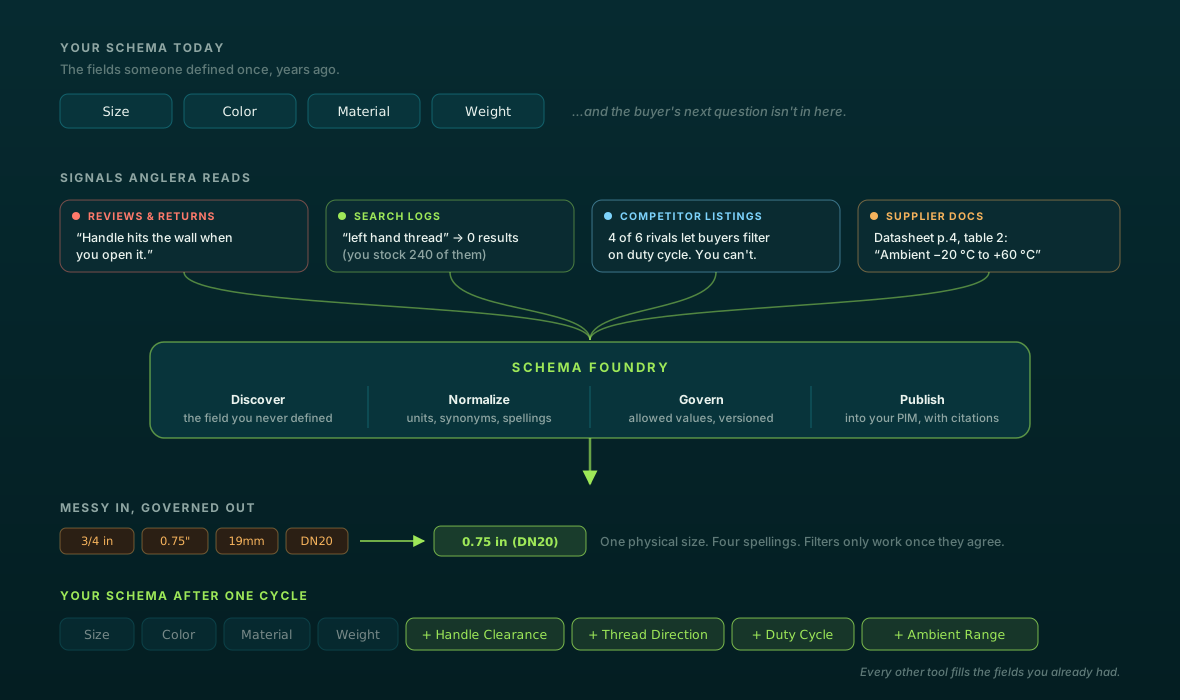
One limitation they share: neither platform automatically enriches product data before it goes out. Salsify syndicates what your team puts into it. Feedonomics distributes whatever fields exist in your source feed. If underlying attributes are thin, inconsistent, or misaligned with buyer search behavior, both platforms ship that problem downstream. That gap is where a dedicated enrichment layer fits — regardless of which platform you ultimately choose.
| Feedonomics | Salsify | Anglera | |
|---|---|---|---|
| Primary job | Transform and distribute product feeds to 300+ paid channels and marketplaces. The core job is getting listings seen in more places with channel-specific field mapping and optimization. | Centralize product content as the system of record for the digital shelf. The core job is authoring, organizing, and syndicating product information across retailers and marketplaces. | Neither — Anglera enriches product attributes upstream, before they reach either platform. Better input data means better output from whichever tool handles distribution. |
| Service model | Managed service. Feedonomics specialists handle setup, ongoing feed optimization, and error resolution on your behalf — you are not operating the platform alone. | SaaS platform your team operates. Implementation support is available but typically requires a third-party consulting engagement, commonly reported at around $16k additional cost. | Approximately 30-day implementation. Anglera connects to your existing catalog or PIM, enriches, and writes back — no ongoing internal headcount required to run it. |
| Best fit | Retailers and brands running paid performance channels — Google Shopping, Amazon Ads, Microsoft, Walmart — who want specialist-managed feed optimization across a large destination set. | Brands, distributors, and manufacturers that need a central content hub to author, approve, and distribute product information to retailers and digital channels. | Any organization whose product catalog has gaps, inconsistent values, or thin attributes that limit performance on whichever distribution platform they use. |
| Channel reach | 300+ destinations including Google Shopping, Amazon, Microsoft Ads, Walmart, and other ad networks and marketplaces. Channel breadth is a core selling point. | Broad syndication network covering major retailers, marketplaces, and digital channels — focused on content delivery and digital-shelf activation rather than ad feed optimization. | Channel-agnostic. Enriched attributes feed into whichever distribution layer handles the last mile, whether that is a feed platform, PIM, or direct marketplace connection. |
| Product content enrichment | Transforms and maps existing data to meet each channel's field requirements. Does not generate or enrich missing attributes — it works with what you provide. | Provides the structure, workflow, and governance to manage content centrally. Content quality depends on what teams author into the platform; no automatic enrichment. | Core capability. Gathers, cleans, and enriches product attributes against buyer signals, scores each SKU for completeness and relevance, then writes results back to your source of truth. |
| Pricing | Custom quote only. Based on SKU volume, channel count, and service tier. No revenue-share model. No public pricing. | Custom quote only. Based on user count, SKU volume, and feature tier. Reviewers note it is expensive relative to alternatives; third-party onboarding typically adds further cost. | Custom quote based on SKU volume and scope. No revenue share. Roughly 30-day implementation timeline from connection to enriched data written back. |
| Implementation path | Feedonomics specialists manage the setup process. Timeline depends on catalog complexity and number of channels; the managed-service model offloads most of the technical work. | Platform configuration handled by your team, typically with a third-party consulting engagement. Timeline varies; the consulting requirement adds both cost and coordination overhead. | Connects to your existing system of record. Roughly 30 days from integration to enriched data available back in your catalog — no new system of record to migrate into. |
How to choose between Feedonomics and Salsify
Choose Feedonomics if your primary pain is channel distribution for paid media and marketplaces. If you run meaningful Google Shopping, Amazon, or Microsoft Ads spend and need feeds optimized, error-corrected, and managed by specialists across a large channel set, Feedonomics is built for exactly that job. It performs best when you already have reasonably complete product data and the bottleneck is getting that data correctly mapped, formatted, and pushed to performance channels — without your team having to own the ongoing feed maintenance.
Choose Salsify if your primary pain is product content ownership and digital-shelf control. If you are a brand or distributor that needs a central PIM to author, govern, and syndicate product information — with structured workflows for content approvals and multi-retailer distribution — Salsify fits that problem. It suits organizations managing complex content processes across multiple contributors, categories, and destinations, where the chaos is in the content layer rather than the distribution layer.
If you need both, these platforms can coexist. Salsify holds and governs the content; Feedonomics optimizes and distributes the feed. Some larger organizations run both, treating Salsify as the upstream system of record and Feedonomics as the performance channel distribution layer. That architecture makes sense when content governance and paid channel optimization are both genuine pain points with budget to match.
The honest signal: if your team spends most of its time chasing feed errors and missing marketplace deadlines, start with Feedonomics. If your team spends most of its time managing content chaos — wrong attributes, inconsistent descriptions, no single source of truth — start with Salsify.
Whichever you pick, the data still has to get done
Here is the gap both platforms share: neither automatically enriches the product data before it ships. Salsify syndicates whatever attributes your team authors into it. Feedonomics distributes whatever fields exist in your source feed. If the underlying catalog has missing specifications, inconsistent values, or content that does not match what buyers are actually searching for, both platforms faithfully distribute that problem to every channel and retailer downstream.
Anglera sits upstream of both as the enrichment layer. It connects to your existing catalog or PIM — whether that is Salsify, a homegrown system, or any other source of record — gathers and cleans product attributes, enriches them against buyer signals, scores each SKU for completeness and conversion readiness, and writes the result back to your source of truth. The workflow is the same regardless of which platform you pick: Anglera enriches first, then your chosen platform distributes.
If you are on Salsify, Anglera enriches before Salsify syndicates. If you are on Feedonomics, Anglera enriches before Feedonomics distributes. Implementation runs roughly 30 days, and because Anglera writes back to your system of record rather than becoming one more destination to maintain, it fits into whatever stack you already operate. Whichever platform wins the evaluation, the enrichment problem remains — and Anglera is where that work gets done.
Frequently asked questions
Can Feedonomics and Salsify be used together?
Yes. A common architecture uses Salsify as the central system of record for product content and Feedonomics to optimize and distribute feeds to paid channels and marketplaces. The two platforms operate at different layers — content governance vs. channel distribution — so they do not overlap in ways that force a choice between them.
Does Feedonomics function as a PIM?
No. Feedonomics transforms and distributes feeds from an existing source catalog; it is not a system of record for product content. You still need a catalog, PIM, or data source upstream of Feedonomics to provide the attributes it maps and distributes.
Does Salsify replace a dedicated feed management platform?
Salsify includes syndication capabilities, but it is not purpose-built for real-time ad feed optimization at the scale Feedonomics targets. Organizations with heavy paid channel spend across many ad networks often find they still need a dedicated feed platform alongside Salsify for that specific job.
Where does Anglera fit if I already have a PIM like Salsify?
Anglera connects to your existing PIM as the enrichment layer — it does not replace it. It reads your catalog, enriches missing or thin attributes against buyer signals, and writes the result back. Your PIM stays the system of record; Anglera handles the data work that the PIM assumes has already happened before content enters it.
What if my product data is already reasonably complete?
Most catalogs appear complete until you check attribute fill rates by category, or compare existing content against what buyers are actually searching for. Anglera's scoring step surfaces those gaps at the SKU level. If your data is genuinely clean and complete, the enrichment lift will be smaller — but scoring against live buyer signals typically still identifies SEO and conversion improvements that field-level completeness checks miss.