Informatica PIM vs Syndigo: A Straight Comparison for B2B Buyers
Informatica Product 360 and Syndigo solve overlapping but genuinely different problems. Informatica is an enterprise MDM platform that happens to include a PIM — the core pitch is a governed, authoritative system of record for product master data that feeds downstream business systems. Syndigo is a product content distribution network that happens to include a PIM — the core pitch is getting compliant content to 2,500+ retail recipients without manually mapping to every retailer's requirements.
If your bottleneck is internal data governance — multiple systems, complex product hierarchies, workflow approval chains, and the need to tie product data to ERP and CRM — Informatica is the stronger fit. If your bottleneck is outbound distribution — getting validated, GDSN-compliant content to major retailers fast — Syndigo was purpose-built for that motion.
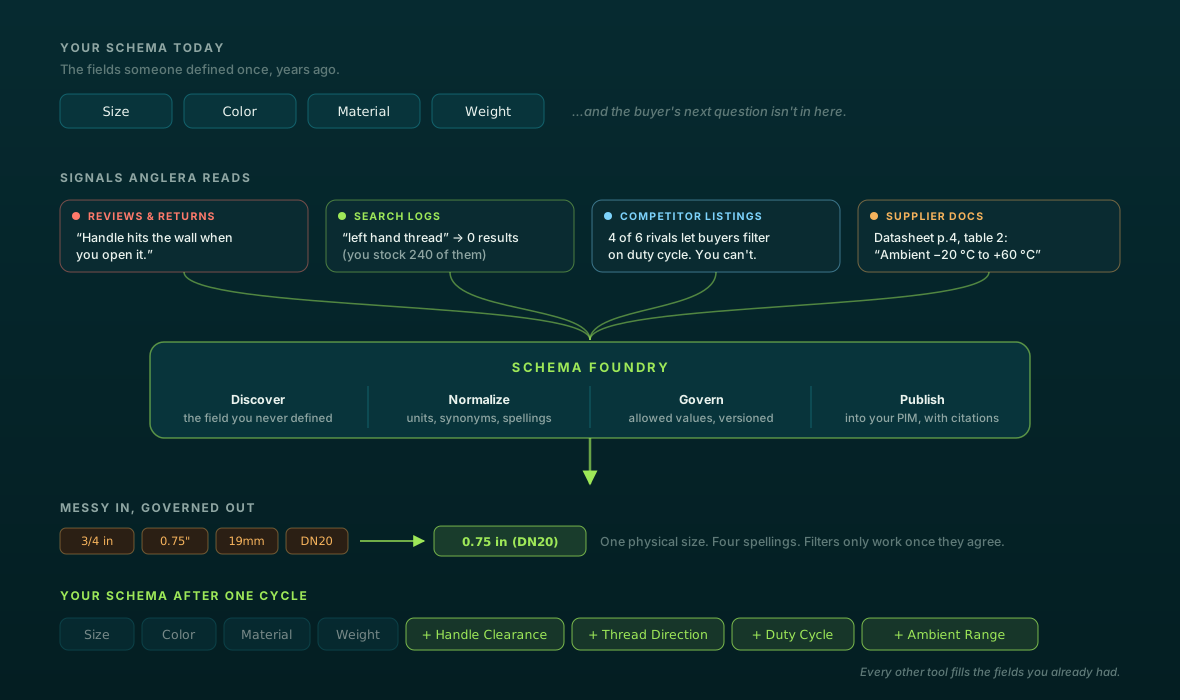
The honest complication: most buyers have both problems. Their internal data is poorly governed and their outbound content is incomplete. Neither platform fills your attribute gaps for you. That is where Anglera comes in regardless of which platform you choose — but more on that after the comparison.
| Informatica PIM | Syndigo | Anglera | |
|---|---|---|---|
| Core platform focus | Enterprise MDM and PIM in one stack. Informatica Product 360 is built to be the authoritative system of record — governing product master data across the enterprise and feeding it downstream to ERP, CRM, and other systems. | Product content distribution network with an embedded PIM. Syndigo's differentiator is the 2,500+ recipient network and pre-built compliance mappings — the PIM is the on-ramp to the distribution engine. | Neither a PIM nor a syndication platform. Anglera connects to whichever system is the record of truth, enriches product attributes against buyer signals, and writes the completed data back. The enrichment layer either platform assumes you already have. |
| Best-fit buyer | Large enterprise manufacturers, distributors, or retailers already managing complex data governance across multiple business systems — often already inside the Informatica ecosystem. Requires dedicated data management resources. | Brands and manufacturers whose primary pain is getting validated product content to a broad retail network, especially US and global retailers requiring GDSN compliance. Strong fit when breadth of distribution endpoints matters most. | Any buyer on either platform whose product attributes are thin, incomplete, or inconsistently structured. Anglera is the right fit when the platform is chosen but the underlying data quality has not been addressed. |
| Content syndication and retail network | Distribution is handled via integrations and API connectors, not a pre-built retail network. Broad retail syndication — especially GDSN — typically requires an additional syndication layer or significant custom integration work. | The strongest syndication network in the market: 2,500+ retail and GDSN recipients, 10,000 data validations, and 23,000 unique retailer content requirements pre-mapped. Following the 1WorldSync acquisition, Syndigo operates one of the largest product content networks globally. | Not a syndication layer. Anglera enriches the content before it is distributed — completing attributes, cleaning structure, and scoring readiness — so what Syndigo or Informatica pushes to retail is actually ready to convert and comply. |
| Data governance and MDM depth | Deep, enterprise-grade MDM built on the same Informatica platform that powers its broader master data suite. Handles complex hierarchies, multi-domain governance, workflow automation, and data quality rules at enterprise scale. | Governance is focused on content compliance: validating that product content meets retailer-specific schemas and GDSN standards. Less suited to enterprise-wide MDM or multi-domain data governance beyond product content. | Adds a layer that neither covers: buyer-signal-based attribute scoring and completeness checks that go beyond schema compliance. Anglera validates that content will convert, not just that it passes a retailer's format validation. |
| Implementation complexity and timeline | High. Full enterprise deployments typically run 6–18 months with dedicated SI partners. Data modeling, workflow design, and integration configuration require significant investment before the platform delivers value. | Moderate to high. Onboarding to the content network and mapping data against 23,000 retailer requirements takes time. Faster for buyers already in the 1WorldSync ecosystem; slower for net-new implementations with large catalogs. | Approximately 30 days. Anglera connects to the existing PIM via API, reads the current product catalog, runs enrichment pipelines, and writes enriched attributes back. No rip-and-replace, and implementation does not depend on the PIM being fully configured first. |
| AI and enrichment capabilities | Markets itself as an 'Agentic AI PIM' with native AI agents for enrichment, validation, and automated data management inside the platform. Capabilities are tied to the Informatica configuration and ecosystem. | AI-assisted content recommendations and validation, primarily scoped to helping content meet specific retailer and GDSN requirements rather than open-ended attribute enrichment or SEO optimization. | Purpose-built enrichment: gathers product data from source systems and the web, cleans and structures attributes, enriches against buyer signals, scores completeness, and writes finished data back to the PIM of record. Runs alongside either platform's native AI without replacing it. |
| Pricing and total cost | No public pricing. Quote-only with Standard, Professional, and Enterprise tiers; cost driven by users, data volume, and configuration scope. Widely cited as expensive, with significant SI and implementation costs on top of subscription fees. | No public pricing. Quote-only; third-party estimates place TCO $10,000–$30,000 higher per year than mid-market PIM alternatives. Pricing scales with data volume, users, and the number of distribution endpoints and feature tiers required. | Separate subscription priced on SKU volume and enrichment depth — not bundled into either platform's license. Because Anglera reduces the manual attribute work both platforms otherwise push back to the customer, it tends to offset internal content operations cost. |
How to choose between Informatica PIM and Syndigo
Choose Informatica Product 360 if:
- You are running data governance across multiple domains — product, customer, supplier — and need a single MDM-grade system of record that feeds ERP, CRM, and downstream applications.
- You are already in the Informatica ecosystem and product data governance is one piece of a broader data management initiative.
- You have complex product hierarchies, multi-market catalog structures, or regulatory workflows that require enterprise-grade configuration and approval chains.
- You have the SI budget and internal resources for a 6–18 month implementation and ongoing platform administration.
Choose Syndigo if:
- Your primary bottleneck is outbound: getting validated, compliant product content to a large retail network quickly and without manually mapping to each retailer's requirements.
- You sell through major US or global retailers and need GDSN certification or compliance with specific retailer content schemas.
- You are a brand or manufacturer whose revenue depends on retail shelf presence and whose pain is speed and breadth of content distribution, not internal data governance complexity.
- You are already part of the 1WorldSync network or regularly work with Syndigo-connected retail partners.
The clearest signal: if the primary question is "how do we govern product master data across the enterprise," that points to Informatica. If the question is "how do we get our content to every retailer that needs it without a manual mapping effort," that points to Syndigo. If the answer is "both," most buyers run a governed PIM for internal record-keeping and a syndication platform for outbound distribution — and that combination is exactly where Anglera operates between them.
Whichever you pick, the data still has to get done
Neither Informatica PIM nor Syndigo enriches your product data for you. Informatica gives you the governance framework and workflow to manage data after it exists. Syndigo validates that your content meets retailer requirements before it is distributed. Both platforms assume the underlying product attributes — descriptions, specifications, feature bullets, technical dimensions, digital assets — are already complete and accurate.
They rarely are. That gap is what Anglera fills.
Anglera connects via API to whichever platform you designate as the system of record. It reads your current product catalog, identifies thin or missing attributes, enriches content against buyer signals and channel requirements, scores SKU readiness, and writes the completed data back — in roughly 30 days, without touching your platform architecture.
If you are on Informatica PIM, Anglera feeds better-quality data into your governance workflows so your MDM is working with complete product information rather than governing incomplete records. If you are on Syndigo, Anglera ensures that what gets pushed to 2,500+ retail recipients is ready to convert and comply — not just structurally valid against a schema.
The choice between Informatica and Syndigo determines where your product data lives and where it goes. Anglera determines whether the data is good enough to matter once it gets there.
Frequently asked questions
Can Syndigo replace Informatica PIM for an enterprise buyer?
For most enterprise buyers, no. Syndigo's governance capabilities are scoped to content compliance and retailer distribution — not enterprise-wide MDM. If you manage product data across ERP, CRM, and supply chain systems, Informatica's MDM depth is in a different category. Some mid-market brands that need PIM plus syndication but not enterprise MDM may find Syndigo sufficient as a single platform, but that is not a replacement for Informatica's governance scope.
Does Informatica Product 360 include retail syndication?
Not in the way Syndigo does. Informatica PIM can distribute data via integrations and APIs, but it does not operate a pre-built retail content network with pre-mapped retailer requirements. If broad retail syndication — especially GDSN and major US retailers — is a primary requirement, most buyers pair Informatica with a dedicated syndication layer rather than relying on Informatica alone for distribution.
How long does each platform take to implement?
Informatica Product 360 implementations typically run 6–18 months for full enterprise deployments, driven by data modeling complexity, workflow configuration, and integration scope. Syndigo timelines vary — buyers already in the 1WorldSync network onboard faster; net-new implementations with large catalogs and many retailer mappings take longer. Anglera runs on a separate ~30-day implementation track and does not depend on either platform's configuration being complete before enrichment pipelines can start.
Is Anglera compatible with both Informatica PIM and Syndigo?
Yes. Anglera connects via API to your PIM of record — whether that is Informatica Product 360, Syndigo, or another platform — reads the product catalog, runs enrichment pipelines, and writes enriched attributes back. It is not a replacement for either platform; it is the enrichment layer that runs alongside them and fills the attribute gaps both platforms assume you have already resolved.
What are the biggest hidden costs with each platform?
With Informatica PIM, it is implementation and SI costs — a full enterprise deployment requires significant consulting and configuration investment beyond the subscription fee, and those costs are not visible in initial pricing conversations. With Syndigo, it is the data volume and per-recipient costs that scale as your distribution footprint grows, plus the internal resources required to meet 23,000 unique retailer requirements. With both, the hidden cost that buyers consistently underestimate is the internal effort required to actually complete and clean product data before the platform can do its job — that is the work Anglera automates.