Sales Layer vs Syndigo: Which Platform Fits Your Product Data Stack?
Sales Layer and Syndigo solve adjacent problems but are built for different buyers. Sales Layer is a cloud PIM aimed at B2B teams — manufacturers, distributors, and retailers — who need a clean, centralized product record and a fast path to multi-channel syndication. Syndigo is a Product Experience Cloud (PXM) built for brands and manufacturers who must push content across a large retail network, including GDSN-connected grocery and mass-market channels. The two platforms overlap in the middle — both manage structured product data, both route it outward — but their network depth, cost structures, and implementation complexity differ substantially.
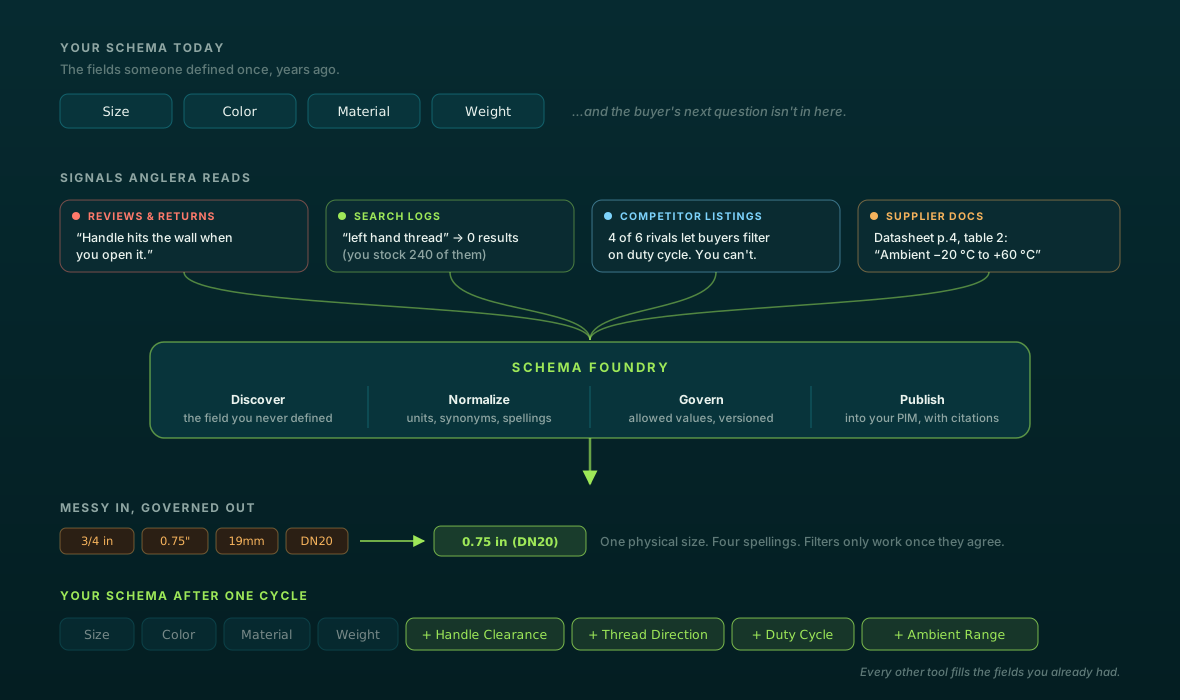
One capability neither platform provides by default: active data enrichment. Both assume your product data is already complete, accurate, and attribute-rich before you route it anywhere. If your SKU catalog has coverage gaps, missing attributes, inconsistent copy, or fields that have never been scored against what buyers actually search for, that problem follows you into whichever system you choose. That is the gap Anglera fills — and it fills it regardless of which platform becomes your source of truth.
| Sales Layer | Syndigo | Anglera | |
|---|---|---|---|
| Platform type | Cloud PIM: centralizes, validates, and distributes structured product data and digital assets | Product Experience Cloud (PXM): combines PIM, DAM, MDM, content syndication, and a 2,500+ retailer content network in one platform | Not a PIM or PXM — an enrichment layer that gathers, cleans, and scores SKU data before it lands in either platform |
| Syndication network | Syndicates to marketplaces, e-commerce channels, and retailer portals; network size not publicly specified | 2,500+ retail and GDSN recipients globally — one of the largest product content networks in the world, expanded through the acquisition of 1WorldSync | Not a syndication platform; enriches the SKUs you syndicate so every endpoint receives complete, optimized content |
| Onboarding speed | 6-week onboarding; 30-day free trial available; tiered plans from Core to Enterprise | Enterprise implementation; timeline scales with data volume and number of retail connections; no trial or public onboarding estimate | Approximately 30-day implementation, running in parallel with your PIM or PXM setup |
| Pricing | Starts at approximately $1,000/month; custom quotes for larger plans; transparent starting price is a differentiator | Custom-quoted; no public pricing tiers; third-party estimates place TCO $10,000–$30,000/year higher than smaller PIM alternatives for mid-market buyers | Separate subscription layered on top of your chosen platform; does not replace either tool |
| Content enrichment and data quality | Validates structured data and flags completeness gaps; filling those gaps requires manual input, supplier submissions, or external integrations | Validates content against 10,000 rules and 23,000 unique retailer requirements; content scoring is available, but sourcing missing data remains the user's responsibility | Actively gathers missing attributes, rewrites inconsistent copy, and scores every SKU against buyer signals — then writes enriched data back into Sales Layer or Syndigo |
| Supplier and trading partner collaboration | Dedicated Supplier Portal for collecting and onboarding product data from multiple vendors — a core B2B feature | Brands and manufacturers submit content into Syndigo's network for distribution to retailers; flow is primarily brand-to-retailer | Enriches supplier-submitted data before it populates the PIM, reducing the manual cleanup that follows every supplier onboarding |
| Best fit for | B2B distributors, mid-market manufacturers, and retailers who need a fast-setup PIM with supplier collaboration and a known entry price | Large brands and manufacturers distributing to GDSN-connected grocery, drug, or mass-market retail chains where compliance breadth is non-negotiable | Any team whose SKU catalog has attribute gaps, inconsistent data, or content that has never been validated against actual buyer search behavior |
How to choose between Sales Layer and Syndigo
Choose Sales Layer if:
- You are a distributor, mid-market manufacturer, or retailer replacing a spreadsheet-based workflow or aging PIM
- A known starting price (~$1,000/month), a 30-day trial, and a 6-week onboarding are requirements, not nice-to-haves
- You need a Supplier Portal to collect and validate product data from multiple vendors at scale
- Your syndication targets are marketplaces, e-commerce storefronts, or retailer portals rather than GDSN-connected grocery or mass-market chains
Choose Syndigo if:
- You are a brand or manufacturer that must distribute content to major grocery, drug, or mass-market retailers — especially those that require GDSN compliance
- Meeting 23,000 retailer-specific data requirements is a hard business constraint, not optional
- You are already operating inside the 1WorldSync or Syndigo network, or key retail partners require it for content submission
- Your budget accommodates a higher TCO in exchange for the broadest possible retail network coverage
The deciding question is almost always: who are your endpoints? If your go-to-market runs through GDSN-connected retail, Syndigo's network reach is the strongest argument in its favor. If your business is B2B distribution with multi-channel e-commerce, Sales Layer's speed, price transparency, and supplier tooling make more practical sense. Buyers who are genuinely uncertain should map their top 20 retail or channel partners against each platform's confirmed network before committing.
Whichever you pick, the data still has to get done
Whichever platform you select, one problem remains constant: the PIM or PXM only stores and routes what you give it. If attributes are missing, product copy is inconsistent, or your SKUs score poorly against what buyers actually search for, neither Sales Layer nor Syndigo resolves that. They organize and move data — they do not generate or fix it.
That is Anglera's job. Anglera connects to your source of truth — Sales Layer, Syndigo, or another platform — gathers missing attributes, cleans existing content, and scores every SKU against real buyer signals. The enriched output is written back into your PIM, keeping the system of record authoritative. Implementation is approximately 30 days and runs alongside your platform without replacing it.
The typical sequence: Sales Layer or Syndigo becomes your system of record on day one. Anglera ensures that what lives inside it is actually complete before it reaches any channel, retailer portal, or GDSN recipient. Whichever path you choose, the enrichment work happens in the same place.
Frequently asked questions
Does Sales Layer include content enrichment?
Sales Layer validates structured data and surfaces completeness gaps, but it does not actively source or write missing attributes. Closing those gaps requires manual data entry, supplier submissions, or an external enrichment tool such as Anglera.
How does Syndigo's retail network compare to Sales Layer's?
Syndigo operates one of the largest product content networks in the world — 2,500+ retail and GDSN recipients — following its acquisition of 1WorldSync. Sales Layer connects to marketplaces and retailer channels but does not publish a comparable network count. If GDSN compliance or access to major grocery and mass-market chains is a requirement, Syndigo's network is a meaningful differentiator.
Is Syndigo significantly more expensive than Sales Layer?
For mid-market buyers, third-party estimates suggest Syndigo's total cost of ownership runs $10,000–$30,000 per year higher than smaller PIM alternatives. Sales Layer publishes a starting price of approximately $1,000/month with a 30-day free trial. Both require custom quotes at enterprise scale, so request pricing early if budget is a constraint.
Can Anglera work with both Sales Layer and Syndigo?
Yes. Anglera is an enrichment layer, not a PIM or PXM replacement. It connects to your existing system of record, enriches SKUs against buyer signals, and writes the output back — whether that system is Sales Layer, Syndigo, or another platform. The ~30-day implementation timeline applies in either case.
Which platform is the better fit for B2B distributors?
Sales Layer is the stronger default for distributors. Its Supplier Portal, B2B-focused onboarding workflow, and 6-week implementation timeline are designed for teams managing product data from multiple vendor relationships. Syndigo is architected primarily around brand-to-retailer content distribution, which is a different problem set.