
IEWC: The Employee-Owned Wire Distributor Buying Upward
IEWC ranks #28 on MDM's 2026 electrical list. Its real story is a 1985 ESOP bet and a 2025 pivot from distributing wire to manufacturing it.
Part of Distributor Playbooks — strategy teardowns of every company on the MDM Top Distributors lists.
IEWC lands at #28 on MDM's 2026 Top Distributors list for electrical, data, and security products, up from #38 the year before, sharing a page with giants like Wesco ($21.8 billion) and Sonepar North America ($16.4 billion). IEWC doesn't disclose revenue, and that's fitting: it has spent four decades quietly compounding while the top of its own category consolidated into a handful of PE-backed and multinational strategics. The company that emerges from its history is smaller, older, and structured differently than almost anything else on that list.
A Milwaukee wire shop with a 1985 pivot
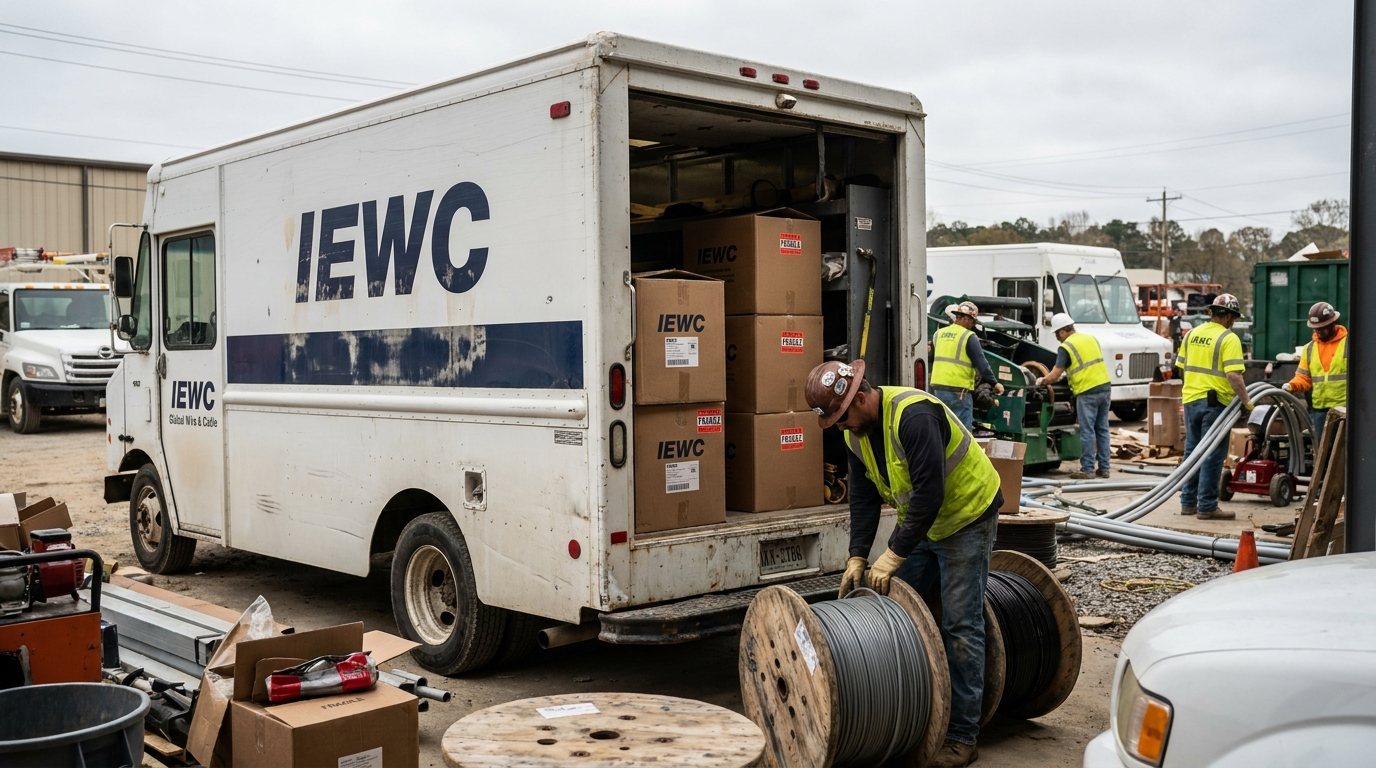
IEWC's origin is unglamorous. In 1962, Ted Krzynski bought Martin Electric Sales in Milwaukee and renamed it, eventually settling on Industrial Electric Wire & Cable by 1964, per the company's own history page. The early bet was operational, not strategic: cut-to-length respooling and just-in-time inventory, unusual disciplines for a wire distributor in the 1960s that let IEWC sell exact footage instead of full reels, cutting waste for OEM customers building harnesses and control panels.
The decision that actually shaped the company came in 1985, when Krzynski sold Industrial Electric to its employees, converting it into an ESOP. He retired two years later after 25 years running the business. That single ownership choice is the throughline of everything that followed: three CEOs since (Chuck Mahaffey, David Nestingen, and current CEO Mike Veum since 2018), and a company that rebranded to the shorter "IEWC" in 2010 but never changed who owns it.
Growth by acquiring other people's wire shops
Once employee-owned, IEWC grew by doing to other regional wire distributors what Krzynski had once done to Martin Electric: buying them out. The history page lists a steady acquisition cadence: Colonial Wire & Cable (2006), Wyro Tech (2007), Peter Augsten Wire & Cable in Germany (2008), C3 Limited (2009), DAMSA in Mexico (2011), Almo Wire & Cable (2013), Westlake Electronic Supply (2014), Premier Cables (2015), Jupiter Communications (2020), and Cablcon (2021). Each deal added either geography or a product niche, and together they turned a Milwaukee-area distributor into a company with distribution points across the U.S., Canada, Mexico, Brazil, China, Germany, and the U.K.
That's a conventional roll-up playbook. What's less conventional is who's writing the checks: not a private equity sponsor, not a public parent, but the employees who own the company outright. It's a model almost nobody else on MDM's electrical/data/security list uses. Sonepar and Rexel are French family- and shareholder-controlled multinationals. Wesco is public. CED is privately held but not employee-owned. IEWC's ESOP status means the acquisition math has to work for the people running the branches, not for an outside return horizon.
The 2025 pivot: from distributing wire to building the thing it goes into
The more interesting recent move isn't geographic, it's vertical. In February 2025, IEWC acquired Simcona, a Rochester, NY wire and cable supplier also founded in 1962, according to MDM's coverage, which strengthened IEWC's OEM and Controls divisions. Two months later, in April 2025, IEWC acquired Bevco Engineering, a Sussex, Wisconsin company founded in 1965 that designs and manufactures electrical control panels for medical, data center, and industrial customers, per the deal advisor TKO Miller.
Bevco isn't a wire distributor. It's a manufacturer. IEWC now lists a "President, Controls Group" on its executive team, a title that didn't need to exist when the business was purely cut-to-length distribution. Pairing a distributor's supply chain and inventory reach with a control-panel builder's design and assembly capability is a bet that OEM customers increasingly want one partner handling both the raw wire and the finished subassembly, rather than sourcing the two separately. It also pushes IEWC's margin profile away from pure distribution spread and toward something closer to contract manufacturing, a different risk and capital picture than the business Krzynski built.
The tension worth naming
The unique thing about IEWC isn't any single deal, it's the combination: a 40-year employee-owned holdout in a vertical where scale increasingly comes from private equity rollups and multinational consolidation, now placing a bet that its future growth looks less like buying more wire distributors and more like owning manufacturing. That's a genuine strategic fork. Staying employee-owned protects culture and long-term decision-making, exactly the kind of patience that let IEWC compound quietly for four decades without needing a headline-grabbing revenue number. But moving into control-panel manufacturing changes what kind of company IEWC is competing to become, and ESOP economics reward steady, distributable cash flow more comfortably than they reward the capital intensity of building out manufacturing lines. Whether IEWC can run both playbooks without diluting either is the question its next decade will answer.
Distribution rarely gets the spotlight, but the companies that quietly master catalogs, branch networks, and product data are the ones still standing when the flashier consolidators move on. IEWC's next chapter, wire distributor turned wire distributor with a manufacturing arm, will be one to watch in that light.