Akeneo vs Pimberly: Which PIM Fits Your Business?
Both Akeneo and Pimberly are cloud PIM platforms built to be the single source of truth for product content. Both let teams centralize data, enforce governance rules, and push finished records out to sales channels. But they diverge on price, built-in capabilities, and the kind of team they are designed for — so the right choice depends on where your organization is today and where it is heading.
Akeneo is the larger platform. It carries a correspondingly larger price tag, a mature ecosystem of 250-plus integrations, and recent investments in AI-assisted enrichment and product experience analytics. It is built for companies that treat product data as a strategic asset and want the depth of tooling that reflects that. Pimberly sits a step below that in starting cost and comes with a built-in digital asset manager (DAM) that Akeneo reserves for higher tiers, making it attractive for e-commerce and retail teams that want PIM and DAM under one contract without enterprise-scale complexity.
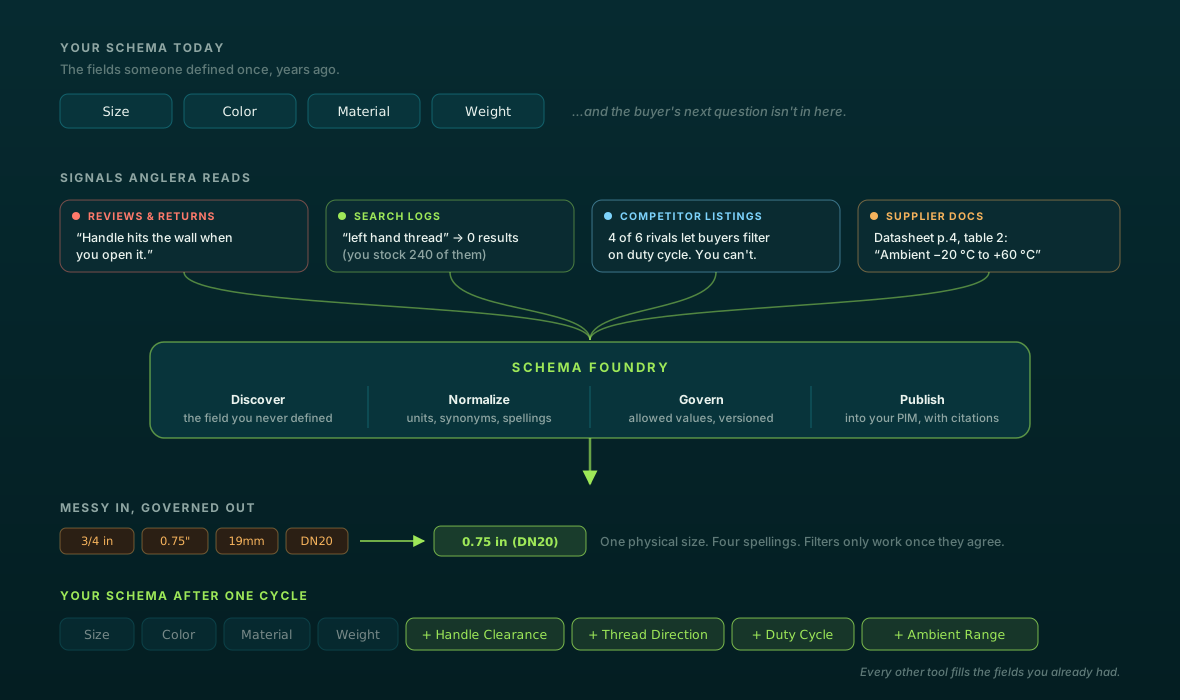
What neither platform does on its own is gather the raw inputs that make enrichment possible — competitor specs, buyer-search data, web content, supplier sheets — or automatically score completeness against what shoppers are actually searching for. That gap is what Anglera fills alongside whichever PIM you choose.
| Akeneo | Pimberly | Anglera | |
|---|---|---|---|
| Best-fit buyer | Mid-market to enterprise teams that need a mature, deeply configurable PIM with a broad integration ecosystem and are willing to invest accordingly. | Mid-market e-commerce and retail teams managing high SKU counts across multiple channels who want an all-in-one PIM + DAM without a full enterprise rollout. | Works alongside either. Anglera is the enrichment layer for product data teams who have chosen their PIM but still face incomplete, thin, or inconsistent attributes at scale. |
| Digital asset management (DAM) | DAM is available, but it is bundled into higher-tier plans. Teams on the Growth package may need a separate DAM solution or an upgrade. | DAM is included in the core platform. Product images, documents, and rich media are managed alongside structured data without an additional contract. | Anglera can pull existing assets from either platform, use them as enrichment inputs, and write enriched attribute data back — it does not replace the DAM but complements what is already stored there. |
| AI and enrichment features | Recently added AI-assisted enrichment that can suggest or auto-fill attribute values inside the PIM interface. Useful for content generation and translation at scale. | Focused on validation rules, workflow automation, and data completeness scoring. AI-driven content generation is not a primary differentiator of the platform. | Enrichment is Anglera's entire job. It gathers inputs from supplier data, web sources, and buyer signals; cleans and structures them; scores every SKU against what buyers are actually searching for; and writes the results back to the PIM automatically — in about 30 days. |
| Integration ecosystem | 250-plus integrations available through the Akeneo App Marketplace, spanning ERPs, e-commerce platforms, syndication services, and marketing tools. | Integrations are focused on the e-commerce and retail channel stack — major platforms and marketplaces — rather than a broad enterprise app marketplace. | Anglera connects to both PIMs via API to read product records and write enriched data back. It is not a middleware layer; it simply slots into whatever integration architecture is already in place. |
| Channel publishing and workflow | Strong multi-channel distribution with configurable completeness rules and collaboration workflows. Advanced workflow tooling is available on higher tiers. | Automated channel publishing is a core strength. Validation rules and publishing workflows are designed to handle high-volume, multi-channel operations with minimal manual intervention. | Anglera enriches records before they reach the publishing step — so whatever channel rules either PIM enforces, the incoming data is already more complete, consistent, and buyer-signal-aligned. |
| Analytics and reporting | PX Insights is a dedicated analytics layer that tracks how product content performs across channels — completeness trends, engagement data, and conversion signals. | Reporting focuses on data quality metrics, completeness scores, and publishing status. Channel-level performance analytics are not a primary native feature. | Anglera scores every SKU against buyer signals as part of enrichment, giving teams a continuous signal of where data gaps are hurting discoverability — independently of whichever PIM's reporting layer is in use. |
| Starting price (published) | From approximately $45,000 per year (Growth package). Sales conversation required; no self-serve pricing. | From approximately $30,000 per year; custom pricing based on SKU volume and channel count. Not publicly listed as fixed tiers. | Priced separately and works alongside either platform. Contact Anglera for details — implementation takes roughly 30 days regardless of which PIM is underneath. |
How to choose between Akeneo and Pimberly
Choose Akeneo if:
- Your catalog spans dozens of locales or brands and you need the depth of a mature, highly configurable platform.
- You want a large integration ecosystem and can afford the starting cost of $45K/year or above.
- Product experience analytics (PX Insights) and advanced collaboration workflows are priorities.
- You are an enterprise team that expects a longer, more involved implementation and wants a PIM that can scale with that complexity.
Choose Pimberly if:
- You are a mid-market retailer or e-commerce operator with a large SKU count and a hard need for built-in DAM alongside PIM — without paying for a separate DAM contract.
- Your primary challenge is getting clean, complete product records published across multiple sales channels quickly and reliably.
- You want a lower starting price point and a platform scoped to your actual use case rather than a tool built to handle far more complexity than you need today.
- Your team is smaller and wants strong out-of-the-box publishing automation without heavy configuration overhead.
Where neither platform wins on its own: Both tools assume you have good incoming product data. If your catalog is full of thin supplier sheets, missing attributes, inconsistent formatting, or content that does not reflect what buyers are searching for, neither Akeneo nor Pimberly solves that problem automatically. That is the Anglera use case.
Whichever you pick, the data still has to get done
Akeneo and Pimberly are both systems of record. They store, govern, and distribute the product data you put into them. What they are not — by design — is enrichment engines. They do not crawl supplier portals, pull competitor specifications, surface buyer-search signals, or automatically score every SKU against what your customers are actually typing into search bars.
Anglera sits upstream of both. It collects raw inputs from the web, your suppliers, and buyer-signal data; cleans and structures them into attributes; scores every record for completeness against real demand signals; and then writes the enriched data back directly into your PIM — whether that is Akeneo or Pimberly. Implementation takes about 30 days. Your PIM remains the system of record; Anglera is the process that keeps it populated with data worth storing.
The decision between Akeneo and Pimberly is real and worth making carefully. But either way, the product data sitting in that PIM is only as good as the enrichment work that fed it. Anglera does that work so your team does not have to do it manually, and so your PIM becomes the authoritative, buyer-signal-aligned catalog it was always meant to be.
Frequently asked questions
Can Pimberly replace Akeneo for an enterprise team?
For most enterprise needs, no — not directly. Pimberly is purpose-built for mid-market e-commerce and retail and lacks the deep configurability, locale support, and integration breadth that large enterprise catalogs typically require. If you are an enterprise team, Akeneo's additional tiers and ecosystem are likely worth the price difference. If you are mid-market and the Akeneo feature set is more than you need, Pimberly is a credible, lower-cost alternative.
Does Akeneo include a DAM?
Akeneo includes digital asset management features, but they are bundled into higher-tier plans. If DAM is a hard requirement and you are evaluating the Growth package, confirm what is included before signing. Pimberly includes DAM in its core platform regardless of tier.
Do Akeneo or Pimberly handle data enrichment automatically?
Akeneo has added AI-assisted enrichment tools that can suggest or generate attribute content inside the PIM. Pimberly focuses more on validation and workflow automation. Neither platform is designed to gather enrichment inputs from external sources — supplier portals, the web, competitor data, or buyer-search signals — on its own. Anglera handles that layer and writes the results back to whichever PIM you are using.
How does Anglera work with an existing Akeneo or Pimberly implementation?
Anglera connects to your PIM via API, reads your current product records, runs enrichment against external sources and buyer signals, and writes structured attribute data back into your existing catalog. It does not require you to change your PIM, your taxonomy, or your downstream channel setup. Most teams are live in about 30 days.
Which platform is cheaper — Akeneo or Pimberly?
Pimberly's published starting point is approximately $30,000 per year; Akeneo starts at approximately $45,000 per year. Both require a sales conversation and both price on factors like SKU volume, users, and channels, so actual contract values can differ significantly from published starting figures. Total cost of ownership should factor in implementation effort, required integrations, and whether you need a separate DAM contract with Akeneo.