Channable vs Contentserv: Feed Syndication or Enterprise PXM?
These two tools solve fundamentally different problems. Channable is a feed management and syndication platform: it takes the product data you already have, applies rule-based transformations, and pushes it to 2,500+ marketplaces and ad channels in real time. Contentserv — now branded Centric PXM — is a system of record: an enterprise PIM/PXM suite that centralizes, governs, localizes, and distributes product data for large teams managing complex catalogs across markets and languages.
The comparison matters most when you are deciding which platform anchors your product data operations. Some teams run both simultaneously — Contentserv as the master record, Channable as the syndication layer downstream — and that architecture is legitimate. But if your question is which one to build around, you are choosing between a feed-first distribution engine and a full enterprise content management suite. They are not interchangeable.
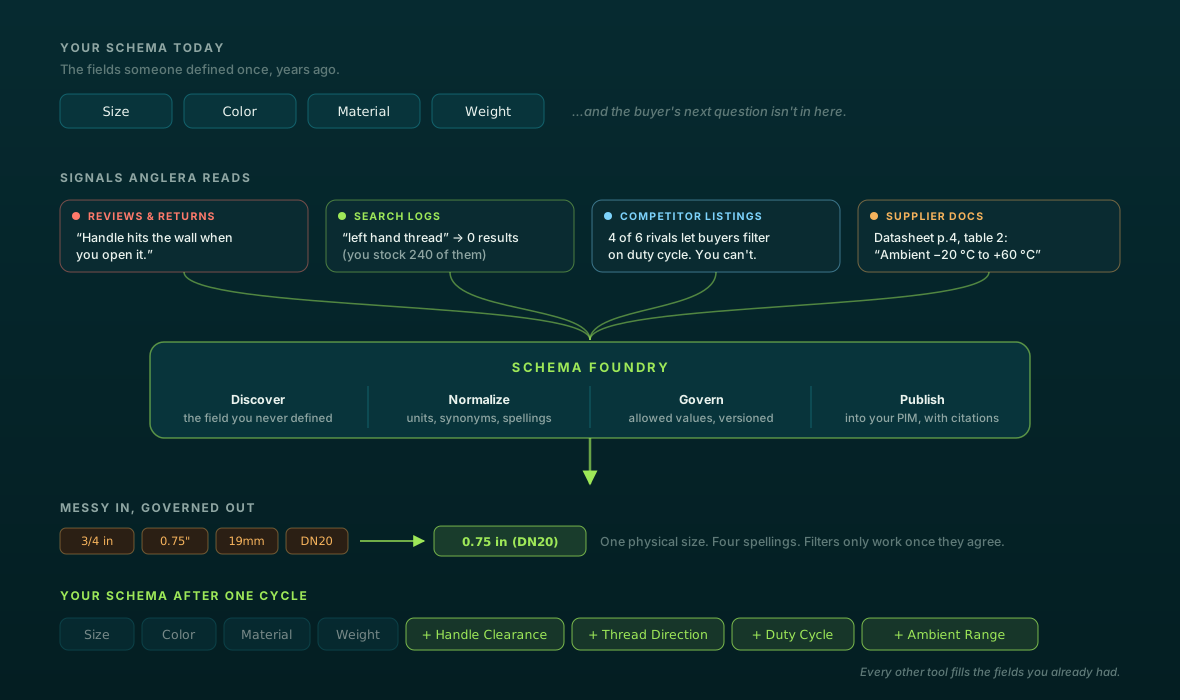
Neither platform, however, solves the upstream data quality problem. Channable will faithfully syndicate incomplete data. Contentserv will store it exactly as received from suppliers. The missing step — gathering, cleaning, enriching, and scoring raw product records before they reach either tool — is where Anglera operates, upstream of both.
| Channable | Contentserv | Anglera | |
|---|---|---|---|
| Core function | Feed management and channel syndication. Transforms catalog data into channel-specific formats and syncs listings in real time across 2,500+ marketplaces and ad networks using rule-based (if/then) logic. | Enterprise PIM/PXM — the system of record for product information. Covers data modeling, governance, DAM, workflow approvals, localization, syndication, and digital shelf analytics in a single suite. | Enriches raw or incomplete product data before it reaches either platform — filling missing attributes, cleaning copy, scoring completeness — so Channable feeds and Contentserv records start from a higher baseline. |
| Channel reach and syndication | 2,500+ direct integrations to shopping engines, marketplaces, and ad networks (Google Shopping, Meta, Amazon, bol.com, and others). Real-time inventory and price sync; marketplace order management available as an add-on. | 1,000+ channel connectors via built-in syndication and digital shelf analytics. Emphasis is on brand consistency and performance visibility rather than raw channel volume. | Not a syndication tool. Anglera writes enriched data back to the source — PIM, ERP, or flat file — so whatever channel Channable or Contentserv distributes to receives complete, accurate records. |
| Data governance and PIM capability | No PIM, no taxonomy management, no master data governance. Rule-based transformations can rename or concatenate fields, but Channable assumes the data already exists and is reasonably structured. You bring the data; Channable routes it. | Full enterprise PIM governance: attribute modeling, validation rules, multi-step approval workflows, versioning, role-based access, and native multi-language support. Designed for teams with formal data stewardship requirements. | Adds an enrichment and completeness-scoring layer on top of governance. Automatically identifies gaps, enriches missing attributes, and flags records below threshold before they enter Contentserv or flow downstream through Channable. |
| Digital asset management (DAM) | No built-in DAM. Feeds reference image URLs hosted elsewhere; basic cropping or resizing is not a core capability. Asset management must happen in an external system before Channable picks up the feed. | Built-in DAM with asset linking, rendition management, and media directly associated to product records. Particularly relevant for fashion, lifestyle, and luxury brands where hero images and lifestyle shots are high-stakes. | Audits existing assets against channel requirements (flags missing hero images, checks resolution thresholds, identifies SKUs with no media) but is not a DAM. Works alongside whatever DAM is already in the stack. |
| Pricing and transparency | Transparent, accessible pricing. Core plan starts at approximately €59/month for 5,000 items. AI features, PPC automation, repricing, and individual marketplace integrations are separate add-ons at €30–71/month each. | No public pricing. Subscription-based with Starter, Professional, and Enterprise tiers; a direct quote is required. Cost varies by modules selected, user count, and data volume — typical of enterprise software in this category. | Per-SKU enrichment model; pricing scales with catalog size and is available without a sales call. No implementation fee for standard PIM and ERP connectors. |
| Implementation timeline | Fast. Most merchants connect a product feed and go live within days to a few weeks. The rule engine is self-service and the learning curve is manageable for e-commerce operators. | Enterprise-grade. Typical implementations run several months depending on data model complexity, number of integrations, localization scope, and user onboarding. Expect a structured rollout with a services partner. | Approximately 30 days from kickoff to enrichment running in production, regardless of which platform it feeds into. First enrichment pass typically surfaces completeness gaps that were previously invisible. |
| Best-fit company profile | E-commerce merchants, retailers, and agencies managing product feeds across many channels — particularly SMB to mid-market brands where speed to channel matters more than enterprise data governance or deep content management. | Enterprise manufacturers, brands, and retailers in fashion, lifestyle, consumer goods, or luxury — where rich media, localization, structured governance, and digital shelf performance all matter at scale. | Any company whose raw product data arrives incomplete from suppliers or internal systems — which covers nearly every B2B distributor, retailer, and manufacturer regardless of which platform anchors their stack. |
How to choose between Channable and Contentserv
Choose Channable if your primary bottleneck is distribution, not data governance. If you have product data in reasonable shape and need to push it across a large number of channels quickly, Channable's rule engine and channel library are hard to beat at its price point. It is built for operators who want to manage feeds, not manage a data model. Mid-market e-commerce teams, agencies running feeds for multiple clients, and retailers who already have a working PIM or ERP feeding clean data are the natural fit.
Choose Contentserv if you need a system of record, not just a distribution engine. The right buyer is an enterprise team managing product data across multiple markets, languages, and content teams — with formal approval workflows, rich media requirements, and governance or brand standards that need to be enforced at the data layer. Contentserv is a longer and more expensive commitment than Channable, but it is solving a structurally larger problem. If you are in fashion, luxury goods, or consumer products where localized content and digital shelf performance are business-critical, the investment is justified.
Use both if your architecture calls for it. Running Contentserv as the PIM master record and Channable as the feed syndication layer downstream is a valid and common configuration — they are not competing for the same job in that setup.
Do not expect either tool to fix upstream data quality. If your supplier data is incomplete, your feeds and your PIM records will reflect that. The feed will look polished, or the governance workflows will run, but the underlying attribute gaps will travel through either platform unchanged.
Whichever you pick, the data still has to get done
Whichever platform a buyer chooses, the same upstream problem remains unsolved: product data arriving from suppliers, ERPs, or legacy systems is routinely incomplete, inconsistently formatted, and missing the attributes that both channel algorithms and buyers actually need to make a purchase decision.
Channable will faithfully syndicate whatever it receives — gaps included. Contentserv will govern and distribute the data precisely as stored. Neither tool sources missing specifications, rewrites weak product copy, fills blank attribute fields, or scores records against what buyers in a given category are actually searching for.
Anglera sits upstream of both. It connects to your existing source of truth — Contentserv, an ERP, a flat-file catalog, or a legacy PIM — reads every SKU, enriches missing attributes using buyer signals and category intelligence, cleans and standardizes copy, and writes the completed data back to that same source. After Anglera runs, Channable has cleaner feeds to syndicate and Contentserv has better records to govern.
The implementation is approximately 30 days, which means Anglera is enriching in production before most Contentserv rollouts reach their midpoint. For Channable customers, it means the first channel push reflects complete data rather than whatever the supplier originally sent. The choice between Channable and Contentserv determines where the data lives and how it is distributed — Anglera determines whether it is worth distributing in the first place.
Frequently asked questions
Can Channable and Contentserv be used together in the same stack?
Yes, and this is a common architecture. Contentserv functions as the PIM system of record — modeling, governing, and localizing product data — while Channable handles feed transformation and syndication downstream. They are targeting different jobs and are not mutually exclusive.
Does Channable do anything to improve data quality, or does it only handle distribution?
Channable's rules engine can perform transformations — concatenating fields, applying conditional overrides, mapping values to channel-specific formats — but it is not a data quality or enrichment tool. It transforms and routes the data you provide. It does not source missing attributes, assess completeness, or improve records that arrived incomplete from a supplier.
Is Contentserv the right fit for a mid-market retailer, or is it over-engineered?
For most mid-market retailers, Contentserv is likely over-engineered and over-priced. It is built for enterprise teams with complex governance requirements, multi-market localization, and rich media management at scale. Mid-market teams often find more accessible PIM options better suited to their catalog complexity and budget, unless they are in a sector — fashion, luxury goods — where that complexity genuinely exists at their size.
Where does Anglera write enriched data back to — and does that disrupt the existing workflow?
Anglera connects to your existing source of truth, whether that is Contentserv, an ERP, a product database, or a flat-file catalog, and writes enriched fields back to the same location. Downstream tools — Channable, any other syndication layer — continue pulling from the same source they already use. No workflow changes are required on the distribution side.
What does Anglera actually enrich that these platforms do not handle themselves?
Anglera fills the gap between raw supplier data and channel-ready records: sourcing missing attribute values (dimensions, materials, compatibility, certifications), standardizing inconsistent formatting, rewriting thin or duplicate product copy, and scoring each SKU against a completeness threshold tuned to buyer search behavior in that category. Both Channable and Contentserv assume this work has already happened.