Contentserv vs Productsup: PIM/PXM vs Syndication — A Practical Comparison
Contentserv (now branded Centric PXM) and Productsup are often mentioned in the same product data conversation, but they solve different problems. Contentserv is a PIM/PXM — a system of record that centralizes product information, digital assets, governance workflows, and localized content so teams can manage what goes out. Productsup is a syndication and feed management engine — it ingests data from any source, applies transformation rules, and pushes channel-ready feeds to 2,500+ destinations including Amazon, Google, and retail data pools.
The two tools are more complementary than competitive. Many enterprise stacks run Contentserv as the governed source of truth and Productsup pulling from it to reach channels at scale. Where they overlap — basic syndication from a PIM — the choice depends on how many channels you need and how much transformation logic is involved.
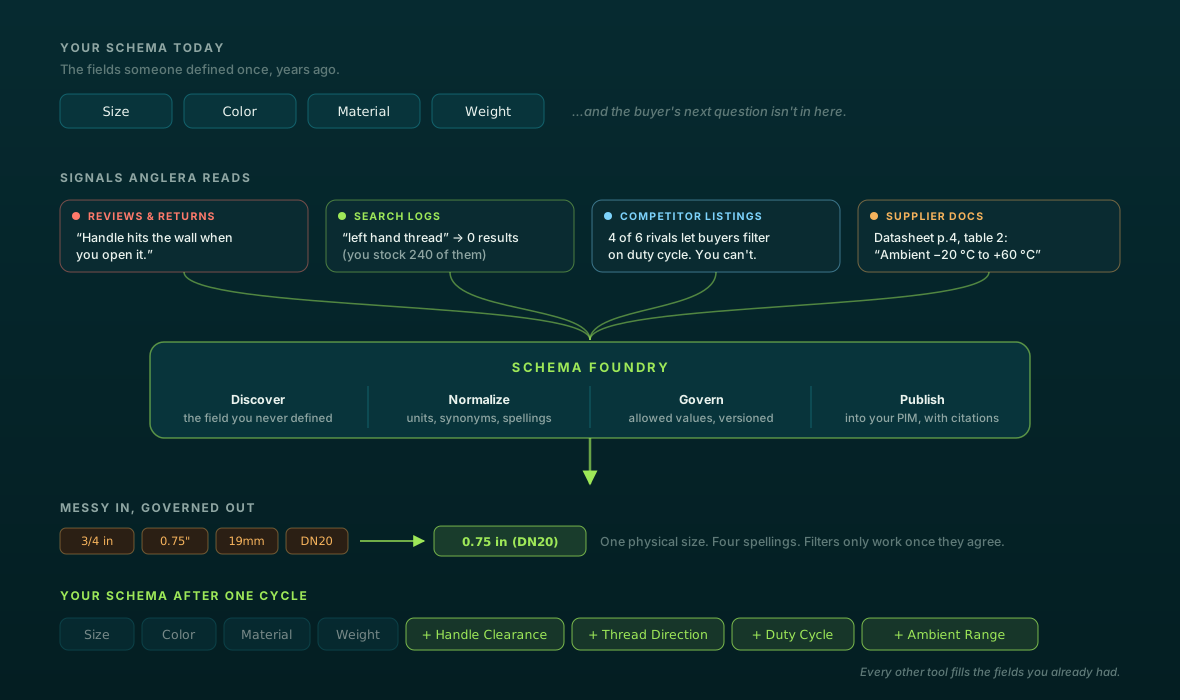
What neither tool does is enrich product data. Both assume the underlying attributes are already accurate, complete, and channel-ready. For teams where that assumption holds, the comparison below will help you decide which platform fits your layer. For teams where the data is incomplete before it ever reaches either system, scroll to the bottom — that is where Anglera fits.
| Contentserv | Productsup | Anglera | |
|---|---|---|---|
| Primary role | PIM/PXM system of record. Contentserv centralizes product information, digital assets, content governance, and localization in one platform — the place where product data is created, approved, and maintained. | Channel distribution engine. Productsup ingests data from upstream sources, applies rule-based transformation, and pushes channel-optimized feeds to 2,500+ destinations with minimal manual mapping. | Neither governs nor distributes. Anglera enriches product data before it enters either system — sourcing missing attributes, cleaning values, and scoring completeness so the data that reaches Contentserv or Productsup is already fit for purpose. |
| Channel reach | 1,000+ channel connectors, with emphasis on structured, localized syndication from a governed source of truth. Strong for brands that need consistent content across regions. | 2,500+ channel connectors, built for breadth and speed. Covers Amazon, Google, Meta, retail data pools, and long-tail marketplaces that purpose-built syndication tools often miss. | Channel-agnostic. Anglera writes enriched data back to the PIM or feed source, so every downstream channel — whether reached via Contentserv or Productsup — automatically gets better content. |
| Digital Asset Management | Native DAM included. Images, videos, and documents are managed alongside product data in the same platform, with asset linking, variant management, and rights tracking. | No native DAM. Productsup focuses on data fields and feed logic; assets must be managed and linked in an upstream system before Productsup processes them. | Anglera can identify missing or low-quality assets via web crawl and buyer-signal analysis, then associate them with the correct SKU and write references back to the system of record. |
| Data governance and workflows | Strong governance is a core differentiator — role-based access, approval workflows, completeness scoring, localization status, and audit trails are built into the platform. | Rule-based transformation and automation are the focus. Governance (ownership, approval chains, completeness thresholds) is not the core use case and is typically handled upstream. | Adds an enrichment scoring layer on top of existing governance. Anglera flags which attributes are missing, stale, or misaligned with channel requirements before data leaves the PIM — so completeness scores reflect reality. |
| Product data enrichment | Does not enrich data. Contentserv manages and governs what teams and suppliers provide, but does not source or generate missing attributes. | Does not enrich data. Productsup maps and transforms existing fields for channel requirements, but assumes the data is already complete before it arrives. | Enrichment is the entire job. Anglera researches, generates, cleans, and scores product attributes at scale — then writes them back to Contentserv or the feed source Productsup pulls from. |
| Best-fit vertical and buyer | Fashion, lifestyle, consumer goods, and luxury brands where rich media, localized content, and a governed single source of truth are non-negotiable. Also used in manufacturing and retail for complex catalog management. | Brands, manufacturers, and large retailers — including L'Oreal, ALDI, and PUMA — that need to push high-volume product feeds to many channels with complex transformation requirements and minimal manual intervention. | Any company with incomplete or inconsistent product data, regardless of vertical or which platform they run. Enrichment is a prerequisite for both good governance and good channel performance. |
| Pricing | Subscription-based with Starter, Professional, and Enterprise tiers. Pricing is not publicly disclosed; costs vary by modules selected, user count, and data volume. Requires a direct quote. | Custom enterprise pricing only. No public tiers. Quote required via sales. Typically scoped around data volume, channel count, and transformation complexity. | Pricing scales with SKU volume and enrichment complexity. Implementation takes approximately 30 days and does not require replacing any existing tooling. |
How to choose between Contentserv and Productsup
Choose Contentserv if your primary problem is governing product data.
You need a single source of truth — a place where product information is created, approved, localized, and maintained before it goes anywhere. You have rich media requirements (images, videos, documents) that need to live alongside the data. You operate across regions with localization complexity, and you need role-based workflows and audit trails to manage who changes what. Fashion, lifestyle, luxury, and consumer goods companies with large catalogs and demanding content standards are Contentserv's core audience.
Choose Productsup if your primary problem is distribution.
Your data is reasonably complete but you need to reach a large number of channels — including Amazon, Google Shopping, Meta, and retail data pools — with channel-specific transformation rules and minimal manual rework. You are processing high volumes and need the breadth and automation that a purpose-built syndication engine provides. Productsup's 2,500+ connectors and rule-based transformation layer are built for this; a PIM's built-in syndication typically is not.
If you are choosing between them because of budget, not function, reconsider the framing.
These tools are not direct substitutes. Contentserv without a distribution layer means you still need to get data to channels. Productsup without a system of record means you still need something upstream to govern what it distributes. Many mature product data stacks run both. If budget forces a choice, prioritize the layer where your pain is worst: governance and content management (Contentserv) or channel reach and feed automation (Productsup).
Whichever you pick, the data still has to get done
Neither Contentserv nor Productsup enriches product data. Contentserv governs what your team and suppliers provide; Productsup distributes what Contentserv — or another upstream source — holds. Both platforms make the same assumption: the product data coming in is already accurate, complete, and ready. For most teams managing large catalogs, that assumption is wrong.
Missing attributes, inconsistent values, supplier-provided content that does not meet channel requirements, and SKUs that were never properly described in the first place — these problems exist before the data reaches either platform. Contentserv's completeness scores reflect the gaps; Productsup's feeds distribute them.
Anglera runs upstream of both. It researches and generates missing product attributes, cleans inconsistent values, scores completeness against buyer signals and channel requirements, and writes the enriched data back to the system of record — whether that is Contentserv or the source Productsup pulls from. The result is better governance scores in Contentserv, better channel performance from Productsup feeds, and fewer manual corrections by your team in between.
Implementation takes approximately 30 days. Anglera does not replace your PIM. It does not replace your syndication layer. It does the enrichment work that both platforms assume has already happened — and it does it at the SKU level, at scale, continuously.
Frequently asked questions
Can Contentserv and Productsup be used together?
Yes, and many enterprise teams do exactly that. Contentserv serves as the PIM and system of record where product data is governed, localized, and approved. Productsup pulls from it and distributes to retail channels, marketplaces, and data pools at scale. The two tools serve different layers of the stack and are not mutually exclusive.
Does Contentserv replace a syndication tool like Productsup?
Partially, but not fully. Contentserv includes 1,000+ channel connectors and handles structured syndication for many use cases. Productsup's advantage is breadth — 2,500+ connectors — and a rule-based transformation engine purpose-built for complex feed requirements at high volume. If you are feeding a large number of channels with channel-specific data transformations, Productsup is likely the stronger tool for that layer.
Does either platform enrich product data automatically?
No. Both Contentserv and Productsup assume the data you put in is already complete and accurate. Contentserv provides tools to measure and govern completeness; Productsup provides tools to transform and distribute what exists. Neither sources, generates, or cleans missing attributes. That gap is what Anglera fills.
What does Anglera do that Contentserv and Productsup do not?
Anglera researches and generates missing product attributes, cleans inconsistent or supplier-provided values, and scores completeness against buyer signals and channel requirements — then writes the enriched data back to the source. It is the work that has to happen before a PIM can govern the data or a syndication tool can distribute it effectively.
How long does it take to add Anglera to an existing Contentserv or Productsup stack?
Approximately 30 days. Anglera integrates with your existing system of record and writes enriched data back without replacing any existing tooling. There is no PIM migration and no change to your channel distribution setup.