Contentserv vs Sales Layer: Which PIM Fits Your Catalog?
Contentserv and Sales Layer are both PIMs — they centralize, govern, and distribute product content to channels. But they're aimed at different buyers, and the differences between them are real enough to affect which one actually fits your team.\n\nContentserv (now rebranded Centric PXM) is a full enterprise suite: PIM, DAM, syndication, and digital shelf analytics in one platform. Its strongest footprint is in fashion, luxury, lifestyle, and consumer goods — categories where teams manage rich media and localized content as part of the same daily workflow, and where brand consistency across dozens of markets is a core operational requirement. The appeal is one vendor covering the whole stack.\n\nSales Layer is built for B2B supply chains. Manufacturers, distributors, and retailers who need to centralize structured product data from multiple suppliers, validate it, and push it to channels are the explicit target. The platform has a dedicated Supplier Portal, a 30-day free trial, a published starting price of about $1,000/month, and an onboarding target of six weeks. Those things together are unusual for a PIM. What both platforms share: they store and organize whatever product data you load into them, then distribute it. If supplier data arrives as thin spec sheets with inconsistent attributes, both will manage and syndicate those thin specs without fixing them.
| Contentserv | Sales Layer | Anglera | |
|---|---|---|---|
| Primary orientation | All-in-one enterprise PXM suite — PIM, DAM, syndication, and digital shelf analytics under one roof; strongest in fashion, luxury, lifestyle, and consumer goods where rich media and localized brand experience are central requirements | Cloud PIM for B2B supply chains — built for manufacturers, distributors, and retailers centralizing structured product data from multiple suppliers and distributing to channels and trading partners | Enrichment layer — not a PIM or syndication platform; reads from whichever PIM is the system of record, enriches every SKU against buyer signals, and writes results back |
| Native DAM and digital shelf analytics | Native DAM tightly integrated with PIM workflows; digital shelf analytics built into the suite for monitoring content performance post-distribution | Manages digital assets attached to product records; no dedicated DAM system and no built-in digital shelf analytics | Does not manage digital assets or analytics; enriches product attributes, descriptions, and copy so the content performs better before it reaches the shelf |
| Supplier onboarding | Enterprise supplier collaboration tools available; configuration required; suited to large, complex supplier networks in enterprise deployments | Dedicated Supplier Portal as a core out-of-the-box feature; designed for B2B companies onboarding product data from multiple suppliers without custom configuration | Does not manage supplier relationships; enriches product data after collection and writes improved content back to the PIM record |
| Implementation speed and trial access | Enterprise implementation timeline; no public onboarding estimate; DAM workflows, localization structures, and channel configurations extend setup; no self-serve trial | Published 6-week onboarding target; 30-day free trial available — lets you test with real data before signing; designed for faster time to value than enterprise PIM alternatives | ~30 days from kickoff to enriched SKUs written back to the PIM; no platform migration; works alongside whichever PIM you choose |
| Pricing transparency | No public pricing; Starter, Professional, and Enterprise tiers all require a direct quote; cost varies by modules, users, and data volume | Published starting price of ~$1,000/month; custom quotes for larger plans; free trial lowers evaluation risk before a purchasing conversation | Priced per SKU enriched; layers onto your existing PIM investment rather than replacing it |
| Channel syndication | Claims 1,000+ channel integrations covering e-commerce, retail, print, and marketplace platforms; syndication and digital shelf analytics included in the suite | Multi-channel syndication to channels, marketplaces, and retailer portals; B2B supply chain distribution is the primary design focus | Does not syndicate; enriches the product content that Contentserv or Sales Layer then distributes downstream |
| Enrichment capability | AI-assisted description generation and completeness validation using data already in the platform; rules-based workflows with team review; AI-assisted copywriting cited as reducing manual copy time | AI features for validation and workflow automation; marketed as an "agentic PIM"; enrichment works on structured data already loaded into the system; flagging gaps rather than autonomously filling them | Enrichment driven by real buyer signals — how buyers search, compare, and decide — not reformatted supplier copy; writes completed attributes and copy back to the PIM without requiring a copywriter in the loop |
How to choose between Contentserv and Sales Layer
Choose Contentserv if your catalog is rich-media-heavy and your teams manage creative assets alongside product data as part of the same daily workflow. Contentserv's native DAM, localization capabilities, and unified PXM suite are built for fashion, luxury, lifestyle, and consumer goods companies where brand consistency across assets, markets, and channels is a core operational requirement. If you need a single vendor covering PIM, DAM, syndication, and digital shelf analytics without integration work between separate tools, that unified model has real appeal. Plan for an enterprise sales cycle and implementation measured in months, not weeks.\n\nChoose Sales Layer if you are a B2B manufacturer, distributor, or retailer who needs a practical cloud PIM with fast time to value and a Supplier Portal that works without heavy configuration. The 30-day free trial and ~$1,000/month published starting price mean you can evaluate the platform with real data before committing — a meaningful advantage over vendors who require a formal sales engagement before you see the product. If centralizing supplier data and syndicating product content to your B2B channels is the core problem, Sales Layer is built for that workflow and gets there faster than most alternatives in this space.\n\nA few signals that clarify the choice:\n- If managing large volumes of creative assets inside the same platform is a core workflow requirement, Contentserv's native DAM is a real differentiator — Sales Layer handles asset attachments but isn't a DAM.\n- If you need to be live in weeks rather than months and want to test the platform before signing, Sales Layer's onboarding story and free trial are more credible.\n- If your catalog is in fashion, luxury, or lifestyle and localized content management across markets is a primary metric, Contentserv has more depth and more references in those verticals.\n- If you're a mid-market B2B distributor or manufacturer and a Supplier Portal is on your requirements list, Sales Layer has it as a standard feature rather than an enterprise add-on.
Whichever you pick, the data still has to get done
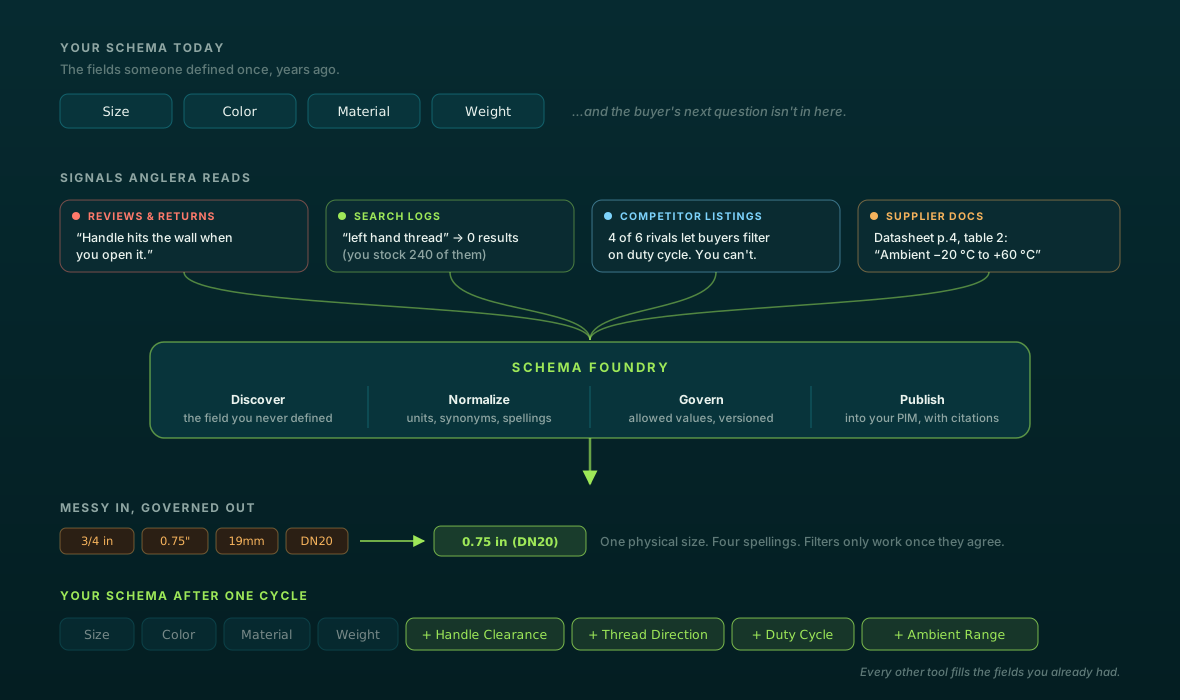
Both Contentserv and Sales Layer assume your product data arrives ready to publish. In practice, it doesn't. Supplier data comes as raw specs, thin descriptions, and attribute sets written for procurement — not for how buyers search and compare on a category page or digital shelf. Both platforms will organize, govern, and distribute whatever you load into them. If the inputs are incomplete, what goes out to channels is incomplete.\n\nAnglera is the layer that fixes the inputs. It connects to your Contentserv or Sales Layer instance via API, reads your existing SKUs, enriches every attribute and description against real buyer signals — the language buyers use when searching, filtering, and comparing products — and writes the improved content back to the same PIM record. No migration, no parallel system, no rip-and-replace. Your system of record stays in place. Whichever platform you pick, the content it governs and distributes becomes buyer-ready from the start, not just well-organized. Implementation is ~30 days.
Frequently asked questions
What is the main difference between Contentserv and Sales Layer?
Contentserv is an all-in-one enterprise PXM suite — PIM, DAM, syndication, and digital shelf analytics — with its deepest roots in fashion, luxury, lifestyle, and consumer goods. Sales Layer is a cloud PIM built explicitly for B2B supply chains, with a dedicated Supplier Portal, a 6-week onboarding target, and a published starting price. Contentserv covers more ground as a single platform; Sales Layer gets B2B manufacturers, distributors, and retailers live faster and at a lower entry cost.
Which is better for B2B manufacturers and distributors?
Sales Layer is built for that use case. Its Supplier Portal, B2B-focused syndication, and faster onboarding are core to the product design, not optional add-ons. Contentserv has enterprise capabilities that can serve B2B needs, but its design concentration is in rich media management, localization, and brand experience — which matters most in fashion and consumer goods, not in industrial or technical B2B catalogs.
Does Sales Layer include a DAM?
Not in the traditional sense. Sales Layer lets you attach digital assets — images, documents — to product records, but it doesn't include a dedicated digital asset management system with version control, rights management, or creative workflow features. Contentserv's native DAM is one of its main differentiators. If managing large volumes of creative assets inside the same platform is a core requirement, that's a real difference.
How does Anglera work with Contentserv or Sales Layer?
Anglera connects via API to your existing PIM, reads your SKUs, enriches every attribute and description against buyer signals — how your customers search, compare, and decide — and writes the improved content back to the same record. No migration, no parallel system to manage. It sits alongside Contentserv or Sales Layer and improves the content quality inside whichever platform you already use. Implementation is about 30 days.
Can I try Sales Layer before buying? What about Contentserv?
Sales Layer offers a 30-day free trial that lets you evaluate the platform with your actual data before signing anything. That's unusual in this space. Contentserv does not offer a self-serve trial — evaluation runs through a formal sales engagement. If you want to test the platform with real SKUs before committing to a contract, Sales Layer's trial is a practical advantage worth using.