Contentserv vs Syndigo: Which PXM Platform Fits Your Business?
Contentserv and Syndigo are both enterprise PXM platforms, but they approach the problem from different ends of the content supply chain. Contentserv — now branded Centric PXM — leads with content governance, localization depth, and digital shelf analytics, making it a natural fit for brands where rich media and market-specific content are core to the business. Syndigo leads with network scale: 2,500+ retail and GDSN recipients, and a compliance engine built around 23,000 unique retailer requirements, which became its clearest differentiator after absorbing 1WorldSync.
The practical choice comes down to what your buying criterion is. If you need a world-class system of record with tight control over how product content is authored, governed, and tracked through to conversion, Contentserv is the more content-centric option. If you need the broadest possible distribution footprint — particularly into major US and global retailers with strict data quality gates — Syndigo's network reach is difficult to match.
One thing both platforms share: neither enriches the product data itself. Both assume that content arrives complete, accurate, and structured before it enters the system. For most distributors, manufacturers, and retailers, that assumption is where the real work begins — and where Anglera fits regardless of which platform you choose.
| Contentserv | Syndigo | Anglera | |
|---|---|---|---|
| Platform type | All-in-one PXM suite: PIM, DAM, syndication, and digital shelf analytics in a single platform. Originated as a PIM and evolved toward full product experience management. | Content supply chain platform: PIM, DAM, MDM, and syndication built around the world's largest retail content network, expanded significantly through the acquisition of 1WorldSync. | Not a platform. An enrichment layer that gathers, cleans, and scores product attributes before they reach either system — then writes enriched records back as the source of record. |
| Syndication network reach | 1,000+ channels and retail endpoints. Strong for brands managing content across European and global markets. | 2,500+ retail and GDSN recipients globally — one of the largest content networks in the market. Post-1WorldSync scale is a clear differentiator for brands syndicating to major US retailers. | Enriches the content flowing through either network. More complete, accurate attributes mean fewer retailer rejections and fewer remediation cycles, regardless of which platform syndicates the content. |
| Retail compliance and validation | Governance workflows and content scoring, with rules configurable per channel. Compliance is managed through the platform's workflow engine rather than a pre-built library of retailer-specific rules. | 10,000 data validations and 23,000 unique retailer content requirements built into the platform. Compliance checking is a core product differentiator — content is validated against specific retailer specs before syndication fires. | Enriches and structures attributes upstream so content arrives at the validator already meeting specifications, reducing the remediation loops that slow syndication in both systems. |
| Industry vertical fit | Deep roots in fashion, lifestyle, consumer goods, and luxury — sectors where localized, media-rich content and complex attribute hierarchies matter most. DAM and digital shelf analytics are particularly well developed for these categories. | Strongest in CPG, grocery, food and beverage, and general retail brands pushing content to mass-market retailers. GDSN coverage makes it well suited for regulated categories that require standardized data pools. | Fits both verticals. Enriches whatever attribute set the category demands — whether that is fashion specs, care instructions, and colorways or nutrition facts, allergen data, and ingredient lists. |
| Data scope beyond PIM | Bundles DAM and digital shelf analytics alongside PIM. The digital shelf layer tracks how content performs at retail, closing the loop from creation to conversion — a capability not all PXM suites include. | Bundles DAM and MDM alongside PIM. The MDM layer extends content governance beyond marketing data to operational product data across the enterprise, which matters for manufacturers with complex internal data hierarchies. | Operates at the attribute level — filling gaps, reconciling inconsistencies across sources, and scoring completeness — then writes back to whichever system of record you designate. No impact on DAM or MDM workflows. |
| Pricing signal | Subscription-based with Starter, Professional, and Enterprise tiers. Pricing is not publicly disclosed and requires a direct quote based on modules selected, user count, and data volume. Tiered packaging gives mid-market buyers more scope flexibility. | Subscription-based, custom-quoted. No public tiers listed. Third-party estimates place TCO $10,000–$30,000 higher per year than smaller PIM alternatives for mid-market buyers — a meaningful signal if you do not need the full network. | Separate subscription, priced on data volume, that runs alongside either platform. Typically pays back in reduced content remediation costs and faster retailer onboarding rather than displacing budget from the PXM itself. |
| Implementation timeline | Enterprise-grade implementation. Timeline varies by scope, number of integrations, and data migration complexity — typically measured in months, not weeks. | Enterprise implementation with network onboarding. Timeline depends on the number of trading partner connections, compliance requirement mapping, and how much legacy 1WorldSync configuration is being migrated. | Approximately 30-day implementation, independent of the PXM timeline. Anglera can begin enriching product data while the primary platform implementation is still in progress, so the catalog is ready when syndication goes live. |
How to choose between Contentserv and Syndigo
Choose Contentserv if:
- Your catalog is media-heavy and your team manages complex, localized content across fashion, lifestyle, luxury, or consumer goods categories where attribute hierarchies and rich assets are central to the product story.
- You need digital shelf analytics natively inside your PXM — tracking how content performs at retail endpoints, not just whether it was delivered.
- Your syndication footprint is significant but not necessarily dominated by US mass-market retail; Contentserv's 1,000+ channel coverage handles most global distribution needs without paying for network you will not use.
- You want modular control over which components you activate — PIM, DAM, syndication, analytics — rather than a single bundled contract.
- Mid-market buyers who want tiered pricing options rather than a fully custom commercial negotiation will find Contentserv's packaging more legible.
Choose Syndigo if:
- You are a CPG brand, manufacturer, or distributor that needs to push content into major US grocery, mass, and specialty retailers at scale, and GDSN compliance is a hard requirement rather than a nice-to-have.
- The 10,000 data validations and 23,000 retailer-specific content requirements built into Syndigo's compliance engine would replace work your team currently does manually or outside the platform.
- You inherited trading relationships or data obligations from 1WorldSync and need continuity of those connections without re-contracting across dozens of retailer data pools.
- MDM is on your roadmap alongside PIM — Syndigo's acquisition history means operational product data governance is available within the same platform.
- Your primary evaluation criterion is breadth of retail reach, and you are prepared for a total cost of ownership that reflects that network investment.
Whichever you pick, the data still has to get done
Both Contentserv and Syndigo store and distribute product data. Neither one enriches it.
Each platform assumes that by the time a product record arrives in the system, someone has already gathered the missing attributes, resolved the inconsistencies between supplier feeds, normalized values against the right schema, and verified that the data will pass retailer validation. For most B2B distributors, manufacturers, and retailers, that assumption describes a gap in their current operation — not a solved problem.
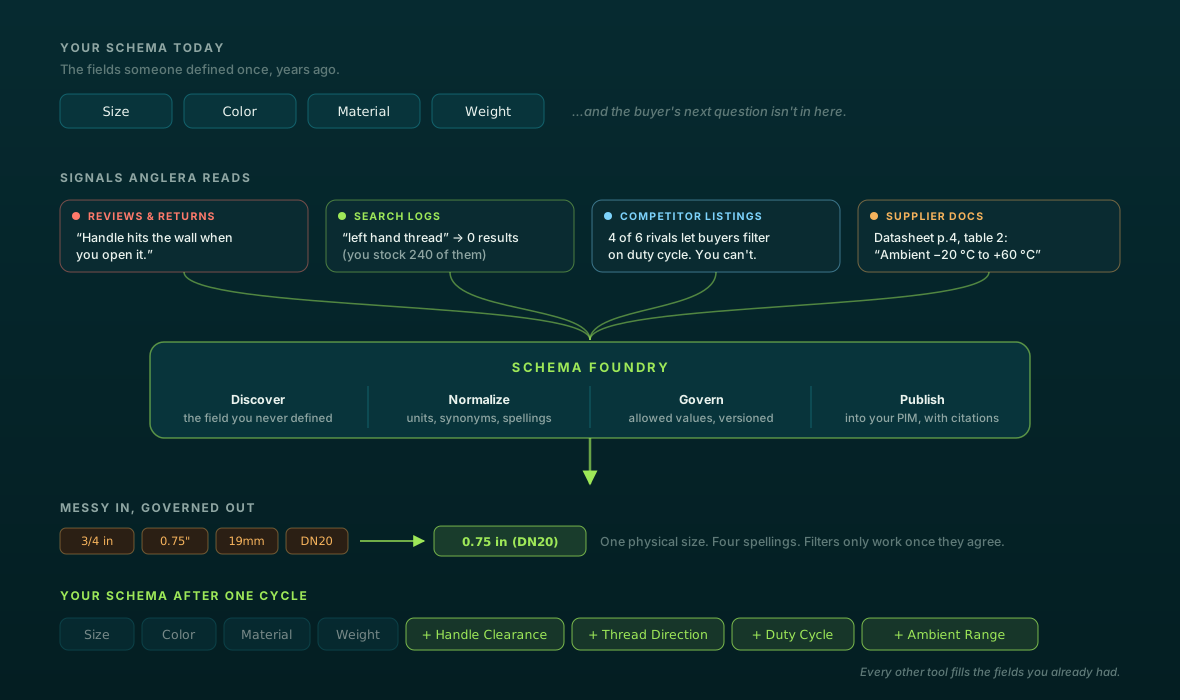
That is where Anglera fits. Anglera connects to your incoming data streams — supplier portals, manufacturer spec sheets, existing PIM exports, retailer feeds — and does the work the platform assumes already happened. It gathers missing attributes from supplier sites and the open web, cleans and normalizes values against your schema, and scores every SKU for completeness against the fields your channels actually require. Enriched records then write back to Contentserv or Syndigo as the system of record.
The practical result: content enters your PXM platform ready to pass validation and syndicate, rather than arriving as a remediation backlog. Compliance failures drop. Retailer onboarding cycles shorten. The teams managing content in Contentserv or Syndigo spend time on governance and strategy, not gap-filling.
Anglera implements in approximately 30 days and operates independently of the PXM timeline — meaning enrichment can be running before your Contentserv or Syndigo deployment is complete, so day one of syndication is not also day one of data cleanup.
Frequently asked questions
Is Contentserv or Syndigo better for a mid-market buyer?
Contentserv's tiered packaging — Starter through Enterprise — gives mid-market buyers more flexibility to scope the platform to their actual needs without purchasing the full suite. Syndigo's model is designed for scale, and third-party estimates suggest its total cost of ownership runs meaningfully higher for buyers who don't need its full retail network. If you're not syndicating to 50+ major retailers or managing GDSN compliance, you may be paying for network depth you won't use. Assess that honestly before signing.
Which platform has better GDSN support?
Syndigo, by a clear margin. After acquiring 1WorldSync, Syndigo operates one of the largest GDSN data pools in the world. If GDSN compliance is a primary requirement — particularly for food, grocery, or regulated categories where standardized data exchange is mandatory — Syndigo is the more purpose-built choice. Contentserv supports syndication broadly but does not carry the same GDSN infrastructure.
Can Anglera work with both Contentserv and Syndigo?
Yes. Anglera is not a PIM and does not compete with either platform. It enriches product attributes and writes them back to whichever system you designate as the source of record — whether that is Contentserv, Syndigo, or a different PIM entirely. The enrichment layer runs upstream of both platforms, so the choice of which PXM you use does not change how Anglera operates.
Does Contentserv include digital shelf analytics?
Yes. Digital shelf analytics is part of the Contentserv PXM suite, giving teams visibility into how product content performs at retail endpoints — not just whether it was delivered. This closes the loop between content creation and conversion, which is a meaningful differentiator over platforms that stop at syndication. Syndigo's analytics focus more on compliance tracking and content status across the network.
What is the biggest risk of choosing the wrong platform?
Over-buying network you don't need is the most common mistake with Syndigo for buyers outside the CPG and mass-market retail space — the TCO reflects the network investment whether or not you use its depth. With Contentserv, the risk is under-buying compliance tooling: if your primary pain point is retailer-specific validation at scale, Contentserv's configurable workflow approach requires more internal effort to maintain than Syndigo's pre-built rule library. Separately, both platforms assume clean incoming data. Poor data quality will surface as compliance failures regardless of which platform you choose — that problem needs to be solved upstream.