EnterWorks vs Feedonomics: Two Different Jobs, One Data Problem in Common
Comparing EnterWorks and Feedonomics directly is a category mismatch — and understanding that mismatch is the most useful thing this page can do for you. EnterWorks (now Precisely EnterWorks) is an enterprise PIM and MDM hub: it centralizes, structures, and governs product data as an internal single source of truth, with role-based workflows, business rules, and integrations to ERP and e-commerce systems. Feedonomics is a managed feed syndication platform: it transforms and distributes product data across 300-plus ad channels and marketplaces, with hands-on specialists handling setup, optimization, and ongoing error resolution.
One stores and governs product data. The other moves it to where buyers search. If your problem is fragmented, ungoverned, or duplicate product records across teams, EnterWorks addresses it. If your problem is getting existing product data to Google Shopping, Amazon, or Walmart in the right spec at scale, Feedonomics addresses it. Many mid-market and enterprise operations ultimately need both — and both assume that underlying product content is already complete and accurate before it arrives.
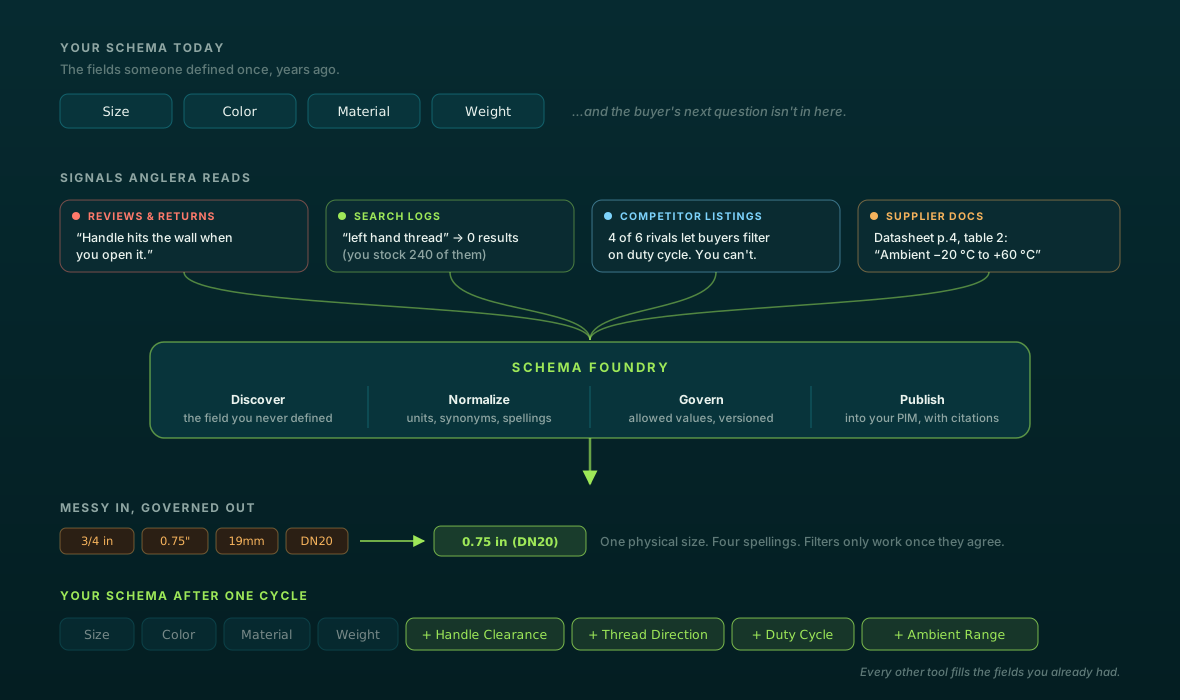
That assumption is where most catalogs break. Attributes are missing, descriptions are thin, specifications are inconsistent across SKUs. Neither EnterWorks nor Feedonomics fills those gaps — they govern or distribute whatever they receive. That shared blind spot is where the enrichment question matters, regardless of which platform you choose.
| EnterWorks | Feedonomics | Anglera | |
|---|---|---|---|
| Primary function | PIM/MDM/DAM hub — centralizes and governs product data as a structured single source of truth for ERP, e-commerce, and syndication systems. | Feed management and syndication — transforms and distributes product data across 300+ ad channels and marketplaces including Google Shopping, Amazon, and Walmart. | Enrichment layer — gathers, cleans, fills attribute gaps, scores completeness against buyer signals, and writes enriched data back to the source of truth. Works upstream of both. |
| Data governance and workflows | Role-based workflows, business rules, complex product relationships, and multi-team data stewardship. Built for organizations that need accountability and process around who edits what. | Feed-level transformation rules and error resolution managed by Feedonomics specialists. Not a governance layer — it does not structure or steward internal data. | Enrichment runs upstream of governance workflows. Product records arrive in the PIM already populated and scored, so stewardship teams are reviewing complete data rather than filling blanks. |
| Channel reach and distribution | Integrates with ERP, e-commerce platforms, and downstream syndication partners as a hub. Channel reach depends on what you connect to it. | 300+ ad channels and marketplaces with hands-on specialist management. Strongest where channel breadth and managed optimization are the priority. | Channel-agnostic. Anglera writes enriched data back to the source of truth, so every downstream channel — including Feedonomics destinations — benefits from more complete content. |
| Implementation model | Enterprise software deployment with significant implementation effort — typically months, involving IT, data stewardship teams, and systems integrators. Now part of the Precisely ecosystem. | Managed service: Feedonomics specialists handle setup, ongoing feed optimization, and error resolution. Faster time-to-first-distribution than a full PIM implementation. | Approximately 30-day implementation. Connects to the existing PIM, ERP, or data file and begins enriching and writing back without replacing current systems. |
| Pricing | Custom enterprise licensing, quote-based. Reported base around $150,000; scales with user count and implementation complexity. No free tier. | Custom quote only — varies by SKU count, number of channels, and service tier. No public pricing; no revenue-share model. | Custom pricing based on catalog size and enrichment scope. |
| Data enrichment capability | Provides structure and workflows for managing product data but does not enrich it. Attributes must arrive complete or be populated manually through internal processes. | Optimizes and transforms feed data for channel spec compliance and error reduction. Cannot generate missing product attributes or fill content gaps from external sources. | Core function. Automatically gathers, cleans, and enriches product attributes from manufacturer data, web sources, and existing assets — then scores completeness and writes back. |
| Ideal team and use case | Mid-market to enterprise manufacturers, distributors, and retailers with large, complex catalogs who need governed multi-team collaboration on product data as a strategic asset. | E-commerce and marketplace teams — often at retail brands or agencies — who need complete, specialist-managed distribution to performance channels at scale. | Any catalog team using either platform that has attribute gaps, thin descriptions, or inconsistent specifications and needs enrichment to flow automatically back to the source of truth. |
How to choose between EnterWorks and Feedonomics
Choose EnterWorks if your core problem is data governance at scale. You have a large, multi-category product catalog managed across multiple teams, brands, or divisions — and you need a structured system of record with workflows, business rules, and reliable integrations to ERP and e-commerce systems. EnterWorks is particularly well-suited to manufacturers, wholesale distributors, and large retailers (Orgill, US Foods, Johnstone Supply, and Fender are named customers) who require accountability around who edits product data and how changes flow downstream. If your problem is "our product data is fragmented, duplicated, or ungoverned," this is the category of tool to evaluate.
Choose Feedonomics if your core problem is channel distribution. Your product data exists, is reasonably complete, and your challenge is getting it to Google Shopping, Amazon, Walmart, and other performance channels in the right format with ongoing optimization and error management. Feedonomics fits e-commerce and marketplace teams that want managed, specialist-led feed operations rather than building and maintaining channel integrations themselves. If your problem is "our products aren't showing up correctly across ad channels and marketplaces," Feedonomics addresses that directly.
If you need both: EnterWorks as the governed source of truth feeding into Feedonomics as the distribution layer is a coherent architecture. Neither tool competes with the other for the same job. The gap both leave open is enrichment — the work of getting product attributes, descriptions, and specifications complete and accurate before data enters either system.
A word on scope: Feedonomics is purpose-built for B2C and retail e-commerce channel distribution. If you are a B2B distributor or manufacturer without a heavy ad-channel use case, Feedonomics may be more than you need. EnterWorks has stronger traction in B2B distribution and manufacturing catalogs where governance and ERP integration matter more than marketplace feed optimization.
Whichever you pick, the data still has to get done
Whichever platform you choose — or both — Anglera operates as the enrichment layer that neither replaces and neither includes.
EnterWorks governs what you put into it. Feedonomics distributes what you give it. Neither fills missing attributes, scores content completeness against buyer signals, or automatically gathers specification data from manufacturer sources, web assets, or existing files. That work happens before either platform adds value — and in most catalogs, it is the work that is either manual, inconsistent, or simply not happening.
Anglera connects to your existing source of truth: the PIM, an ERP export, a flat catalog file. It enriches every SKU, scores completeness, and writes the enriched data back — so EnterWorks has governed records that are already populated when they enter workflows, and Feedonomics has feed content that does not drop required attributes at channel submission or trigger specialist escalations for missing data.
Implementation runs in approximately 30 days and does not require replacing either platform. If you have EnterWorks today, Anglera feeds it better data to govern. If you have Feedonomics today, Anglera improves the upstream content before feeds are built. If you are evaluating both and have not solved enrichment yet, Anglera is the piece that makes either investment produce returns faster.
Frequently asked questions
Are EnterWorks and Feedonomics competitors?
No. They solve different problems. EnterWorks is a PIM and MDM that governs how product data is structured and stored internally. Feedonomics is a syndication platform that distributes product data to ad channels and marketplaces. A company could reasonably run both — EnterWorks as the governed source of truth, Feedonomics as the distribution layer.
Can Feedonomics replace a PIM like EnterWorks?
No. Feedonomics transforms and routes product data to channels; it does not provide internal governance, role-based workflows, business rules, or a system-of-record structure. If product data is ungoverned or incomplete going in, Feedonomics distributes those same problems to every channel it reaches.
Does EnterWorks enrich product content automatically?
No. EnterWorks provides the structure and workflows for managing product data, but enrichment is not part of its function. Missing or incomplete attributes must be populated manually by teams or through an external enrichment tool before governance workflows process them.
Where does Anglera fit if I already use EnterWorks?
Anglera connects to EnterWorks as an upstream enrichment layer. It reads product records, enriches missing attributes from external and manufacturer sources, scores completeness against buyer signals, and writes the enriched data back. Your existing workflows and governance processes stay intact; the data moving through them improves.
Where does Anglera fit if I already use Feedonomics?
Feedonomics optimizes the product data you supply but cannot generate missing attributes or fill content gaps. Anglera enriches the upstream source — the PIM, ERP, or catalog file — before feeds are built, so Feedonomics distributes more complete, channel-ready content and spends less specialist time resolving missing-attribute errors at submission.