Feedonomics vs Unilog CX1 / CIMM2: A Fair Comparison for B2B Buyers
Feedonomics and Unilog CX1 / CIMM2 are not direct competitors — they solve fundamentally different problems at different stages of the commerce stack. Feedonomics is a managed feed syndication platform: it takes your existing catalog data and distributes it to 300+ ad channels and marketplaces, with specialists handling optimization and error resolution on your behalf. Unilog CX1 is a B2B digital commerce suite for mid-market distributors and manufacturers: it bundles a storefront, a built-in PIM, a CMS, site search, and ERP integration into one platform, with optional managed content services to enrich and fill gaps in your traded-item catalog.
A buyer evaluating both tools is typically asking one of two questions. The first: which platform should anchor my B2B commerce stack? In that case, Unilog CX1 is the structured choice — it owns the storefront, catalog, and integration layer — while Feedonomics is a narrower add-on for multichannel distribution. The second: do I need a dedicated feed tool, a full eCommerce platform, or both? Distributors who sell through their own site and through Amazon or comparison channels may ultimately need both, since neither tool replaces the other.
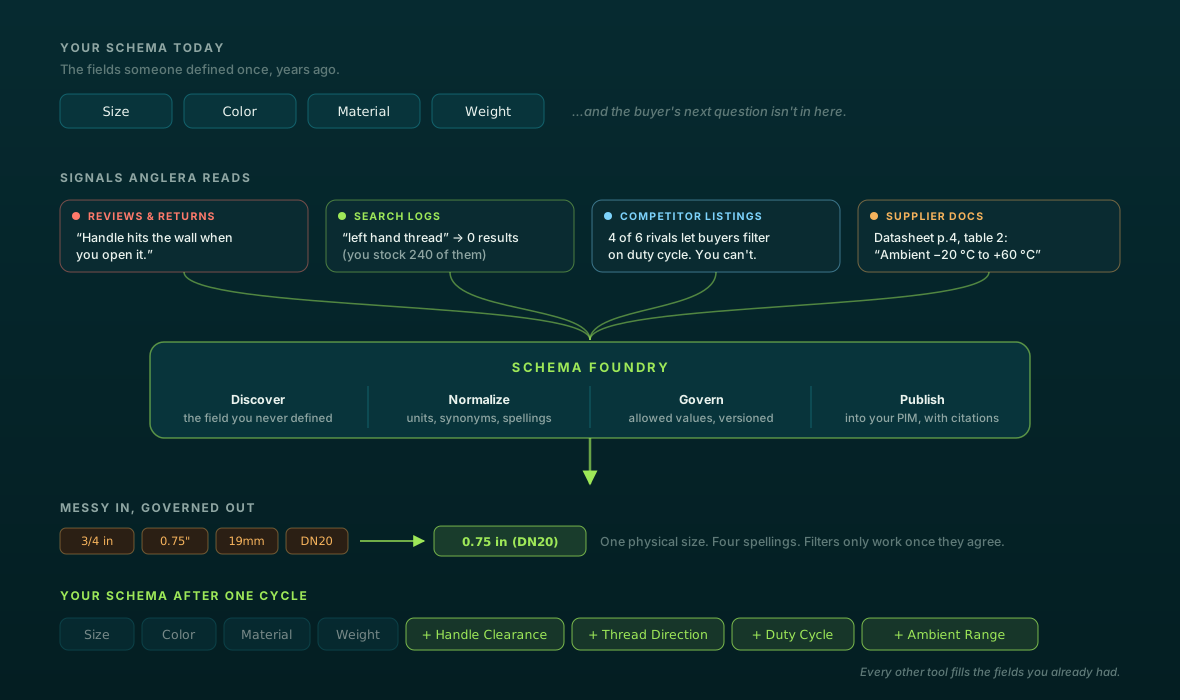
What both tools share is a dependency on clean, complete, attribute-rich product data. Feedonomics optimizes feeds around what you give it; Unilog's content subscriptions fill gaps from a library of ~2,000 manufacturers. Neither is a substitute for systematic enrichment at the SKU level — which is where Anglera fits.
| Feedonomics | Unilog CX1 / CIMM2 | Anglera | |
|---|---|---|---|
| Primary function | Feed management and multichannel syndication. Transforms, optimizes, and distributes product data to 300+ ad channels and marketplaces — Google Shopping, Amazon, Microsoft, Walmart, and more — via a managed-service model. | All-in-one B2B digital commerce suite. Bundles a storefront, built-in PIM, CMS, site search, and ERP/POS integration (CX1 Connect) into a single platform purpose-built for mid-market distributors and manufacturers. | Neither syndicates feeds nor runs a storefront. Anglera enriches and scores every SKU against buyer signals, then writes clean data back to your PIM — so whatever flows downstream to Feedonomics or Unilog is already high-quality. |
| Product data & PIM | Relies on your existing catalog as the data source. Feedonomics transforms and maps data to channel requirements but does not own or maintain your product master — catalog gaps flow directly into your feeds. | Includes a built-in PIM and a managed library of 10M+ SKUs from ~2,000 manufacturers, plus subscription-based enrichment, taxonomy, gap-fill, and normalization services. The library is strongest in electrical, industrial, plumbing, and HVAC. | Works with any source of truth — your standalone PIM, Unilog's built-in catalog, or an ERP export. Anglera reads, enriches, scores, and writes back without replacing the system you already use. |
| Catalog enrichment approach | Feed-level optimization for ad performance: title rewrites, attribute mapping, categorization, and ongoing error resolution by specialists. This is channel formatting and feed hygiene — not deep content enrichment at the attribute level. | Optional managed content subscriptions covering taxonomy, normalization, attribute gap-fill, and spec standardization. Depth and coverage depend on which manufacturers are in Unilog's library and what subscription tier you choose. | AI-driven enrichment at the SKU level — attributes, descriptions, compliance copy, spec normalization, and completeness scoring — based on what real buyers search and filter by. Runs before data reaches the feed or the storefront. |
| Distribution & channel reach | Core strength. 300+ destinations: paid search, comparison shopping engines, social commerce, and major marketplaces. Specialists continuously handle feed errors, suppression issues, and channel-specific optimization. | Built for B2B sales through your own storefront and ERP-integrated order flow. CX1 Connect handles ERP and POS sync. Broad multichannel ad distribution is not the platform's focus. | Not a distribution tool. Anglera ensures the data Feedonomics distributes — or that Unilog serves in search and category pages — is complete, accurate, and buyer-signal-optimized before it leaves the catalog. |
| B2B commerce storefront | No storefront. Feedonomics distributes to channels but does not provide a buying experience. It assumes you already have an eCommerce site or platform. | Full B2B storefront included — account-based pricing, branch and location support, punchout, quote workflows, and customer-specific catalogs designed for distributor selling motions. | No storefront. Works behind the scenes to improve the content that your storefront — Unilog's or another — displays to buyers searching and filtering your catalog. |
| Implementation & service model | Weeks to initial feeds live. Feed specialists own setup, ongoing optimization, and error resolution, reducing internal burden. Custom pricing only; no public rates, no revenue share. | Multi-month B2B eCommerce implementation — storefront build, ERP integration, catalog migration, and content onboarding. Subscription plus optional content services; real deployments scale in cost with catalog size and modules selected. | ~30-day implementation. Connects to your existing PIM or catalog, runs enrichment workflows, and writes results back. No storefront, no feed management, no ERP plumbing required on Anglera's end. |
| Vertical & buyer fit | Retailers and brands already running eCommerce that need to maximize multichannel ad reach and marketplace presence. Works across verticals wherever paid channel distribution is the growth lever. | Mid-market B2B distributors, manufacturers, and wholesalers — especially in electrical, industrial, plumbing, and HVAC. Common among AD member companies (50+). Strongest where large traded-item catalogs and B2B commerce workflows overlap. | Fits any catalog-heavy B2B seller regardless of vertical. Complements Feedonomics (richer, more complete feeds) and Unilog (higher-quality storefront content and search results) from a single enrichment layer. |
How to choose between Feedonomics and Unilog CX1 / CIMM2
Choose Feedonomics if your primary gap is multichannel visibility, not a storefront. If you already have an eCommerce site or B2B platform and need to get your catalog in front of buyers on Google Shopping, Amazon, Walmart, and hundreds of comparison channels — managed by specialists who handle optimization and errors continuously — Feedonomics is built for that job. It is the stronger choice when channel distribution reach, not platform consolidation, is the objective.
Choose Unilog CX1 / CIMM2 if you are a mid-market B2B distributor, manufacturer, or wholesaler that needs to launch or modernize a B2B eCommerce operation and wants storefront, PIM, content, and ERP integration from a single vendor. Unilog's managed content library is a meaningful accelerator if your traded-item catalog skews toward electrical, industrial, plumbing, or HVAC SKUs that fall within their ~2,000 manufacturer coverage. It is the stronger choice when the absence of a functioning B2B storefront — not feed distribution — is what is holding you back.
If you need both jobs done: These tools are not substitutes. A distributor running a Unilog storefront who also sells on Amazon or comparison shopping engines may end up needing a feed syndication tool alongside Unilog's platform. The right question is not "which one" but "which gap am I solving first" — storefront and catalog infrastructure (Unilog) or multichannel distribution (Feedonomics).
Whichever you pick, the data still has to get done
Whichever platform you choose, the underlying question is the same: is your product data good enough to drive buyer decisions before it reaches the channel or the storefront?
Feedonomics can distribute your catalog to 300+ channels, but feed specialists optimize around the data you supply. Missing attributes, weak titles, inconsistent specs, and incomplete descriptions flow straight into your feeds — and into your ad performance. Unilog's managed content subscriptions address gaps for SKUs that fall within their manufacturer library, but coverage varies and the enrichment is not driven by what your specific buyers search and filter by.
Anglera sits upstream of both. It connects to your existing source of truth — your PIM, Unilog's built-in catalog, or an ERP export — runs AI-driven enrichment and buyer-signal scoring at the SKU level, and writes clean, complete data back before it flows anywhere else. The result: richer feeds when Feedonomics distributes them, stronger search and category content when Unilog serves them. Implementation is ~30 days. Anglera does not replace the platform you chose — it makes that platform work with better data than it started with.
Frequently asked questions
Are Feedonomics and Unilog CX1 direct competitors?
Not really. Feedonomics is a feed syndication and multichannel distribution platform; Unilog CX1 is a B2B eCommerce suite that includes a storefront, PIM, and managed content services. A distributor evaluating both is usually choosing between a full-platform approach (Unilog) and a channel-distribution tool (Feedonomics) — or determining whether they need both for different parts of their commerce operation.
Does Feedonomics include a PIM or content enrichment?
No. Feedonomics transforms and distributes data from your existing catalog to channels — it does not own or maintain your product master. Feed specialists can optimize titles and attribute mapping for channel requirements, but that is channel formatting, not deep content enrichment. If your catalog has attribute gaps or weak specs, those problems carry into your feeds.
Does Unilog CX1 replace a standalone PIM?
For many mid-market distributors it does. CX1 includes a built-in PIM and a managed library of 10M+ SKUs from ~2,000 manufacturers. Whether that is sufficient depends on your catalog complexity, how many of your SKUs fall within Unilog's manufacturer coverage, and the depth of attribute enrichment your buyers require beyond what the content subscriptions provide.
What does Anglera do that Unilog's content services do not?
Unilog's content services fill in manufacturer data from a library of ~2,000 vendors — useful for standard traded items in covered categories. Anglera enriches at the SKU level using buyer-signal data and AI across any catalog, regardless of manufacturer coverage: writing attributes, normalizing specs, generating compliance-ready copy, scoring completeness, and flagging gaps based on what real buyers search and filter by. The two approaches complement each other rather than substitute.
How quickly can Anglera be deployed alongside Feedonomics or Unilog?
Anglera's typical implementation is ~30 days. It connects to your existing data source — your PIM, Unilog's catalog, or an ERP export — runs enrichment workflows, and writes results back without requiring you to replace or reconfigure the platform you have already chosen.