Informatica PIM vs Plytix: Enterprise Governance or SMB-Ready All-in-One?
Informatica PIM and Plytix are both product information management platforms, but they are built for almost opposite buyers. Informatica Product 360 is an enterprise MDM+PIM system designed for large manufacturers, distributors, and retailers that need strict data governance, workflow automation, and integration into a complex enterprise stack. Plytix is a cloud-based all-in-one built for small and mid-sized teams — combining PIM, DAM, AI content generation, and channel syndication in a single, self-serve tool at a fraction of the cost.
The decision is less about features than about scale and organizational context. If you are running a 50,000-SKU catalog across multiple ERP systems, global locales, and regulated procurement workflows, Informatica's MDM foundation and enterprise integrations matter. If you are a team of ten managing a focused catalog and need to publish product feeds to ecommerce channels without IT involvement, Plytix's unlimited-user model and built-in syndication are hard to beat at the price.
What both platforms share is an assumption that the product data going in is already buyer-ready — complete attributes, accurate specs, descriptions written for how customers actually search. In practice, supplier data rarely meets that bar. It arrives as raw specs, incomplete fields, and copy written for procurement documents rather than for a buyer comparing options on a marketplace. That upstream gap is where the comparison gets genuinely interesting.
| Informatica PIM | Plytix | Anglera | |
|---|---|---|---|
| Target company size and complexity | Enterprise — built for large manufacturers, distributors, and retailers managing high-volume catalogs across global markets; integrates into existing enterprise data stacks including ERP, CRM, and MDM systems | SMB and mid-market — designed for teams without dedicated IT resources; a unified PIM+DAM+syndication stack that can be set up and run without a specialist implementation team | Scales to both — adapts to enterprise catalog complexity or SMB simplicity; enriches every SKU and writes results back regardless of catalog size or PIM tier |
| Pricing and total cost | Quote-only; subscription-based across Standard, Professional, and Enterprise tiers; pricing driven by users, data volume, and configuration scope; widely cited as expensive with significant implementation overhead | Freemium entry point; paid plans start around $733/month; catalog-size-based tiers with add-ons for AI credits and extra distribution channels; unlimited users on all paid plans | Per-SKU enrichment pricing layers onto your existing PIM investment; no platform migration; no additional seat costs |
| AI enrichment and content generation | "Agentic AI PIM" — AI agents that enrich, validate, and manage product data inside the platform; enrichment operates on existing supplier copy; emphasis on data quality governance and validation rather than buyer-signal research | Built-in AI to generate and translate product descriptions from existing attribute data; AI credit add-ons for expanded use; useful for producing first-draft copy at scale but constrained by the completeness of underlying attributes | Buyer-signal-driven enrichment — researches how buyers in your category actually search, compare, and decide; fills missing specs from authoritative sources; writes buyer-ready content back to whichever PIM you run, not a reformatted version of supplier copy |
| Syndication and channel reach | Broad enterprise integration ecosystem across ERP, CRM, and downstream enterprise systems; channel distribution typically flows through connected systems rather than direct marketplace feed syndication | Built-in channel feed syndication to ecommerce channels and marketplaces is a core feature; pitched to SMBs as "build once, publish everywhere"; a meaningful operational advantage for teams without integration resources | Does not syndicate — enriches the product content that Informatica or Plytix then distributes; works upstream of both platforms |
| Implementation complexity | Enterprise-grade implementation requiring specialist consultants, MDM configuration, data model design, and workflow setup; multi-month rollouts are common; significant IT involvement expected | SMB-friendly onboarding designed to be self-serve; guided setup without dedicated IT; faster time to value than enterprise alternatives; no professional services required for standard deployments | ~30 days from kickoff to enriched SKUs written back to the PIM; no platform migration; no PIM-side implementation project required |
| MDM and data governance | Core MDM capabilities — deduplication, golden record management, data quality rules, and workflow automation for compliance-driven or multi-source environments; purpose-built for organizations where product data must integrate with a governed enterprise data layer | PIM-level governance within the platform; no MDM layer; suited for companies that need product catalog management and channel publishing, not enterprise master data governance | Not a governance tool — enriches content quality upstream so the record Informatica governs or Plytix manages holds better, buyer-ready data; governance and enrichment serve different problems |
| User access model | User-count-based pricing; seat costs factor into subscription tier and total contract value; common pattern for enterprise software at this scale | Unlimited users on all paid plans; a meaningful practical advantage for SMBs where cost per seat would otherwise limit who can access the catalog tool | Not seat-based — priced on the catalog enrichment scope, not the number of team members accessing results |
How to choose between Informatica PIM and Plytix
Choose Informatica PIM if you are a large enterprise with data governance requirements that go beyond catalog management. You have high-volume catalogs, existing MDM or ERP infrastructure, multi-locale requirements, and compliance or procurement workflows that need data quality enforcement at the system level. Informatica Product 360's strength is the governed system of record — deduplication, golden records, workflow automation, and integration into the enterprise data stack. If your organization already runs Informatica's broader data management suite, Product 360 fits naturally into that architecture. Expect a multi-month implementation and a significant budget commitment.
Choose Plytix if you are an SMB or mid-market team that needs a complete product content platform without the cost or complexity of enterprise software. Plytix's unlimited-user model, built-in DAM, AI description generation, and channel feed syndication make it one of the most practical all-in-one options for teams that do not have a dedicated data team, integration budget, or IT department to manage an enterprise rollout. Starting at around $733/month with a freemium entry point, it is a material step up from spreadsheets without requiring a six-figure commitment.
A few signals that clarify the choice:
- If you have an existing enterprise data stack — SAP, Salesforce, Oracle — and need PIM to integrate as a governed data asset with deduplication and quality rules, Informatica is the relevant choice.
- If you are a team of 5–50 people who need everyone working in the same tool with no per-seat cost growth, Plytix's unlimited-user model is a real operational advantage.
- If data governance, golden record management, or MDM are requirements driven by compliance or procurement, Informatica is the only real choice between the two.
- If you need to publish product feeds to ecommerce channels or marketplaces quickly without custom integration work or IT involvement, Plytix's built-in syndication is materially simpler.
- If total cost of ownership is the primary constraint and you are not an enterprise, Plytix wins decisively on price.
Whichever you pick, the data still has to get done
Both Informatica PIM and Plytix centralize and distribute product content. Neither solves what happens before the data lands in the PIM: supplier files arrive as raw specs, incomplete attribute sets, and copy written for procurement documents rather than for how buyers actually search and compare online.
Informatica's Agentic AI validates and rewrites data from within the PIM — but it starts from whatever supplier content you already loaded into the system. Plytix's AI generates descriptions from your existing attributes — same constraint. If the underlying data is thin, inconsistent, or built for the factory floor, both platforms produce a well-organized version of the same problem.
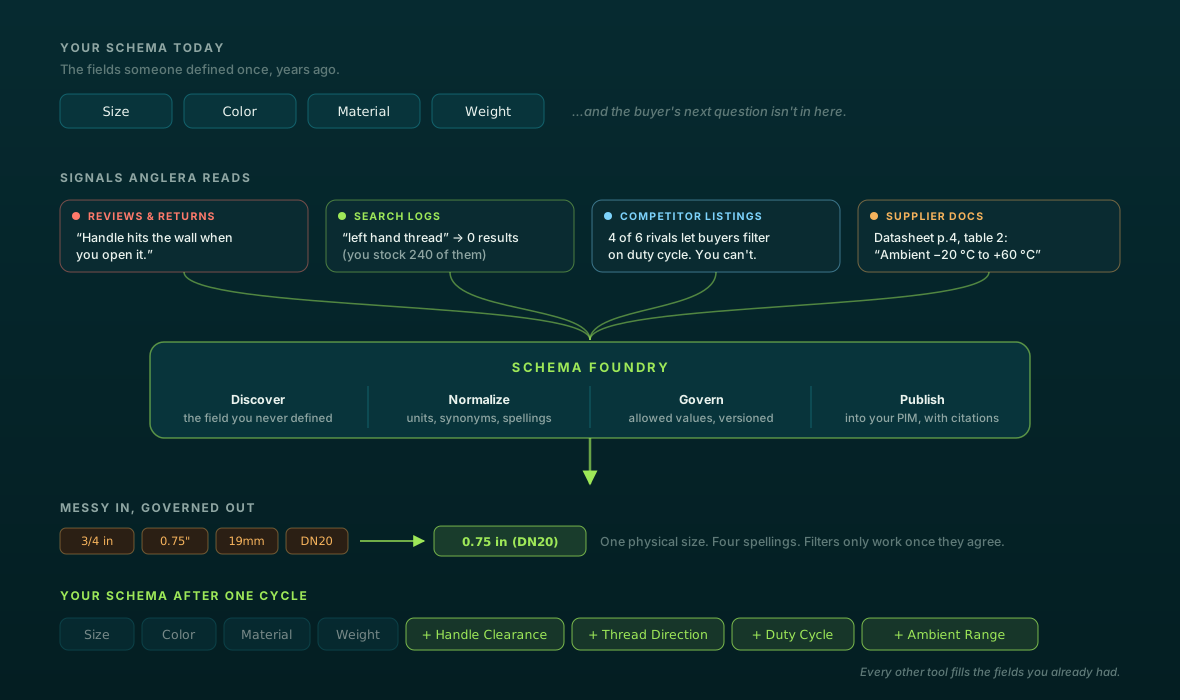
Anglera addresses that upstream gap. It connects to your Informatica Product 360 or Plytix instance via API, reads your existing SKUs, researches what buyers in your product category actually search for and what attributes drive purchase decisions, fills missing specs from authoritative sources, and writes buyer-ready content back to the same PIM record. Your system of record stays in place. The content Informatica governs — or that Plytix syndicates across channels — is genuinely better from the start, not just better organized. Implementation runs about 30 days with no platform migration required on either side.
Frequently asked questions
What is the main difference between Informatica PIM and Plytix?
Informatica PIM (Product 360) is an enterprise MDM+PIM platform built for large organizations that need strict data governance, workflow automation, and integration into a complex enterprise data stack. Plytix is a cloud-based all-in-one PIM built for SMBs — combining PIM, DAM, AI content generation, and channel syndication in a single, accessible tool. The core difference is scale, governance depth, and target buyer: Informatica for enterprise data governance, Plytix for SMB content management and channel distribution.
Does Plytix have MDM capabilities like Informatica?
No. Plytix focuses on product content management — centralizing, enriching, and syndicating product data for ecommerce channels and marketplaces. Informatica Product 360 is built on a Master Data Management foundation, which includes deduplication, golden record management, and data quality enforcement across the enterprise. If MDM and data governance are organizational requirements, Informatica is the relevant choice between the two.
How does Anglera work with either Informatica PIM or Plytix?
Anglera connects to your PIM via API — whether that is Informatica Product 360 or Plytix — reads your existing SKUs, runs enrichment against buyer signals, and writes improved attributes and descriptions back to the same record. No migration is required; Anglera works alongside whichever platform you already run in roughly 30 days.
Is Plytix a good fit for enterprise companies?
Plytix is built and priced for SMBs and mid-market teams. Its catalog-based pricing, unlimited users, and self-serve setup make it practical for companies without enterprise IT resources or integration budgets. Large enterprises with complex data governance requirements, high SKU volumes across many locales, and existing MDM infrastructure typically need a platform like Informatica Product 360 rather than Plytix.
Do I need a separate enrichment tool if I already have Informatica's AI features or Plytix's AI generation?
For most B2B distributors and manufacturers, yes. Informatica's Agentic AI validates and rewrites data from within the PIM, but it works on whatever supplier content was already loaded — if the underlying attributes are incomplete or written for procurement rather than buyers, the AI output reflects those gaps. Plytix's AI generates descriptions from existing attributes with the same constraint. Anglera enriches upstream: it researches buyer search behavior in your product category, identifies missing specs, fills them from authoritative sources, and writes results back to the PIM. The governed or syndicated record becomes genuinely buyer-ready, not just a reformatted version of existing supplier copy.