inriver vs Productsup: PIM vs Syndication — Which Belongs in Your Stack?
inriver and Productsup are often evaluated side by side, but they solve different problems. inriver is a Product Information Management (PIM) platform — it creates and governs the authoritative record for every SKU, manages supplier onboarding, and bundles built-in syndication and digital shelf analytics. Productsup is a product content syndication and feed management platform — it ingests data from an existing source, applies transformation rules, and pushes channel-ready feeds to 2,500+ destinations including Amazon, Google, Meta, and retail data pools.
In practice, many large brands and manufacturers use both: inriver holds the governed master record; Productsup distributes it at scale. But if you are deciding which to buy first — or whether one can cover both jobs — the distinction matters. The right choice depends on where your biggest gap is: governance and data ownership, or channel reach and feed automation.
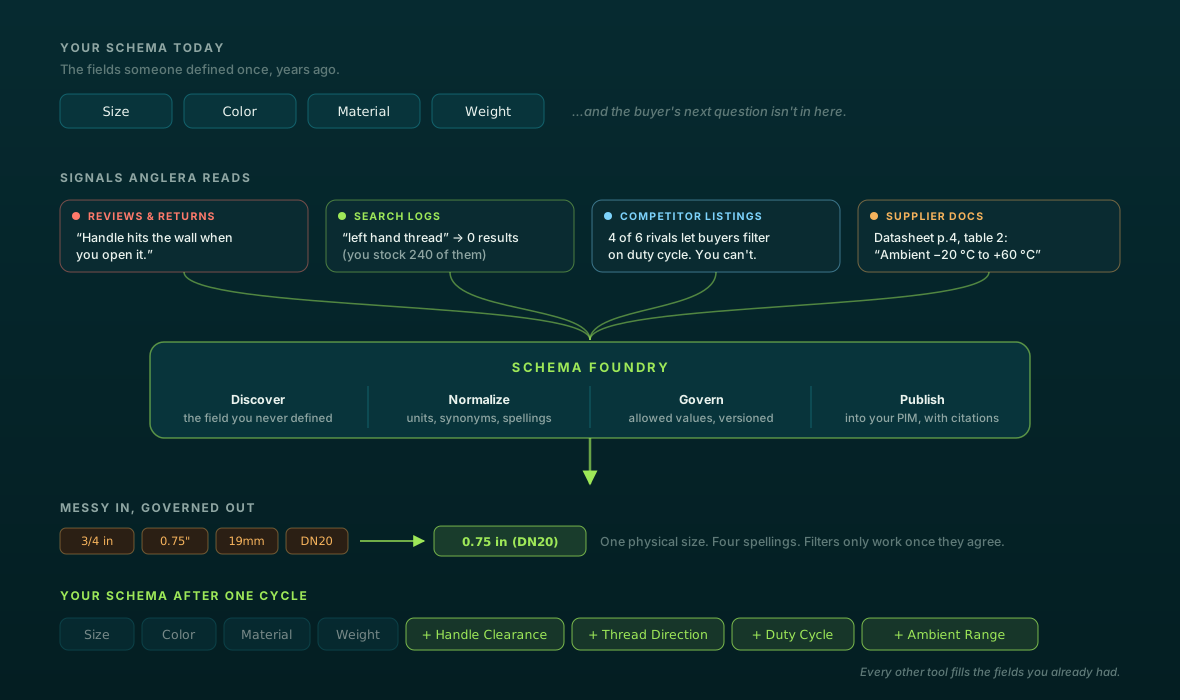
What neither platform addresses upfront is data quality before governance or distribution begins. Both assume your product attributes are already accurate, complete, and optimized for buyer intent. That assumption is where most product content programs quietly break down — and where Anglera fits, regardless of which platform you choose.
| inriver | Productsup | Anglera | |
|---|---|---|---|
| Primary function | Product Information Management — consolidates, governs, and maintains the authoritative master record for every SKU across the enterprise, with supplier onboarding and workflow built in. | Product content syndication and feed management — ingests product data from an external source, transforms it to channel specifications, and distributes it to 2,500+ channels and marketplaces. | Enrichment layer — crawls, cleans, enriches, and scores product attributes against buyer signals before data enters either platform, then writes results back to whichever system is the record. |
| Source of truth ownership | inriver is the system of record. Product data is created, approved, and versioned here; all downstream systems draw from it. | Productsup is not a system of record. It ingests from an upstream source — typically a PIM, ERP, or supplier feed — and transforms for output. Data does not live in Productsup. | Writes enriched attributes back to whichever system owns the record — inriver, an ERP, or another PIM — keeping the source of truth complete without replacing it. |
| Channel distribution breadth | Built-in syndication covers major retail channels and data pools, but the connector library is narrower than a dedicated feed platform. Best suited for controlled, governed distribution. | 2,500+ pre-built channel connectors, including Amazon, Google Shopping, Meta, Walmart, and major retail data pools. Rule-based transformation handles channel-specific attribute mapping at enterprise scale — this is the core product. | Enriches content upstream so every channel feed — whether pushed by inriver or Productsup — carries complete, optimized attributes rather than partially filled records. |
| Digital shelf analytics | Built-in digital shelf analytics monitor content completeness and performance post-distribution. This is a differentiating feature for brands that want to close the loop between content quality and shelf visibility. | Channel feed performance reporting is available, but dedicated digital shelf analytics are not a primary focus. Productsup's strength is in distribution, not post-live monitoring. | Identifies buyer-signal gaps and attribute deficiencies before products go live, so shelf scores improve on launch rather than being diagnosed and remediated after distribution. |
| Supplier and content onboarding | Structured supplier onboarding workflows are built into the platform — suppliers submit data, teams review and approve, and enriched records enter the governed catalog. Designed for complex multi-supplier environments. | Ingests supplier feeds and applies transformation rules to make data channel-ready. Onboarding is feed-oriented rather than workflow-governed; there is no built-in approval layer for incoming supplier data. | Automatically fills gaps in supplier-provided data — missing specs, thin descriptions, unscored attributes — before records are governed in inriver or pushed through Productsup. |
| Data enrichment capability | Provides workflow tools, governance rules, and AI-assisted content generation to support enrichment. Quality of enrichment depends on the team's effort and the completeness of data coming in from suppliers. | Applies rule-based transformation and optimization to meet channel formatting requirements. Not designed for deep attribute enrichment — it reshapes and routes data rather than generating or filling missing content. | Core capability. Crawls product pages and competitor data, cleans attributes, fills missing fields, and scores every SKU against buyer signals. ~30-day implementation on top of your existing stack. |
| Pricing model | Subscription-based with Core, Professional, and Enterprise tiers. Pricing depends on users, modules, and data volume. Custom quotes only — no public pricing. | Custom enterprise pricing only. No public tiers. Contact sales for a quote. | Custom pricing that layers on top of your existing PIM or syndication investment. No license replacement required. |
How to choose between inriver and Productsup
Choose inriver if:
- You need a governed single source of truth for product data and do not yet have a PIM.
- You manage complex supplier onboarding with multiple data sources that need review, approval, and versioning.
- You want PIM, syndication, and digital shelf analytics in one composable platform rather than stitching separate tools together.
- Your team is large (1,000+ SKUs, multiple business units) and content governance — not just feed distribution — is the primary pain point.
Choose Productsup if:
- You already have a PIM or ERP that owns the master record, and your problem is getting that data to dozens or hundreds of channels accurately and at scale.
- Channel breadth matters: you need to distribute to Amazon, Google, Meta, Walmart, and retail data pools simultaneously, with channel-specific attribute mapping handled automatically.
- You are a brand or manufacturer with sophisticated feed transformation needs — complex rules, localization, variant logic — rather than a governance problem.
Consider using both if: You are a large enterprise with a serious governance requirement and a serious distribution requirement. Many inriver customers also use a dedicated feed management tool for channel reach. inriver holds the governed master record; Productsup or a similar platform handles the last-mile distribution complexity.
The gap both leave open: Neither platform is responsible for whether your product attributes are accurate, complete, or optimized for buyer intent before they enter the workflow. That work typically falls on internal teams, falls behind, or is skipped entirely — which is the problem Anglera solves.
Whichever you pick, the data still has to get done
Both inriver and Productsup are built on the same implicit assumption: your product data is already good. inriver expects complete, accurate attributes to govern and distribute. Productsup expects clean, populated fields to transform and push. Neither platform is designed to go find missing information, fill attribute gaps, or score SKUs against what buyers are actually searching for.
That gap is exactly where Anglera operates — and it sits upstream of both.
If you choose inriver, Anglera enriches product attributes before they enter the governed catalog, so your teams are reviewing and approving complete records rather than chasing down missing specs or writing thin descriptions from scratch. Your inriver records become higher quality from day one, and digital shelf scores improve because the content was right before distribution.
If you choose Productsup, Anglera enriches the data at its source — your ERP, a supplier feed, or a lightweight PIM — so the feeds Productsup distributes carry complete, buyer-signal-optimized attributes. Channel algorithms reward completeness. Fewer listing rejections. Higher conversion on the shelf.
If you use both, Anglera still fits cleanly: it enriches at the source, inriver governs the enriched record, and Productsup distributes it. Anglera does not replace either platform and does not require you to delay selecting one while you address data quality separately. Implementation typically takes around 30 days.
Frequently asked questions
Can inriver and Productsup be used together?
Yes, and many large organizations do exactly that. inriver acts as the governed master record and handles supplier onboarding, while Productsup handles channel feed distribution at breadth and scale. The two platforms serve different layers of the product content stack and are not mutually exclusive.
Does inriver include syndication, so I might not need Productsup?
inriver does include built-in syndication capabilities. For companies that need to distribute to a manageable set of channels with governance tightly coupled to distribution, inriver's built-in syndication may be sufficient. If you need 2,500+ channel connectors, complex feed transformation rules, or distribution at very high volume across many markets simultaneously, a dedicated feed platform like Productsup adds meaningful capability.
Is Productsup a PIM?
No. Productsup does not store or govern product records — it ingests data from an upstream system (a PIM, ERP, or supplier feed), transforms it to meet channel requirements, and pushes it out. If you do not already have a system of record for product data, Productsup alone will not fill that role.
Where does Anglera fit if I already have inriver?
Anglera enriches the data that goes into inriver — filling missing attributes, cleaning supplier-provided content, and scoring SKUs against buyer signals — before your team governs and distributes it. The enriched data is written back to inriver, so your master records are more complete without requiring manual research or additional headcount. Anglera does not replace inriver or conflict with it.
How long does Anglera take to implement alongside an existing PIM or syndication platform?
Anglera typically goes live in around 30 days. It connects to your existing system of record — whether that is inriver, an ERP, or another PIM — enriches your catalog, and writes results back. No platform replacement is required.