Anglera + inriver
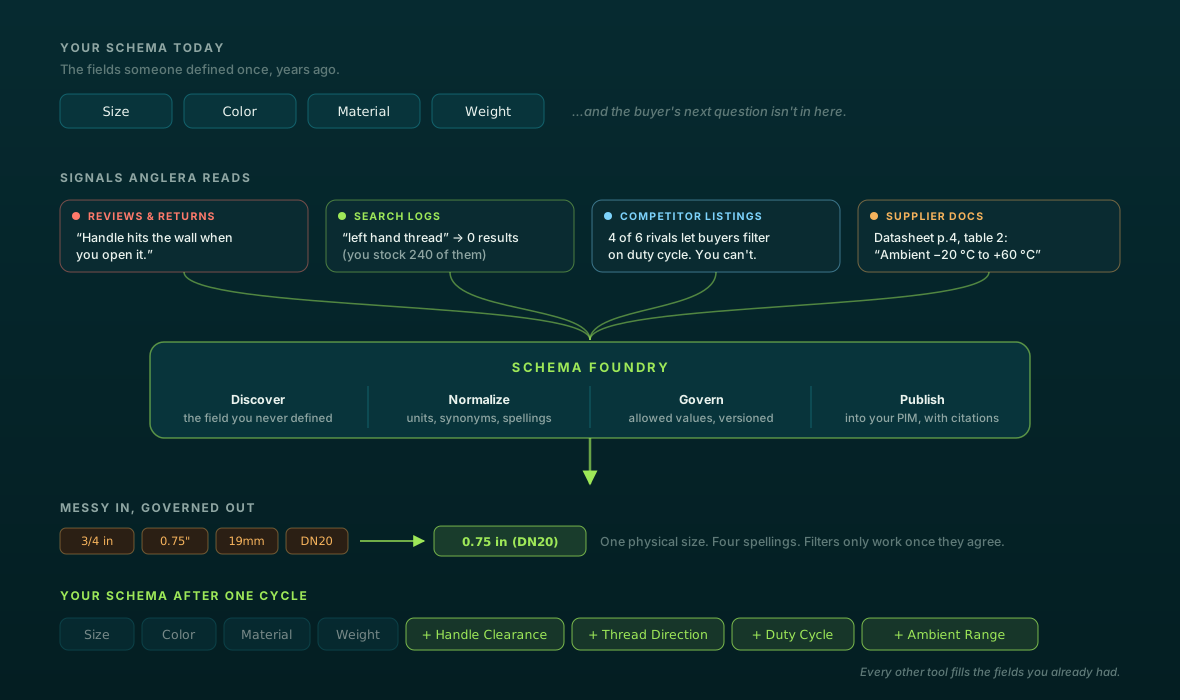
inriver stores and governs product data exceptionally well, but its "enrichment" is largely template-driven AI copy generation applied uniformly to attributes — it does not analyze buyer signals (how buyers actually search, compare, and decide) to determine what content gaps matter most per SKU. Anglera sits alongside inriver: it reads the raw data inriver already holds, runs buyer-signal intelligence against every SKU, writes enriched, scored content back to inriver as the system of record, and does it in ~30 days without a multi-month PIM reconfiguration project. You keep inriver; Anglera makes every product in it earn its place on the digital shelf.
What inriver does
inriver is a SaaS Product Information Management (PIM) platform that helps brands, manufacturers, distributors, and retailers consolidate, govern, enrich, and distribute product content across channels. It bundles PIM, built-in syndication, and digital shelf analytics into one composable platform serving 1,600+ global brands.
Pricing: Subscription-based; Core, Professional, and Enterprise tiers priced by users, modules, and data volume. Specific figures are not publicly listed — custom quotes only.
inriver vs Anglera, side by side
| inriver | Anglera | |
|---|---|---|
| Core purpose | Store, govern, and distribute product data across channels | Enrich product data against buyer signals and write it back to the source of truth (including inriver) |
| Enrichment approach | AI-assisted copy generation (titles, descriptions, bullet points) based on existing attributes and channel templates | Buyer-signal intelligence: analyzes how buyers search, compare, and decide, then fills the specific content gaps that drive conversion |
| Digital shelf readiness scoring | Digital shelf analytics tracks live channel performance after content is published | Scores every SKU for search-readiness and buyer-decision readiness before it goes live, so gaps are fixed proactively |
| Manual effort required | Teams configure workflows, data models, and enrichment rules; AI assists but humans still review and approve content at scale | Automated enrichment pipeline — Anglera does the work; team reviews exceptions rather than every SKU |
| Time to value | Enterprise PIM implementations typically run 3–12 months depending on data model complexity and integrations | ~30 days from connect to enriched, scored catalog written back to inriver |
| Relationship to your existing stack | Acts as the system of record — requires migrating or centralizing data into inriver | Works alongside inriver (or any PIM) — no migration, no rip-and-replace; enriches what is already there |