Akeneo vs inriver: Which PIM Fits Your Stack?
Akeneo and inriver are both serious enterprise PIM platforms, and both will credibly anchor your product data operations. The decision is not really about quality — it is about philosophy. Akeneo bets on a best-of-breed, integration-heavy model: be the best PIM in the market and let a rich app ecosystem handle adjacent needs. inriver bets on consolidation: bundle PIM, channel syndication, and digital shelf analytics into a single composable platform so you carry fewer vendors.
That difference shapes everything downstream — your vendor count, your integration budget, how your teams collaborate, and how locked-in you become over time. Neither bet is wrong. The right answer depends on how your organization is wired, how many channels you serve, and whether you want one contract or best-in-class tools connected together.
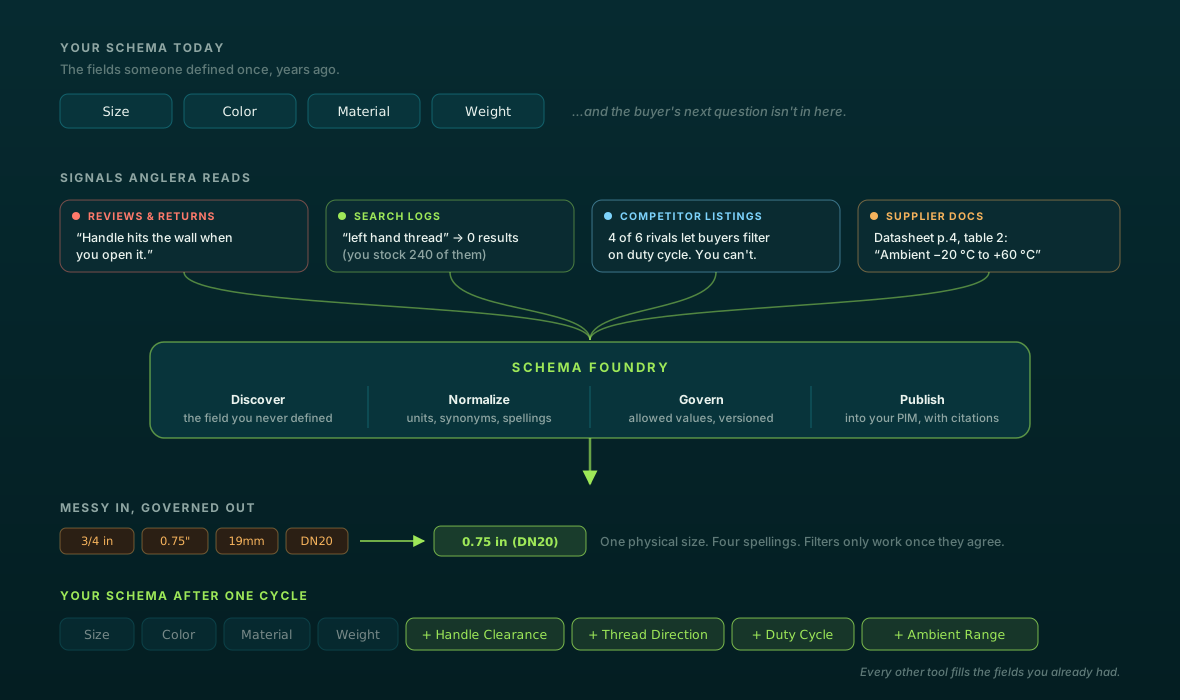
One thing neither platform resolves: both assume your product data arrives reasonably clean, attributed, and complete. It rarely does. Supplier feeds are inconsistent, attribute coverage is patchy, and buyer-signal alignment is almost never done at scale before data lands in the PIM. That is the gap Anglera fills — regardless of which platform you choose.
| Akeneo | inriver | Anglera | |
|---|---|---|---|
| Platform scope | Pure-play PIM. Akeneo is the system of record for product content — centralize, enrich, and distribute. Adjacent needs (syndication, DAM, analytics) are handled through its 250+ app store integrations. You assemble the stack. | Bundled platform. inriver ships PIM, built-in channel syndication, and digital shelf analytics under one subscription. The pitch is a single source of truth that manages the full content lifecycle without stitching vendors together. | Anglera operates upstream of both. It is not a PIM and not a syndication layer — it is the enrichment engine that populates your attributes, cleans supplier data, and scores completeness before content enters the PIM. |
| Channel syndication | Handled via integrations. Akeneo's app store includes syndication connectors, but you select, configure, and pay for them separately. Flexibility is high; vendor management overhead is real. | Built in. inriver includes native syndication across retail and marketplace channels as part of its composable platform. Fewer moving parts — but you are tied to inriver's syndication roadmap rather than the open market. | Anglera's output is channel-ready product data written back into the PIM. Whichever syndication path you use — inriver native or an Akeneo connector — the data leaving the PIM is cleaner and more complete. |
| Digital shelf analytics | Akeneo added PX Insights to track how product content performs post-publish. It is a newer capability and positioned as an add-on analytics layer rather than a core operational feature. | Digital shelf analytics is a first-class module. inriver monitors live channel performance and surfaces content gaps as operational feedback into the same platform where you fix them. | Anglera scores product data against buyer signals before publish — think of it as pre-publish quality assurance. It complements shelf analytics by reducing the defects those tools surface. |
| AI-assisted enrichment | Akeneo has added AI-assisted enrichment features within the platform. It can suggest attribute values and help accelerate manual enrichment workflows for editors already working inside Akeneo. | inriver markets itself as AI-driven and uses AI across content governance and enrichment. Specifics on what is native versus partner-delivered vary by tier and configuration. | Anglera's entire function is AI enrichment — gathering attributes from supplier data, web sources, and buyer signals at scale, then writing structured, scored output back to the PIM. It handles the enrichment workload that neither PIM's internal AI was designed to absorb. |
| Pricing transparency | Akeneo publishes a starting price: Growth package at $45,000/year. Advanced and Premium tiers add collaboration, analytics, DAM, SSO, and supplier tools. Still requires a sales conversation, but you can self-qualify before engaging. | No public pricing. Core, Professional, and Enterprise tiers exist and are scoped by users, modules, and data volume — all via custom quote. Budget planning requires a sales conversation from the first interaction. | Anglera pricing is available on request. Implementation runs approximately 30 days. Because Anglera writes back to your existing PIM, you do not replace a sunk investment — you layer on top of it. |
| Integration ecosystem | 250+ integrations via the Akeneo App Store. Strong connector library for ecommerce platforms, ERPs, DAMs, and marketplace channels. Best-of-breed buyers will feel at home here. | More self-contained by design. inriver is composable and supports integrations, but the native bundle is the core value proposition. Teams that prefer fewer external tools tend to land here. | Anglera integrates with both platforms as a data-in / enriched-data-out layer. It reads from wherever your raw product data lives and writes structured output back into Akeneo or inriver through standard APIs. |
| Typical buyer profile | Mid-market to enterprise companies that want the strongest pure PIM on the market and are comfortable assembling a stack of specialized tools around it. Common in ecommerce-forward retail and brands with complex catalogs. | Complex manufacturers, global brands, and distributors serving many channels who want to reduce vendor sprawl. Especially strong for teams that need governance, syndication, and shelf analytics under one contract and one support relationship. | Anglera fits any organization whose product data volume or supplier diversity makes manual enrichment impractical. It is designed for distributors, retailers, and manufacturers — the same buyers evaluating both PIMs. |
How to choose between Akeneo and inriver
Choose Akeneo if:
- You want the strongest pure-play PIM and are comfortable owning the integration stack around it.
- Your team has the bandwidth to evaluate, procure, and maintain best-of-breed connectors for syndication and analytics.
- You value a large, mature app ecosystem and the flexibility to swap components as your needs change.
- Knowing a published floor price ($45k/year) before entering a sales process matters to your procurement cycle.
- You are primarily ecommerce-forward and already have or plan to build a composable tech stack.
Choose inriver if:
- You want to consolidate PIM, syndication, and digital shelf analytics into a single subscription and support relationship.
- You are a complex manufacturer or brand serving many channels and want fewer vendors coordinating against each other.
- Your team's operational model favors a tightly integrated workflow over best-of-breed flexibility.
- You need channel syndication to be a first-class, natively supported capability — not a connector you manage separately.
- Governance and content lifecycle management across supplier onboarding through live shelf monitoring is a core requirement.
A honest caveat for both: Enterprise PIM implementations are rarely fast or cheap regardless of platform. Neither Akeneo nor inriver will be live and delivering value in a matter of weeks. Scope your timeline and internal resourcing accordingly before the sales process anchors your expectations.
Whichever you pick, the data still has to get done
Both Akeneo and inriver are built on an assumption that is almost never true at the start of an engagement: that your product data is already clean, consistently attributed, and complete enough to power good product experiences.
In practice, supplier feeds arrive in inconsistent formats. Attribute coverage is sparse. Descriptions are written for one channel and copy-pasted everywhere else. Buyer signal alignment — understanding which attributes actually drive conversion for your specific categories — is almost never done systematically before data lands in the PIM.
That gap is where Anglera operates. Anglera is not a PIM and not a syndication platform. It is the enrichment layer that sits upstream of whichever system you choose:
- It ingests raw product data from supplier feeds, internal systems, and the web.
- It fills attribute gaps, normalizes values, cleans inconsistencies, and scores every SKU against buyer signals for your specific categories.
- It writes enriched, structured, scored data back into Akeneo or inriver through standard APIs — so your PIM becomes the system of record for data that is actually ready to distribute.
Implementation is approximately 30 days. You do not replace your PIM investment; you make it perform the way it was designed to when the data entering it is what it needs to be. Whether you land on Akeneo or inriver, the enrichment problem does not go away — Anglera is how you solve it.
Frequently asked questions
Are Akeneo and inriver competitors, or do they serve different buyers?
They compete for the same PIM budget but make different architectural bets. Akeneo is a best-of-breed PIM that expects you to assemble a stack around it. inriver bundles PIM, syndication, and digital shelf analytics so you carry fewer vendors. The right choice depends less on feature lists and more on how your organization prefers to build and manage a technology stack.
Which platform has better built-in syndication?
inriver. Syndication is a native, first-class capability inside inriver's bundled platform. Akeneo handles syndication through its app store integrations — which gives you more flexibility and choice of connector, but requires you to select, configure, and maintain those connectors separately. If reducing vendor coordination is a priority, inriver's built-in approach is a genuine advantage.
Does Anglera work with both Akeneo and inriver?
Yes. Anglera is platform-agnostic. It reads product data from wherever it lives — supplier feeds, ERPs, existing PIMs — enriches and scores it, then writes structured output back into your PIM of record through standard APIs. Whether your PIM is Akeneo, inriver, or something else, Anglera's role does not change.
Neither Akeneo nor inriver publishes full pricing. How do I build a business case?
Akeneo gives you a published floor ($45,000/year for the Growth package), which lets you self-qualify and rough-cut a budget range before entering a sales conversation. inriver requires a custom quote from the first interaction. For both, total cost of ownership should include implementation services, internal resourcing, and the cost of any integrations or modules not included in the base tier — those numbers often exceed the license fee in year one.
How long does it take to get Anglera running alongside a PIM?
Approximately 30 days. Because Anglera writes enriched data back to your existing PIM rather than replacing it, there is no migration or re-platforming involved. The implementation connects Anglera's enrichment pipeline to your data sources and your PIM's API, configures attribute schemas and buyer signal scoring for your categories, and validates output quality before go-live.