Pimberly vs Plytix: Which PIM Is Right for Your Business?
Pimberly and Plytix are both cloud-based PIM platforms, but they are built for different buyers at different price points. Pimberly targets mid-market and enterprise e-commerce teams that need enterprise-grade governance, validation workflows, and a combined PIM and DAM at scale — starting around $30,000 per year. Plytix is built for small and mid-sized businesses that want an affordable, all-in-one PIM with unlimited users, built-in feed syndication, and AI content generation, with paid plans starting around $733 per month.
The core question for any buyer is whether you need Pimberly's depth and workflow automation at a higher price point, or whether Plytix's faster onboarding and lower cost of entry fit your stage and catalog complexity. Neither tool is objectively better — they serve different segments, and picking the wrong one wastes time and money in either direction.
| Pimberly | Plytix | Anglera | |
|---|---|---|---|
| Target market | Mid-market to enterprise retail and e-commerce teams managing large SKU counts across complex multi-channel environments. | Small and mid-sized businesses — including growing brands, agencies, and distributors — that need an affordable, quick-start PIM. | PIM-agnostic; incomplete and inaccurate product data is a problem at every company size. Anglera enriches the catalog regardless of which platform stores it. |
| Pricing | Starts at approximately $30,000/year. Custom pricing based on SKU volume and number of channels — no public fixed tiers. | Freemium entry point available. Paid plans start around $733/month (~$8,800/year). Pricing scales with catalog size; AI credits and extra distribution channels are add-ons. | Priced separately based on catalog size and enrichment volume — not headcount. Sits alongside whichever PIM license you've already committed to. |
| User seats and team access | Seat-based licensing. Costs increase with team size, which matters for organizations with many contributors, reviewers, and channel managers. | Unlimited users on all plans — a standout feature for distributed teams, agencies managing multiple brands, and businesses that don't want seat costs to limit adoption. | Not seat-based. Access is tied to the catalog and enrichment workflows, not headcount, so it doesn't add per-user overhead. |
| AI and content generation | AI capabilities exist but are not a primary differentiator. Core strengths are governance, validation rules, and workflow automation rather than AI-generated copy. | Built-in AI for generating and translating product descriptions is a marketed core feature. AI credits are available as an add-on to paid plans. | AI-driven enrichment at the attribute level — fills missing specs, normalizes inconsistent values, and scores each SKU against buyer signals before data is published. Complements rather than duplicates in-PIM copy generation. |
| Channel syndication and feed publishing | Automates feed publishing to retailers, marketplaces, and e-commerce platforms via configurable workflow and validation rules. | Built-in feed syndication with pre-built channel connectors is a core selling point — especially for SMBs that want a single tool covering PIM and distribution. | Enriches and scores attribute completeness before data reaches the feed. Reduces downstream retailer rejections and retailer-side corrections caused by missing or malformed product content. |
| DAM (Digital Asset Management) | Built-in DAM is a core, fully featured module — stores, organizes, and links assets to SKUs with governance controls. Designed for teams managing large libraries of product media. | DAM is included on all plans; covers image and file management linked to product records. Functional for SMB use cases but less extensive than Pimberly's enterprise DAM. | Pulls existing assets to extract specs from images and PDFs, verify that assets match product records, and flag SKUs with missing media — then updates the PIM with enriched attribute data. |
| Implementation and onboarding | Enterprise-grade implementation. Typically requires a formal onboarding engagement and a longer ramp time, appropriate for teams with IT resources and complex data models. | Designed for self-serve onboarding. SMB-friendly setup with a shorter time-to-value — teams can import a catalog and begin publishing without a prolonged implementation project. | Approximately 30-day implementation. Connects to the PIM via API and begins enriching immediately, without disrupting an in-progress PIM onboarding or requiring separate infrastructure. |
How to choose between Pimberly and Plytix
Choose Pimberly if you are a mid-market or enterprise retailer, distributor, or brand managing a large, complex catalog across many sales channels — and you need strong governance, configurable validation rules, and a combined PIM and DAM under one roof. Pimberly makes the most sense when you have dedicated IT or e-commerce operations resources, a budget at or above $30,000 per year, and workflow complexity that a simpler tool cannot accommodate. It is also the right call if controlling how data is structured, approved, and published is non-negotiable.
Choose Plytix if you are an SMB or a growing brand that needs to get a PIM running quickly without a long implementation engagement or a large licensing bill. The unlimited-user model means you are not penalized as your team grows, and built-in AI for content generation and syndication connectors reduce the need for additional point tools. If your primary goal is building product content once and publishing it consistently across channels — and you do not need enterprise-grade governance controls — Plytix delivers meaningful value at a fraction of Pimberly's price.
The line blurs for mid-market companies that initially chose Plytix for speed and affordability but are now running into catalog-size limits, governance gaps, or channel complexity that requires more sophisticated workflow controls. That is typically the moment the Pimberly conversation starts.
Whichever you pick, the data still has to get done
Both Pimberly and Plytix solve the same core problem: they give you a structured place to store and publish product content. What neither solves is the quality of the data going in. Attributes are missing. Values are inconsistent across suppliers. Descriptions are copied verbatim from spec sheets and do not match what buyers actually search for. Retailer portals reject feeds because required fields are blank or out of spec.
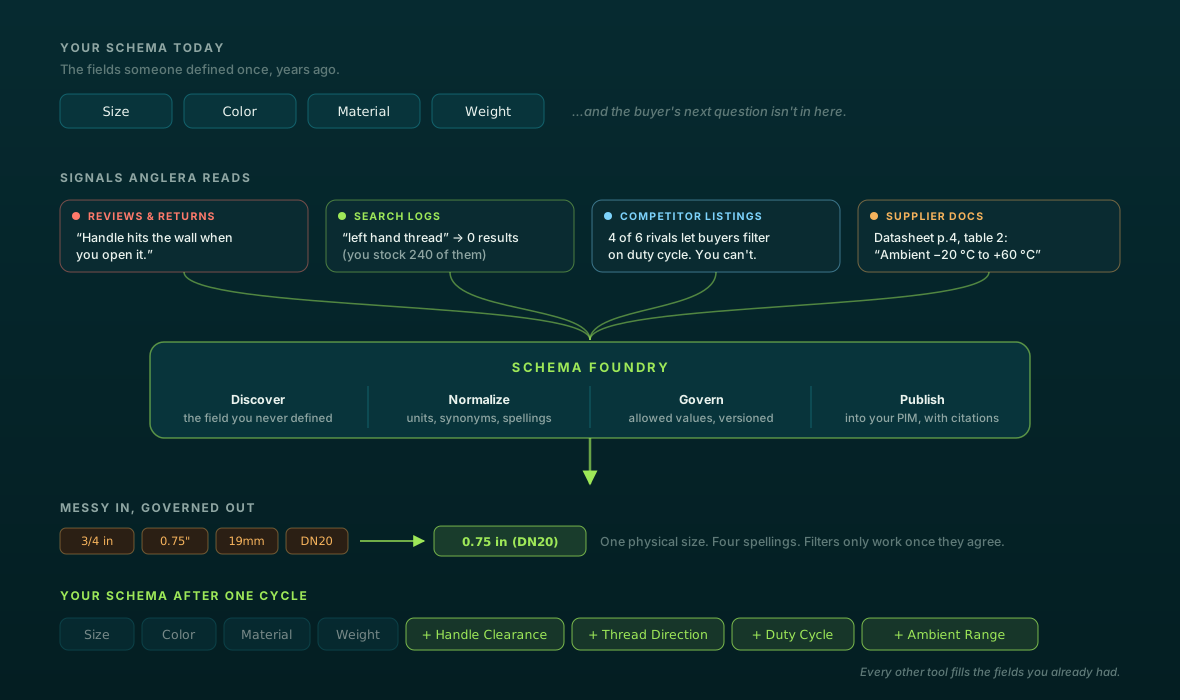
Anglera is the enrichment layer that runs alongside whichever PIM you choose. It reads your existing catalog, gathers missing specifications from manufacturer sources, normalizes attribute values to match channel requirements, and scores each SKU against buyer signals — then writes the enriched, validated data back to your PIM via API. The PIM stores and publishes your product content; Anglera does the work to make it publishable in the first place.
Implementation takes roughly 30 days and does not require replacing or disrupting your PIM setup. If you are currently evaluating Pimberly or Plytix, the right moment to add Anglera is during or immediately after PIM onboarding — before the first major feed or product launch goes live. Starting with clean, complete data means fewer retailer rejections, faster channel expansion, and less time spent on manual data cleanup after the fact.
Frequently asked questions
Is Plytix suitable for large catalogs?
Plytix can handle large catalogs, but its pricing scales with catalog size and it is optimized for SMB use cases. If you are managing hundreds of thousands of SKUs with complex validation requirements, multi-stakeholder approval workflows, or enterprise governance needs, Pimberly is likely the better fit. For most SMBs and mid-sized brands, Plytix's catalog limits are not a practical constraint.
Does Pimberly include AI content generation?
Pimberly has AI capabilities, but AI-generated product descriptions are not a primary selling point the way they are for Plytix. Pimberly's focus is on governance, data validation, and multi-channel workflow automation. Plytix explicitly markets built-in AI for description generation and translation as a core feature available through AI credit add-ons.
Can Anglera work with both Pimberly and Plytix?
Yes. Anglera connects via API and is PIM-agnostic. It reads your existing product records, runs enrichment against buyer signals and source data, and writes results back — regardless of whether your source of truth is Pimberly, Plytix, or another platform. The PIM does not change; Anglera works alongside it.
Which platform is faster to set up?
Plytix is designed for self-serve onboarding and is meaningfully faster to get running. Most SMB teams can import a catalog and begin configuring channels without a formal implementation project. Pimberly targets mid-market and enterprise buyers and typically involves a structured onboarding engagement, which takes longer but is appropriate for the complexity it is built to handle.
If I add Anglera, do I still need a PIM?
Yes. Anglera is not a PIM and does not replace one. It has no storefront for browsing or publishing product content to channels. Anglera's job is to enrich and score the data that lives in your PIM — filling attribute gaps, normalizing values, and writing results back so the PIM can do its job accurately. You need a PIM; Anglera makes the data inside it better.