Pimcore vs Productsup: Which Platform Fits Your Stack?
Pimcore and Productsup solve different problems — and buyers sometimes conflate them because both touch product data. Pimcore is a repository: it stores, structures, and governs product information, digital assets, and master data in one place. Productsup is a distribution engine: it ingests data from suppliers or PIMs, applies transformation rules, and pushes channel-ready feeds to Amazon, Google, Meta, retail data pools, and 2,500 other destinations.
The honest framing is that these tools are not direct competitors — they sit at different points in the same pipeline. You might use Pimcore as your system of record and Productsup downstream to fan out to channels. Some teams use Productsup alone if they do not need a full PIM. Others use Pimcore alone if they publish to only a handful of channels via native connectors. The choice depends on where your biggest gap is: structured data governance or channel reach.
What neither platform does is enrich your data against buyer signals before it moves. Neither scores completeness, flags underperforming attributes, or writes missing values back to your master record. That gap exists regardless of which platform you choose — and it matters because incomplete or low-quality product content is the most common reason feeds get rejected or lose to competitors on shelf.
| Pimcore | Productsup | Anglera | |
|---|---|---|---|
| Core function | PIM, DAM, MDM, and DXP in one open-source platform — a central repository for storing, governing, and organizing product data and digital assets. | Product content syndication and feed management — ingests supplier data, applies transformation rules, and distributes channel-ready feeds at scale. | Enrichment layer — gathers missing attribute values, cleans existing data, scores every SKU against buyer signals, and writes results back to whichever system holds the record. |
| Channel distribution | Native connectors for a limited set of channels; broader reach typically requires custom development or a downstream syndication tool. | 2,500+ pre-built channel connectors including Amazon, Google, Meta, and major retail data pools. Processes over 2 trillion products per month. Built for multi-channel at enterprise scale. | Channel-agnostic. Anglera enriches the data before it reaches any distribution layer, so whichever channels Pimcore or Productsup feed, the content arriving there is already complete and scored. |
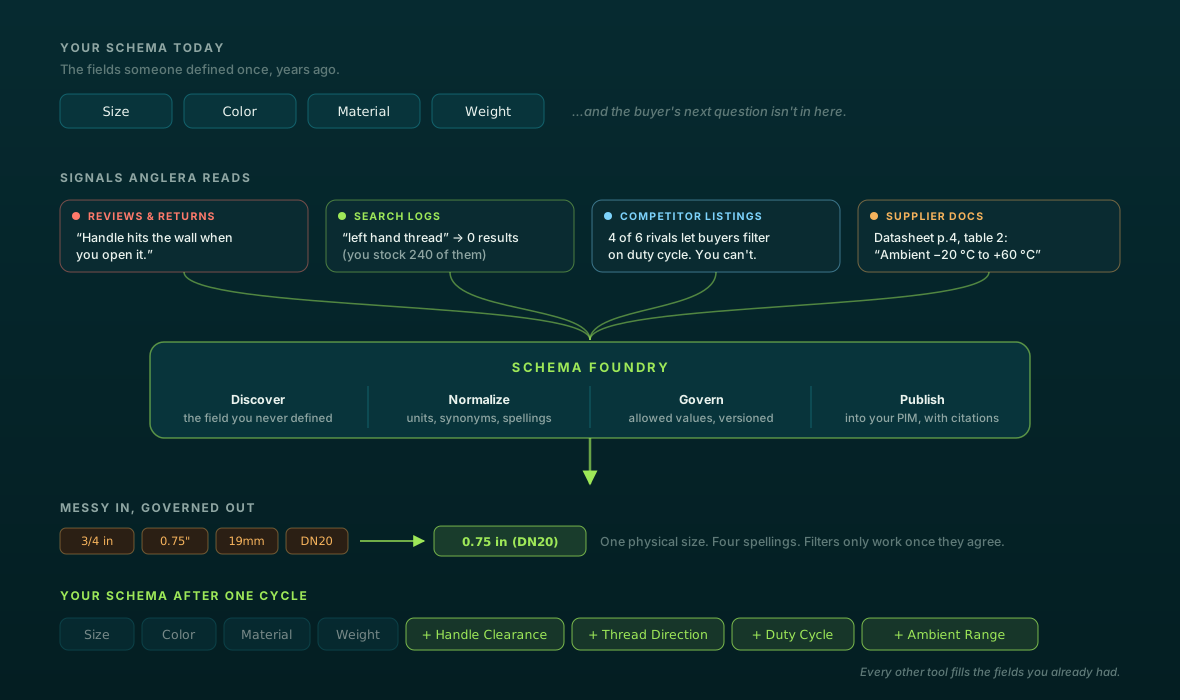
| Data model and governance | Highly flexible open-source data model. Teams can define custom object types, attributes, and hierarchies. Supports MDM and DAM alongside PIM. Strong governance for complex catalog structures. | Transformation-oriented rather than governance-oriented. Rules map and reshape data for each channel target, but Productsup is not designed to be the long-term system of record for your master catalog. | Operates on top of whatever data model the PIM defines. Anglera reads existing attribute structures, fills gaps, and pushes enriched values back — it does not require you to change your schema. |
| Pricing and cost structure | Community Edition free (non-commercial). Professional Edition $9,900/year. Enterprise Edition $29,900/year. PaaS from $39,900/year. Transparent public tiers. | Custom enterprise pricing only. No public tiers. Expect a sales conversation before any number is on the table. Costs vary significantly by catalog size, channel count, and data volume. | Separate from both. Anglera is an enrichment service layered on top — budget it independently of whichever platform you choose. |
| Implementation complexity | Developer-heavy. Pimcore is open-source and extensible, but standing it up, modeling your catalog, and integrating data sources requires engineering time. Plan for months, not weeks. | Faster to first feed than a full PIM implementation, but enterprise deployments with complex transformation logic, many suppliers, and dozens of channels still involve significant configuration and onboarding. | ~30-day implementation. Anglera connects to your existing PIM or data source, runs enrichment workflows, and writes back — without requiring a platform migration or re-architecture. |
| Enrichment and buyer-signal scoring | Not in scope. Pimcore stores whatever data you put in; it does not identify what is missing, score attribute quality, or enrich content against external buyer signals. | Not in scope. Productsup applies rule-based transformations to existing data but does not generate missing attribute values, score completeness, or benchmark content against buyer expectations. | Core purpose. Anglera automatically identifies missing or low-quality attributes, enriches them from multiple sources, scores every SKU against buyer signals, and writes the result back to your PIM or feed. |
| Target user and organization size | Midmarket to enterprise teams that need a unified, developer-extensible platform for product data governance — particularly where digital experience (DXP) or DAM requirements exist alongside PIM. | Enterprise brands, manufacturers, and retailers with high SKU counts and complex multi-channel distribution requirements — especially those selling across Amazon, Google Shopping, and retail media networks. | B2B distributors, manufacturers, and retailers of any size that have product data in a PIM or feed — and need that data enriched before it hits channels or buyers. |
How to choose between Pimcore and Productsup
Choose Pimcore if your primary problem is data governance and you need a central, structured system of record for product information, digital assets, and master data. Pimcore suits teams that have engineering resources to model a catalog and want maximum flexibility in how data is structured. It is especially well-suited when PIM sits alongside DAM and MDM requirements, or when digital experience (DXP) is in scope. The open-source model gives you full control and avoids vendor lock-in, but you pay for that flexibility in implementation time and ongoing dev effort.
Choose Productsup if your data already lives somewhere structured — in a PIM, an ERP, or supplier feeds — and your bottleneck is getting that data into the right shape for each channel, quickly and reliably. Productsup is built for the distribution layer. If you are managing feeds to 20+ retail destinations, running frequent supplier data ingestion, or publishing to Amazon and Google at volume, Productsup handles that better than any PIM's native connectors will.
Use both together if you need full pipeline coverage: Pimcore as the system of record and governance layer, Productsup as the outbound distribution engine. This is a common enterprise pattern, though it carries the cost and complexity of two platform implementations plus the integration between them.
Neither tool is right if your primary problem is that product data is incomplete, inconsistently described, or unscored — because both platforms distribute or store data without generating or improving it.
Whichever you pick, the data still has to get done
Whichever platform you pick — Pimcore, Productsup, or both — the same gap exists: the data flowing through it needs to be complete, accurate, and aligned with what buyers actually search for before it moves.
Pimcore stores whatever your team puts in. If an attribute is missing, it stays missing until someone fills it. Productsup transforms and distributes data at scale, but transformation rules cannot invent information that was never there. The result is the same in both cases: feeds and product pages with thin, incomplete, or inconsistently written content that underperforms on shelf.
Anglera sits upstream of both. It connects to your PIM or supplier feed, identifies every attribute gap and quality issue, enriches the data using buyer signals, and writes the corrected values back to the source of record — so that whatever Pimcore governs or Productsup distributes is already complete. Implementation takes roughly 30 days and does not require changing your platform or your team's workflow. Pimcore remains your system of record. Productsup remains your distribution engine. Anglera does the enrichment work that both platforms assume already happened.
Frequently asked questions
Can I use Productsup without a PIM like Pimcore?
Yes. Productsup can ingest data directly from supplier files, ERPs, or flat feeds and push it to channels without a PIM in the middle. Many brands start this way. The tradeoff is that without a governed system of record, data quality and consistency across sources tends to degrade over time — especially as SKU counts grow.
Is Pimcore a syndication tool?
Not primarily. Pimcore has some native output channels and connectors, but its core strength is data storage, governance, and structure — not channel distribution at scale. Teams that need to push feeds to dozens of retail or advertising channels typically add a dedicated syndication layer like Productsup.
Does Productsup enrich product data or only distribute it?
Productsup applies rule-based transformations to data that already exists — mapping fields, reformatting values, and structuring content to meet each channel's schema requirements. It does not generate missing attribute values or score content against buyer signals. Enrichment requires a separate layer before or alongside Productsup.
Where exactly does Anglera connect in a Pimcore or Productsup setup?
Anglera connects to your existing data source — typically your PIM (such as Pimcore) or a staging feed. It reads your current attribute data, identifies gaps and quality issues, enriches using buyer signals and external sources, and writes the completed values back to the same PIM or feed. Productsup then distributes data that is already enriched, rather than distributing raw or incomplete records.
How long does it take to implement Anglera alongside an existing platform?
Roughly 30 days. Anglera is an enrichment service that layers on top of your current stack — it does not require a platform migration, a schema change in Pimcore, or a reconfiguration of Productsup. The implementation connects to your data, configures enrichment workflows per product category, and sets up the write-back to your system of record.