Plytix vs Productsup: PIM vs Syndication — Which Do You Actually Need?
Plytix and Productsup are frequently mentioned in the same breath, but they solve different problems at different company sizes. Plytix is a PIM built for small and mid-sized teams that need one place to store, build, and distribute product content — with unlimited users and built-in AI to reduce per-person cost pressure. Productsup is an enterprise syndication engine that ingests data from multiple sources, applies transformation rules, and distributes it across 2,500-plus channels at a scale measured in trillions of products per month.
The surface-level overlap — both touch product data, both connect to channels — is what creates confusion. But the workflows are oriented differently. Plytix starts at the source: centralize content, enrich it, then push it out. Productsup starts at distribution: ingest whatever data exists, transform it into channel-ready formats, and move it fast. A mid-market brand trying to get off spreadsheets has almost nothing in common with an enterprise manufacturer syndicating to 50 retail data pools, even if both are "looking at PIM and syndication tools."
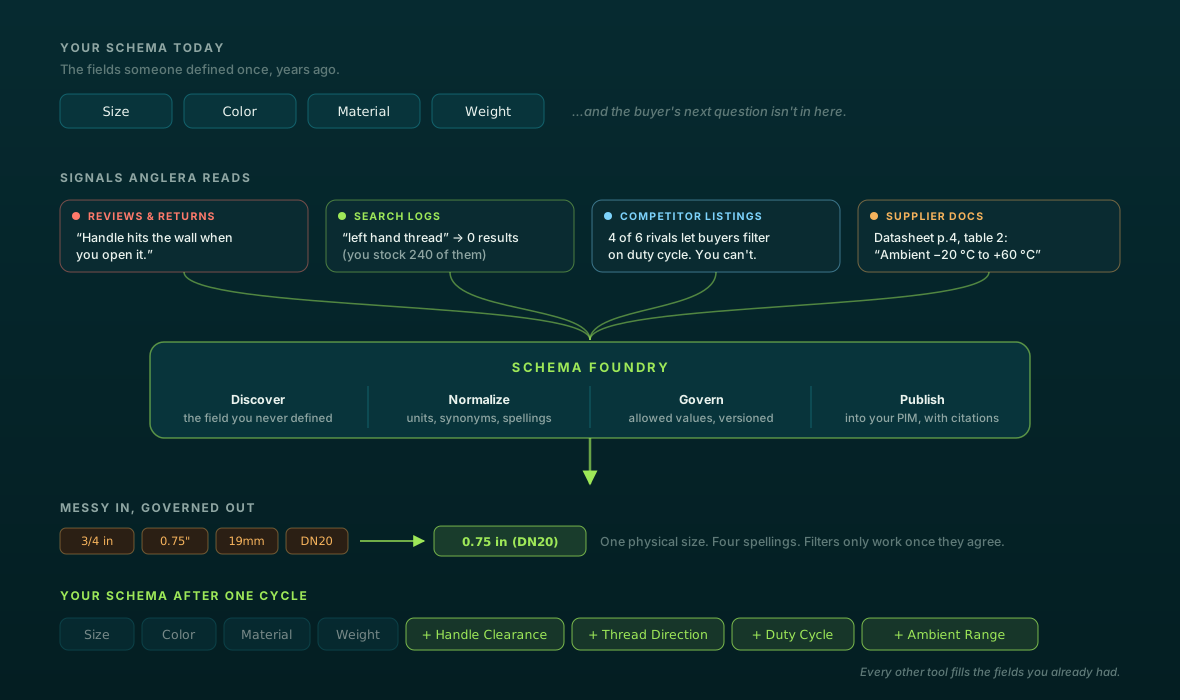
What neither platform does out of the box is enrich the underlying product data — filling missing attributes, scoring completeness against channel-specific buyer signals, and writing clean records back to the source of truth. That gap exists regardless of which platform you choose, and it is where Anglera fits alongside either one.
| Plytix | Productsup | Anglera | |
|---|---|---|---|
| Primary function | PIM plus DAM plus basic channel syndication — one platform to centralize product content, manage assets, and publish to core ecommerce channels | Enterprise feed management and syndication — ingest supplier data, apply transformation rules, and distribute across 2,500-plus channels at scale | Enrichment layer — fills missing attributes, cleans inconsistencies, scores every SKU against buyer signals, and writes enriched records back to the source of truth |
| Target company size | Small and mid-sized businesses; unlimited users on all plans makes it accessible for growing teams without per-seat cost pressure | Mid-market to enterprise brands, manufacturers, and retailers managing high-volume, multi-channel distribution; clients include L'Oréal, ALDI, and PUMA | Works alongside either — roughly 30-day implementation fits SMB timelines; enrichment scales to enterprise SKU volumes without replacing existing tools |
| Channel reach | Solid coverage of major ecommerce channels and marketplaces; well-suited for teams distributing to a manageable set of destinations | 2,500-plus channel connectors including Amazon, Google, Meta, and retail data pools; built specifically for breadth and volume at enterprise scale | Channel-agnostic — enriches and scores data before it flows into either platform's distribution layer, so feeds are complete when they arrive at the channel |
| Content creation and AI | Built-in AI for generating and translating product descriptions; AI credits available as an add-on to paid plans | Rule-based data transformation and normalization; not a content generation platform — assumes content already exists and focuses on formatting it correctly per channel | AI-driven attribute enrichment sourced from buyer signals — identifies missing fields, fills gaps from authoritative sources, and flags completeness issues per channel requirement |
| Pricing model | Freemium entry point; paid plans start around $733 per month; catalog-size tiers with add-ons for AI credits and additional distribution channels | Custom enterprise pricing only; no public tiers — a sales conversation and quote are required before any number is available | Custom pricing; contact for a quote — implementation scoped to your catalog size and enrichment requirements |
| Implementation complexity | Low to moderate; designed for teams without dedicated IT; onboarding is largely self-serve and most SMB teams are operational within weeks | Enterprise-scoped implementation with dedicated project management and integration work; ramp time varies by channel complexity and data source count | Approximately 30 days; connects to your existing PIM or feed layer without replacing it — no rip-and-replace required |
| Data quality and enrichment | Basic completeness tracking and validation within the platform; relies on the team to supply and maintain accurate attribute data | Transformation rules can normalize and reformat data, but enrichment assumes the source data is already complete — garbage in, garbage out still applies | Core capability — gathers, cleans, enriches, and scores every SKU before distribution so that whichever platform moves the data, it arrives channel-ready |
How to choose between Plytix and Productsup
Choose Plytix if you are an SMB that needs a single platform to centralize product content, manage digital assets, and distribute to a core set of channels. The unlimited-user model and freemium entry point make it accessible without enterprise budget or IT overhead. Built-in AI for descriptions and translations reduces the manual content work that kills small teams. If your primary pain is "product data lives in spreadsheets and everyone is working off different versions," Plytix solves that directly and gives you a distribution layer as part of the same tool.
Choose Productsup if you are a mid-market or enterprise brand, manufacturer, or retailer distributing to a large and complex set of channels — particularly if you are feeding retail data pools, managing supplier ingestion workflows, or need the breadth of 2,500-plus connectors. Productsup assumes you already have product data and excels at transforming and moving it at scale. It is not the right tool for a team still trying to get its data into one place. If your pain is "we have the data, but getting it formatted and delivered correctly across 40 destinations is manual and error-prone," Productsup is purpose-built for that.
The honest edge case: A mid-market company sitting between these two — say, a specialty distributor with a few hundred SKUs and growing channel ambitions — may find that Plytix handles today's needs but will hit limits as channel count grows. In that scenario, starting with Plytix and planning a future migration to a dedicated syndication layer is a reasonable path, not a mistake.
Whichever you pick, the data still has to get done
Whichever platform you choose, the underlying risk is the same: if your product data is incomplete, inconsistent, or missing the attributes that buyers and search algorithms require, better distribution only moves bad data faster. Plytix's AI can generate descriptions, but it cannot fill missing technical specifications or score attribute completeness against a retailer's content requirements. Productsup's transformation rules can reformat data, but they cannot manufacture information that was never captured.
Anglera connects to your existing stack — whether Plytix is your PIM or Productsup is your feed layer — and runs enrichment on every SKU before it ships downstream. It gathers missing attributes from authoritative sources, cleans inconsistencies, and scores each product against buyer signals specific to each channel. Enriched records are written back to your source of truth, so the data improves permanently rather than being patched at the point of export.
The result is concrete on both sides: Plytix users publish richer, more complete content from the moment Anglera runs; Productsup users push channel-ready feeds that arrive with the attributes retailers and marketplaces actually require. Implementation takes about 30 days and fits into your existing workflow without replacing either platform. Anglera is the enrichment step that both tools assume already happened — it just makes sure it actually does.
Frequently asked questions
Can Plytix replace Productsup for enterprise channel distribution?
Not for most enterprise use cases. Plytix covers core ecommerce channels well, but Productsup's 2,500-plus connectors, retail data pool integrations, and rule-based automation at enterprise scale are built for a different tier of complexity. A manufacturer syndicating to dozens of retail partners will outgrow Plytix's distribution layer. For an SMB with a manageable channel set, Plytix is usually sufficient and significantly more cost-effective.
Is Productsup a PIM?
No. Productsup ingests and transforms product data for distribution — it is not designed to be the master record for product content or digital assets. Enterprise teams using Productsup typically pair it with a dedicated PIM for data governance and content management. Without a PIM as the source of truth, Productsup is moving whatever data it receives, complete or not.
Does Anglera replace Plytix or Productsup?
No. Anglera is strictly the enrichment layer. It connects to whatever PIM or feed management platform you already use, enriches the data, and writes it back. You keep your existing tools and workflows; Anglera ensures the data flowing through them is complete, accurate, and scored against the buyer signals that drive conversion at each channel.
Which tool should I look at if I am a manufacturer distributing to retail partners?
If you are distributing at enterprise scale to a large number of retail partners and data pools, Productsup is the more likely fit — that is exactly the use case it is built for. If your channel footprint is smaller and you also need a central place to manage and build product content, Plytix may cover both needs without requiring a separate syndication platform.
Does Plytix's built-in AI remove the need for a separate enrichment tool?
Plytix's AI generates and translates product descriptions, which reduces content writing time. That is different from enrichment — filling missing technical attributes, sourcing specifications from manufacturer data, and scoring completeness against channel-specific requirements. If your catalog has gaps in structured attribute data (dimensions, materials, certifications, compatibility), Plytix's AI will not close those gaps. That is the work Anglera is designed to do.