Plytix vs Syndigo: Which Product Content Platform Fits Your Business?
Plytix and Syndigo both store and distribute product content, but they are aimed at different companies with different problems and different budgets.\n\nPlytix is an all-in-one PIM, DAM, and syndication platform built for small and mid-sized teams. Its pitch is practical: one tool that lets a lean team centralize product data, generate descriptions with AI, manage digital assets, and push content to ecommerce channels — with unlimited users on every plan and a freemium entry point that makes it genuinely accessible. Syndigo is built at the other end of the scale: an enterprise Product Experience Cloud that combined with its 1WorldSync acquisition operates one of the largest product content networks in the world, connecting brands and manufacturers to 2,500+ retail and GDSN recipients with compliance validation against 23,000 unique retailer requirements.\n\nThe choice between them usually resolves quickly once you know your distribution footprint. Plytix suits companies that need a solid, affordable product content hub for their own channels. Syndigo suits companies where the primary challenge is pushing validated, compliant content to dozens or hundreds of retail trading partners simultaneously. Neither platform, however, solves the upstream problem they share: the product data going in is rarely buyer-ready. Supplier content arrives as raw specs written for procurement, not for how buyers actually search and compare.
| Plytix | Syndigo | Anglera | |
|---|---|---|---|
| Target market and scale | Built for small and mid-sized businesses — lean teams, moderate catalog sizes, and direct-to-market ecommerce channels. Unlimited users on all plans keeps costs predictable as teams grow. | Built for mid-market and enterprise brands and manufacturers with large catalogs and complex multi-retailer distribution requirements. Designed to operate at the scale of 2,500+ trading partners globally. | Enrichment layer — not a PIM or syndication platform; reads from whichever platform is the system of record, enriches every SKU against buyer signals, and writes results back regardless of company size |
| Syndication and distribution network | Built-in channel feed syndication to major ecommerce platforms and marketplaces; designed for direct-to-consumer and ecommerce channel reach rather than broad retail distribution networks | One of the largest product content networks globally following the 1WorldSync acquisition — 2,500+ retail and GDSN recipients; purpose-built for brand-to-retailer content distribution with 23,000 unique retailer content requirements tracked | Does not syndicate — enriches the content that Plytix or Syndigo then distributes; the two layers stack cleanly |
| Data governance and compliance | Straightforward PIM governance suited to SMB catalog sizes; no MDM layer or enterprise-grade data validation built in; teams manage attribute completeness manually or with AI assist | Robust compliance infrastructure — 10,000 data validations against retailer requirements, MDM capabilities for master data management, and GDSN-certified content distribution; built for compliance-grade governance at enterprise scale | PIM-agnostic — adapts to the attribute schema defined in Plytix or Syndigo; enriches within your existing data model without requiring structural changes |
| AI and content enrichment | Built-in AI for generating and translating product descriptions from existing data; AI credits are a paid add-on; output quality depends on the completeness of attributes already in the system | AI-assisted content authoring within the platform; completeness scoring against retailer content requirements; teams manage and approve final content before distribution | Autonomous enrichment driven by buyer signals — how real buyers search, compare, and decide — not reformatted supplier copy; writes results back to the PIM without a copywriter in the loop |
| Pricing and total cost | Freemium tier available; paid plans from ~$733/month; catalog-size-based tiers with add-ons for AI credits and extra distribution channels; no per-seat pricing | Custom-quoted only; no public pricing; third-party estimates place TCO $10,000–$30,000 higher per year than mid-market PIM alternatives; pricing varies by data volume, users, and feature tier | Priced per SKU enriched — layers onto your existing PIM investment rather than replacing it |
| Implementation speed | Self-serve onboarding with a freemium entry point; smaller teams can be productive in days to weeks; paid plans involve a sales conversation but setup is designed for SMB speed | Enterprise sales and implementation process; MDM setup, data validation configuration, and retailer network onboarding extend the timeline to months for typical deployments | ~30 days from kickoff to enriched SKUs written back to the PIM; no platform migration required |
| Best fit | Small and mid-sized ecommerce brands, retailers, and manufacturers needing an affordable, all-in-one product content hub with unlimited users and built-in AI | Mid-market and enterprise brands and manufacturers that distribute to a large number of retail and GDSN recipients and require compliance-grade content governance and validation at scale | Any B2B distributor, retailer, or manufacturer with an existing PIM who needs richer, buyer-ready product content without switching platforms |
How to choose between Plytix and Syndigo
Choose Plytix if you are a small or mid-sized team that needs a practical, affordable product content platform. The freemium entry point and ~$733/month paid tier make it accessible for growing businesses without an enterprise software budget. Unlimited users across all plans means you are not paying per seat as your team expands. If you sell primarily through your own ecommerce channels and marketplaces — and your distribution reach fits within Plytix's channel integrations — it covers PIM, DAM, and syndication in one tool without enterprise-level complexity or cost. Built-in AI copy generation is a genuine time-saver for teams that would otherwise write descriptions manually.\n\nChoose Syndigo if you are a brand or manufacturer with a broad retail distribution footprint. Syndigo's defining advantage is its post-1WorldSync network: 2,500+ retail and GDSN recipients, 10,000 data validations, and compliance tracking against 23,000 unique retailer content requirements. If your business requires pushing validated, structured product content to major retail chains, grocery distributors, and GDSN-connected trading partners simultaneously, Syndigo's network infrastructure is not easily replicated elsewhere. Expect custom pricing, a longer implementation timeline, and a TCO that runs significantly above mid-market alternatives — that premium is defensible when retail compliance and network reach are business-critical requirements.\n\nA few signals that clarify the decision:\n- If you are under roughly 200 employees and distribute primarily through your own channels, Plytix covers the need at a fraction of the cost.\n- If you have 10 or more active retail trading partners requiring structured, validated content submissions, Syndigo's compliance infrastructure tends to justify the investment.\n- If upfront pricing transparency matters, Plytix is the clear winner — Syndigo requires a sales conversation and a TCO well above what the average mid-market buyer expects going in.
Whichever you pick, the data still has to get done
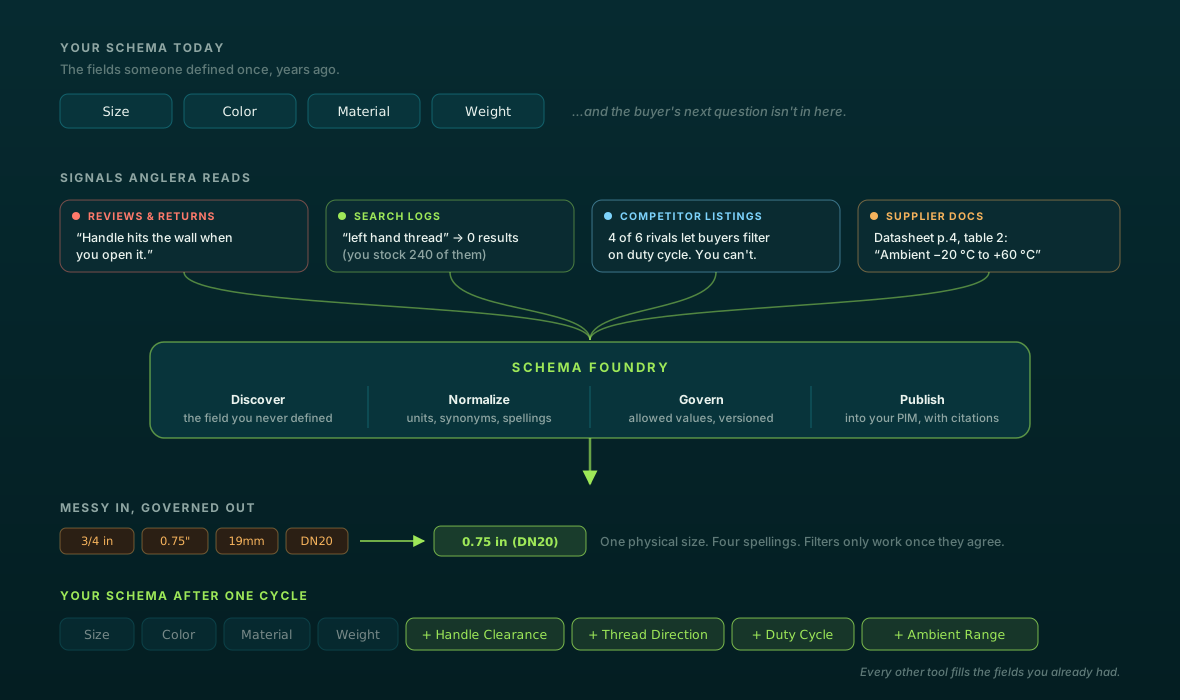
Both Plytix and Syndigo assume the product content entering the platform is accurate, complete, and written for buyers rather than for the factory floor. In practice, supplier data arrives as raw specs, inconsistent attribute values, and copy drafted for procurement teams rather than customers. Plytix organizes and distributes that content; Syndigo validates and syndicates it. Neither platform automatically makes the underlying content buyer-ready.\n\nAnglera is the layer that does that work. It connects to your Plytix or Syndigo instance via API, pulls your existing SKUs, enriches every attribute and description against buyer signals — how your customers actually search, compare, and filter — and writes the improved content back to the platform record. Your system of record stays in place. The content that Plytix or Syndigo then governs and distributes is buyer-ready from the start, not just well-organized and widely distributed. Whichever platform you choose, Anglera handles the enrichment work that both platforms assume already happened. Implementation is ~30 days with no platform migration required.
Frequently asked questions
What is the main difference between Plytix and Syndigo?
Market segment and network scale. Plytix is an affordable all-in-one PIM, DAM, and syndication platform built for small and mid-sized businesses — accessible pricing, unlimited users, built-in AI for content generation. Syndigo is an enterprise-grade product content network used by brands and manufacturers to push validated content to 2,500+ retail and GDSN recipients globally. If broad retail distribution and compliance-grade content validation are the requirements, Syndigo's network is the differentiator. If you need a practical, affordable product content hub for your own channels, Plytix fits better.
Is Syndigo worth the higher cost for mid-market companies?
It depends on your retail distribution footprint. Syndigo's TCO runs $10,000–$30,000 higher per year than mid-market PIM alternatives, with custom pricing that requires a sales conversation to unpack. If you have 10 or more active retail trading partners requiring structured, validated content submissions — grocery chains, big-box retailers, GDSN-connected distributors — the compliance infrastructure and network reach can justify that premium. For companies distributing primarily through their own ecommerce channels, the cost difference is harder to recover.
Can Plytix handle enterprise-scale catalogs?
Plytix is purpose-built for SMBs and handles moderate catalog sizes well. Its unlimited-user model is genuinely attractive for growing teams. For enterprise-scale requirements — MDM, 10,000+ SKUs across complex attribute hierarchies, compliance-grade content validation for dozens of retail partners, or GDSN certification — its governance and compliance tooling is lighter than what Syndigo offers. If you are starting to outgrow Plytix, the question is usually whether you need Syndigo's distribution network or just a more configurable PIM.
How does Anglera work with Plytix or Syndigo?
Anglera connects to your Plytix or Syndigo instance via API, reads your existing SKUs, runs enrichment against buyer signals — how your customers search, compare, and filter — and writes the improved attributes and descriptions back to the same platform record. No migration is required. Anglera works alongside whichever platform you choose in roughly 30 days, enriching the data before Plytix distributes it or before Syndigo validates and syndicates it.
Do I need a separate enrichment tool if I already have Plytix or Syndigo?
For most B2B distributors and manufacturers, yes. Both platforms store and distribute product data, but neither automatically generates buyer-signal-optimized content. Supplier data arrives raw and incomplete; the platform gives you a well-organized place to manage it, but someone still has to research, write, and fill every attribute against how buyers actually shop. Anglera automates that work and writes results back to whichever platform you already run — so your system of record gets better content, not just better organization or wider distribution.