
BDI: How a Family Holding Company Built a Bearing Giant
BDI ranks #3 in Power Transmission on MDM's 2026 Top Distributors list. Its real story is who still owns it, and why that has never changed.
Part of Distributor Playbooks — strategy teardowns of every company on the MDM Top Distributors lists.
In 1935, a small Cleveland outfit called Bearing Distributors, Inc. started supplying bearings to the steel mills lining the Cuyahoga River. Ninety years later, the company known simply as BDI ranks third in Power Transmission on Modern Distribution Management's 2026 Top Distributors list, with $1.0 billion in 2024 revenue, a top-15 placement in Fluid Power, and a top-25 spot in Industrial Supply. The interesting part of BDI's story isn't the scale. It's who still signs the checks at the top.
From steel mills to a global product line
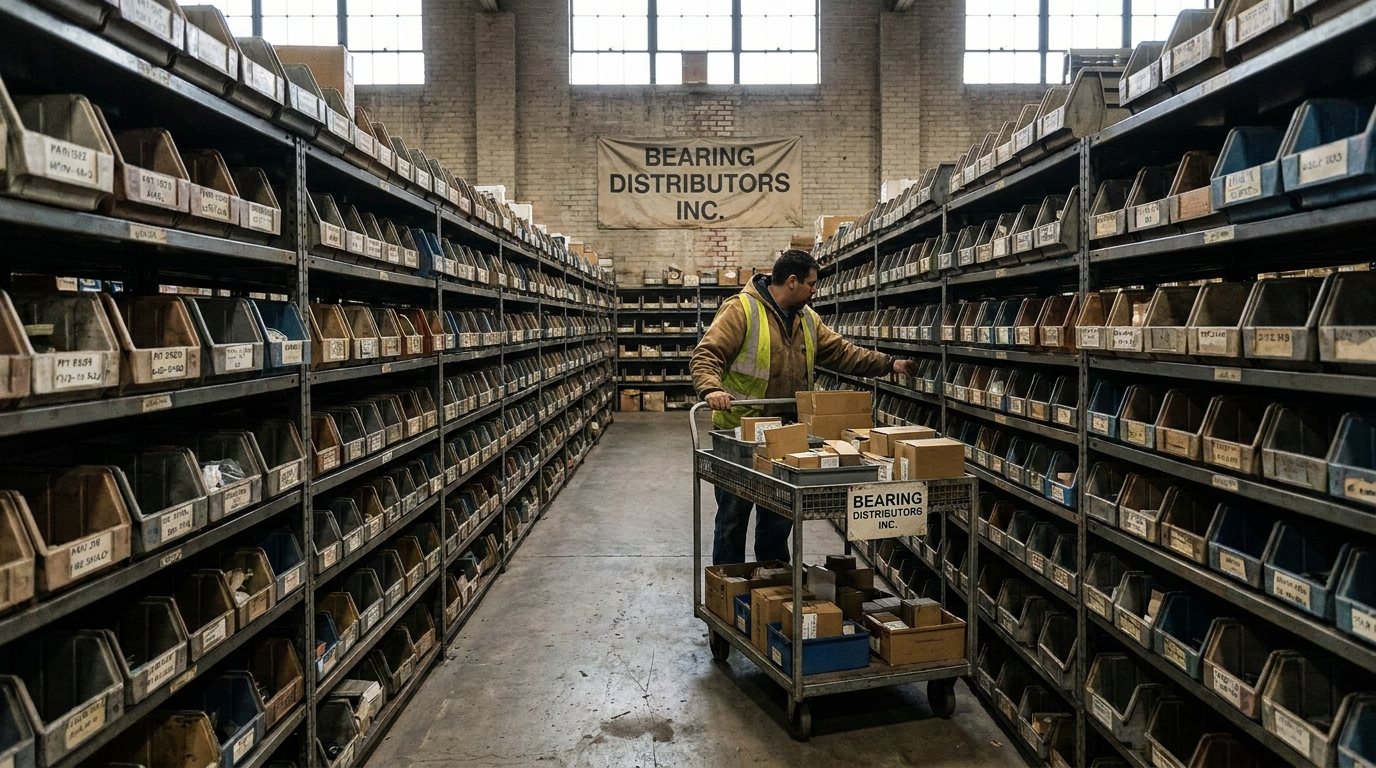
BDI's original business was narrow by design: bearings, sold to the heavy industry clustered around Cleveland. The name change from "Bearing Distributors, Inc." to the shorthand "BDI" tracked a real strategic shift, as the company pushed outward into mechanical power transmission, then electrical power transmission, linear motion, fluid power, material handling, and industrial safety products. That progression is the standard playbook for a bearing house that wants to survive past its first product line: stop being a single-category reseller and become the technical layer between a plant's maintenance team and the hundreds of vendors it would otherwise have to manage directly.
A second inflection came north of the border. According to the Canadian Fluid Power Association, BDI Canada went through an ownership change that merged it with the Cleveland parent, and by the end of the 1990s the combined entity was the largest bearing, power transmission, and fluid power distributor in Canada. That merger is a useful marker for how BDI actually grows: not by inventing new categories, but by absorbing regional operators who already have the category and the customer relationships, then running them at BDI's scale. Trade press over the years has logged the same pattern domestically, with acquisitions of regional bearing houses like Bearing Sales and Brown Bearing folded into the BDI branch network rather than kept as separate brands.
The unglamorous part: who owns BDI
Here's the detail that doesn't show up on a typical distributor scorecard. BDI is a subsidiary of Forge Industries, a family-owned private holding company founded in 1919 and headquartered in Youngstown, Ohio, about seventy miles from BDI's own Cleveland base. Forge's other subsidiaries are Akron Gear & Engineering, a gear shop, and Miller Spreader, a maker of asphalt and concrete construction equipment. That is an odd portfolio for a company sitting on top of a billion-dollar bearing distributor: a gear machinist and a paving-equipment manufacturer, bundled with the third-ranked power transmission distributor in North America, all under one family's control for over a century.
Most of BDI's real competitive set has taken a different ownership path. Applied Industrial Technologies and Motion Industries (a Genuine Parts Company subsidiary) are public. Kaman's distribution arm and a long list of regional power transmission houses have moved through private equity hands over the past two decades, often multiple times, as PE firms buy, consolidate, and flip bearing and MRO distributors on standard hold-period timelines. BDI has stayed put. The strategic tension in that is real and worth naming honestly: family ownership means no PE sponsor pushing for an accelerated roll-up or a dressed-up exit, which can mean slower access to acquisition capital when a competitor is willing to overpay for share. It also means no earnings calls, no sponsor-driven cost-cutting cycles, and no pressure to hit a return threshold inside a five-to-seven-year fund window. For a distribution business where trust with plant maintenance managers is built branch by branch over years, that patience is arguably worth more than the leverage a financial sponsor could bring.
What the branch map says about the strategy
BDI now operates more than 180 branches across roughly a dozen countries in North America, Europe, and Asia, per Power Transmission Engineering's company directory. The company has kept opening and relocating branches through 2025, including a first location in Oklahoma and expanded facilities in the Atlanta and Charlotte metro areas, according to reporting in Industrial Distribution. That is organic density-building, not the kind of headline-grabbing mega-acquisition that shows up in a PE-backed competitor's press releases. It matches the ownership structure: a family holding company compounds branch count and category depth over decades rather than swinging for a transformational deal that resets the balance sheet.
BDI's 2026 MDM placements:
| Vertical | 2026 MDM Rank |
|---|---|
| Power Transmission/Bearings | #3 |
| Fluid Power | #13 |
| Industrial Supply | #24 |
BDI's 2025 MRO placement (#13) is no longer part of MDM's 2026 list.
The value-added services layered onto that branch network, including inventory optimization, technical support, documented cost-savings reporting, and end-user training, are what every serious industrial distributor now offers. What sets BDI apart is that it can offer them at national scale while still being small enough, corporately, that a family in Youngstown can decide how fast to grow without checking in with a fund's investment committee.
Sources
- Modern Distribution Management, 2026 Top Distributors
- Forge Industries, company overview
- Canadian Fluid Power Association, BDI Canada Inc. member profile
- Power Transmission Engineering, BDI company directory
- Industrial Distribution, BDI branch expansion coverage
Every distributor on this list runs on the same unglamorous inputs: a catalog worth trusting, a branch worth stocking, and data clean enough to move product without a phone call. This series looks at how each one built theirs.