
Border States: The Electrical Distributor Betting on Itself
Border States ranks #6 on MDM's 2026 electrical list. Its real edge: full employee ownership and the confidence to just quit its buying group.
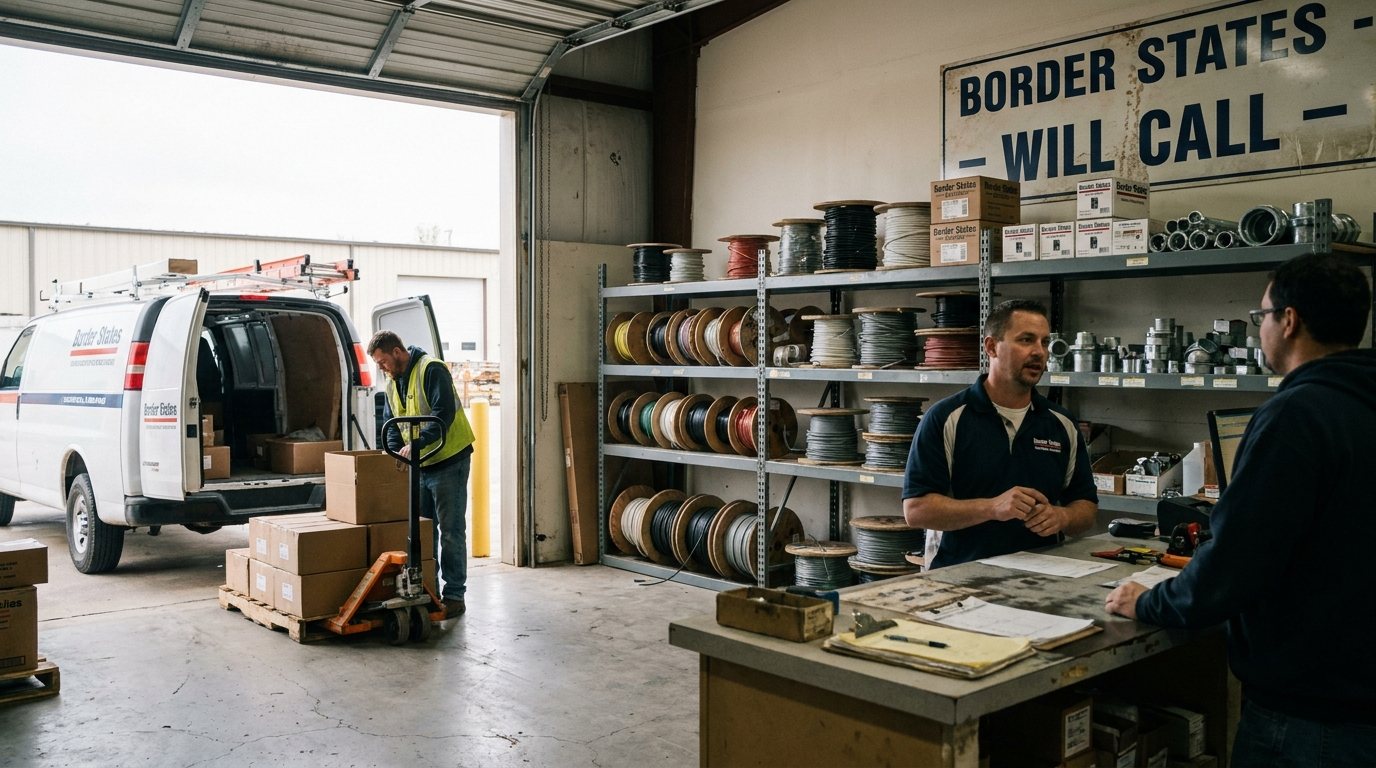
Part of Distributor Playbooks — strategy teardowns of every company on the MDM Top Distributors lists.
On December 31, 2025, Border States walked away from Affiliated Distributors, the buying group it had belonged to for 40 years. Most independent distributors join a group like AD to get the volume rebates and vendor access that come with pooling purchases across hundreds of members. Border States decided it no longer needed the pool. That single decision says more about how this company competes than any branch count could.
Border States lands at #6 on MDM's 2026 Top Distributors list for the electrical vertical, Modern Distribution Management's annual accounting of North America's largest distributors across 20 product categories. The company has held a spot in MDM's top ten for electrical distributors continuously since at least 2011, according to its own company history, and trade press now puts it around $4 billion in annual revenue and the sixth-largest electrical distributor in the country. MDM does not disclose a FY2025 revenue figure for the company.
The moat nobody else in the vertical has quite like this
Border States has been 100% employee-owned since 2000. That fact appears on every page of its marketing material, and it would be easy to wave past as culture-page boilerplate. It is not. The ESOP, established in 1984 under then-president Paul Madson, is the mechanism that has funded roughly four decades of acquisition-led growth without the debt load or private-equity exit clock that shapes most of the electrical distribution roll-up story.
Compare the trajectory. Sales were $40 million the year the ESOP was created. By 2018 the company had passed $2 billion. By 2025, per trade estimates, it is approaching $4 billion. That is not organic branch-by-branch growth. It is a steady acquisition cadence: Korber Electric in 1990, Sterling Electric Supply in 1992, Nunn Electric in 2006, Minnesota Electric Supply in 2007, Western Extralite in 2014, Shealy Electrical Wholesalers in 2016, Kriz-Davis in 2017, Advance Electrical Supply in 2022, and most recently Dominion Electric Supply, a Mid-Atlantic distributor that brought roughly 300 employee-owners and ten locations into the fold. Nearly every deal, employee-owned company acquiring employee-owned outcome, gets absorbed into the same ownership pool rather than cashed out to a financial sponsor.
Why leaving the buying group is the tell
Buying groups exist to give small and mid-size distributors the negotiating leverage of a giant. Border States spent 40 years inside one. The reason to leave now, rather than at any earlier point in that run, is scale: the company reportedly ran close to $960 million a year in group-eligible purchases, enough volume that it can negotiate rebates and terms directly with manufacturers like Eaton, Hubbell, and Schneider Electric without splitting the difference through a co-op. It also runs SAP S/4HANA and has invested in supply-chain systems with GAINS, the kind of back-office infrastructure that used to be the buying group's job to provide.
That is the unique insight worth naming plainly: Border States has grown large enough, and built enough internal infrastructure, to graduate out of the exact kind of cooperative structure that most distributors depend on to compete with companies its size. It spent four decades as the biggest fish in someone else's pond and just decided to build its own.
The acquisition engine still runs on people, not just capital
What keeps that engine from becoming a private-equity-style roll-up in employee-owned clothing is who runs it. Leadership has passed cleanly through internal succession for twenty years, Brad Thrall to Tammy Miller to David White to current president and CEO Jason Seger, who took over in March 2024. Each of those CEOs came up inside the ESOP structure rather than being installed by outside capital, which matters for an acquisition strategy that depends on sellers believing their branch employees will stay employee-owners rather than become line items in an integration plan.
The company is also diversifying the base that ownership sits on top of. It entered industrial and PVF markets in 2019 and continues building distribution capacity, including a new Upper Midwest distribution center slated to open in fall 2026. That is a bet that the same ownership model and the same acquisition playbook scale into adjacent categories, not just more electrical branches.
The tension worth watching
Stepping outside AD removes a layer of collective vendor leverage right as the company leans harder on direct manufacturer relationships to hit what trade press describes as an aggressive five-year growth target. If that target requires more acquisitions at Dominion Electric's scale or larger, Border States will be negotiating every one of those vendor and integration relationships on its own account, with no buying-group backstop if a manufacturer relationship gets rocky. Employee ownership has been a patient, forgiving source of capital for forty years. Going solo on procurement is the first real test of whether the model works without the group behind it.
This is the fourth installment in Distributor Playbooks, a series on the strategy behind the companies that move the world's physical goods. The unglamorous parts of this business, the catalogs, the branches, the vendor terms, the data behind every SKU, are where distributors actually win or lose.