
DH Sutherland: The Family Distributor Aerospace Trusts
DH Sutherland made the 2026 MDM Top Distributors specialty adhesives list from one Oregon building. Here's how a three-generation family firm stayed independent.
Part of Distributor Playbooks — strategy teardowns of every company on the MDM Top Distributors lists.
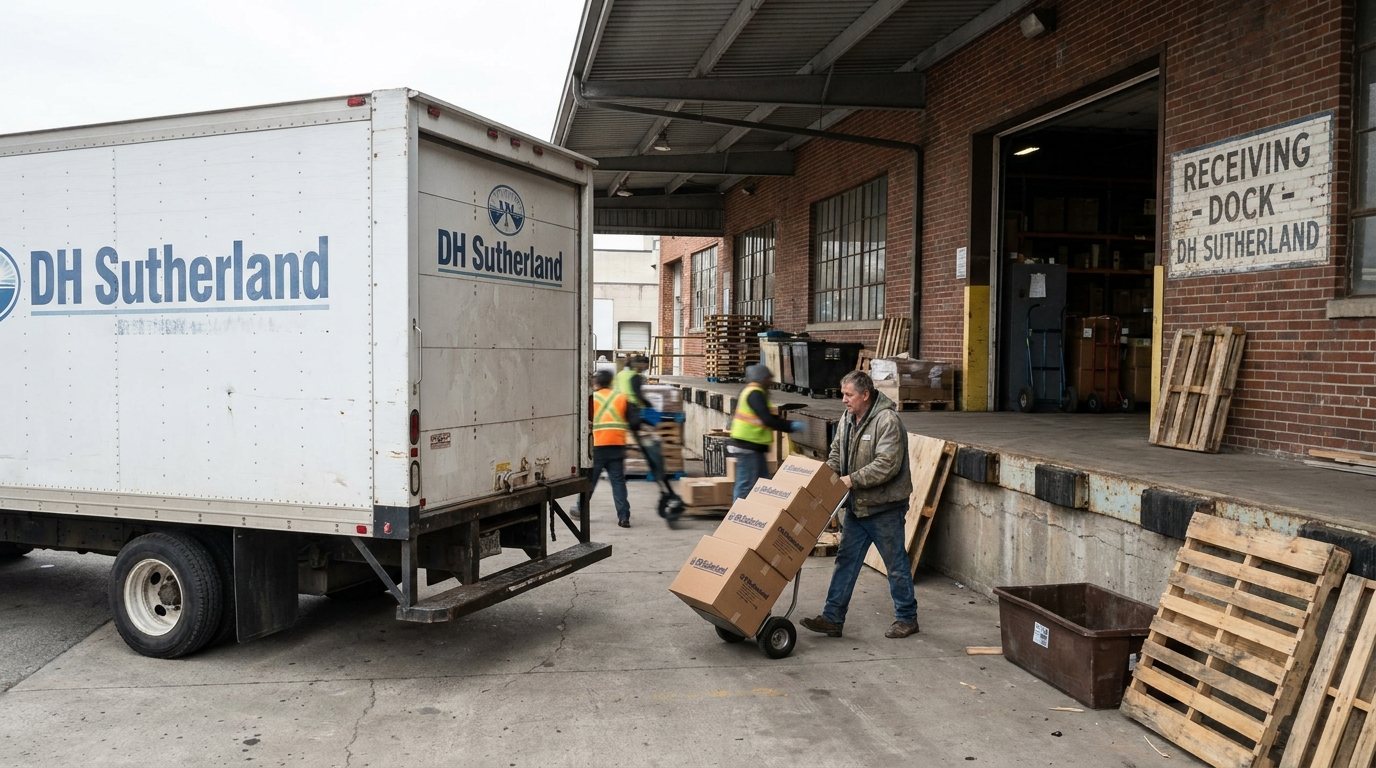
DH Sutherland ships adhesives, sealants, and carbon-fiber prepreg out of a 20,000-square-foot building in Beaverton, Oregon, to aircraft makers and high-performance equipment shops on three continents. That's the whole footprint. No branch network, no regional distribution centers, and it still shows up in the Specialty Adhesives category of Modern Distribution Management's 2026 Top Distributors list alongside companies with warehouses in every time zone. The gap between the building and the reach is the reason to look closer.
A phone booth, not a warehouse
The company traces to 1951, when David Sutherland, a returning B-29 pilot, started an export business working out of a phone booth in a downtown Portland, Oregon hotel lobby, selling North American goods into Japan. It was a broker's start, not a distributor's: no inventory, no supplier contracts, just a phone line and a market nobody else in Portland was calling.
The break came from the aviation boom that followed the war. Boeing was setting up offset manufacturing programs with Mitsubishi Heavy Industries in Japan, and Sutherland's export line put him in the room. He didn't stay a general trader. He narrowed, hard, into the materials aerospace manufacturers needed on a clock: adhesives and composites that degrade if they sit too long in the wrong temperature, ship too slowly, or get handled by someone who doesn't understand the chemistry. That narrowing, from "anything that ships to Japan" to "materials with an expiration date," is the founding decision that still defines the company.
Three generations, one building
Most industrial and chemical distributors that survive 75 years get bought. Adhesives and sealants distribution in particular has been a magnet for private equity roll-ups and strategic acquirers looking to bolt technical distributors onto bigger platforms. DH Sutherland took the other path. It's still family-run, now with Mary Sutherland Crouse as CEO and Andrew S. Crouse as president, second and third generation respectively, and it has picked up Oregon State University's Excellence in Family Business award and an Oregon Ethics in Business award along the way rather than a private-equity term sheet.
That's the insight worth naming: in a niche where scale usually wins the acquisition conversation, DH Sutherland has spent three generations betting that depth of technical relationship beats footprint. It represents 3M, Henkel (Loctite), DuPont, PPG, Dow Corning, Toray, and Kaneka Aerospace as a small independent, not a subsidiary of a bigger distribution platform, which means every one of those manufacturer relationships has to be earned and re-earned on technical trust rather than negotiated leverage from a parent company's balance sheet.
The portfolio is the strategy
Look at what DH Sutherland actually carries and the specialization sharpens further. It isn't a general adhesives house; it's built around materials that are time- and temperature-sensitive, film adhesives, structural pastes, foam cores, and epoxy-based carbon fiber prepregs that require cold-chain handling and technical application support, not just a shipping label. Recent supplier additions follow the same logic: a North American representation deal for Fibertech Group's prepreg materials, a meter-mix equipment partnership with Fluidic Systems so customers can dispense the adhesives correctly rather than just receive them, and a strategic partnership with Kaneka Aerospace. Each addition extends the same value proposition: the material plus the process knowledge to use it correctly, sold to aerospace and defense manufacturers and, on the other end of the same technical bench, sports and recreation equipment makers who need identical composite expertise for a paddleboard instead of a wing spar.
| Era | Move | Why it mattered |
|---|---|---|
| 1951 | David Sutherland starts export brokerage in Portland | No inventory, pure relationship business |
| Post-war | Anchors to Boeing's Mitsubishi offset program | Converts general trading into aerospace specialization |
| Ongoing | Second/third generation (Crouse family) takes leadership | Stays independent through a consolidating era |
| Recent | Adds Fibertech, Kaneka Aerospace, Fluidic Systems as principals | Deepens materials-plus-process model |
The trade-off nobody at DH Sutherland has to explain out loud
Staying this small and this independent carries a real cost, and it's worth stating rather than glossing over. A single-location, family-owned distributor doesn't get the purchasing leverage, the balance sheet, or the geographic redundancy that a PE-backed platform distributor can offer a manufacturer weighing where to place a global distribution agreement. If a principal like 3M or Henkel decides it wants one partner covering all of North America instead of a regional aerospace specialist, DH Sutherland is the kind of company that loses the account, not the kind that makes the acquisition to keep it.
The bet, evidently, is that aerospace and defense manufacturers buying temperature-sensitive structural adhesives don't actually want the biggest distributor. They want the one whose technical desk has answered the same chemistry question for three generations of engineers at the same customer. Whether that bet keeps working as the roll-up wave in specialty chemical distribution continues is the open question for the next generation of Sutherlands and Crouses to answer.
Distribution's biggest strategic bets rarely show up in a press release. They show up in the branch count nobody expanded, the acquisition nobody made, and the catalog of materials somebody spent 75 years learning cold.