
Kendall Electric's Growth Model: One ESOP Buys Another
Kendall Electric ranks #14 on MDM's 2026 electrical list by growing through acquiring fellow employee-owned distributors instead of selling to private equity.
Part of Distributor Playbooks — strategy teardowns of every company on the MDM Top Distributors lists.
Kendall Electric lands at #14 on the electrical vertical of Modern Distribution Management's 2026 Top Distributors list, the annual scorecard of North America's largest wholesale distributors. MDM doesn't disclose a revenue figure for the Portage, Michigan-based company, which is itself a small tell: Kendall Electric is 100% employee-owned, and employee-owned companies are under no obligation to publish what they make. That ownership structure is not incidental to how Kendall competes. It is the strategy.
The five-decade ESOP
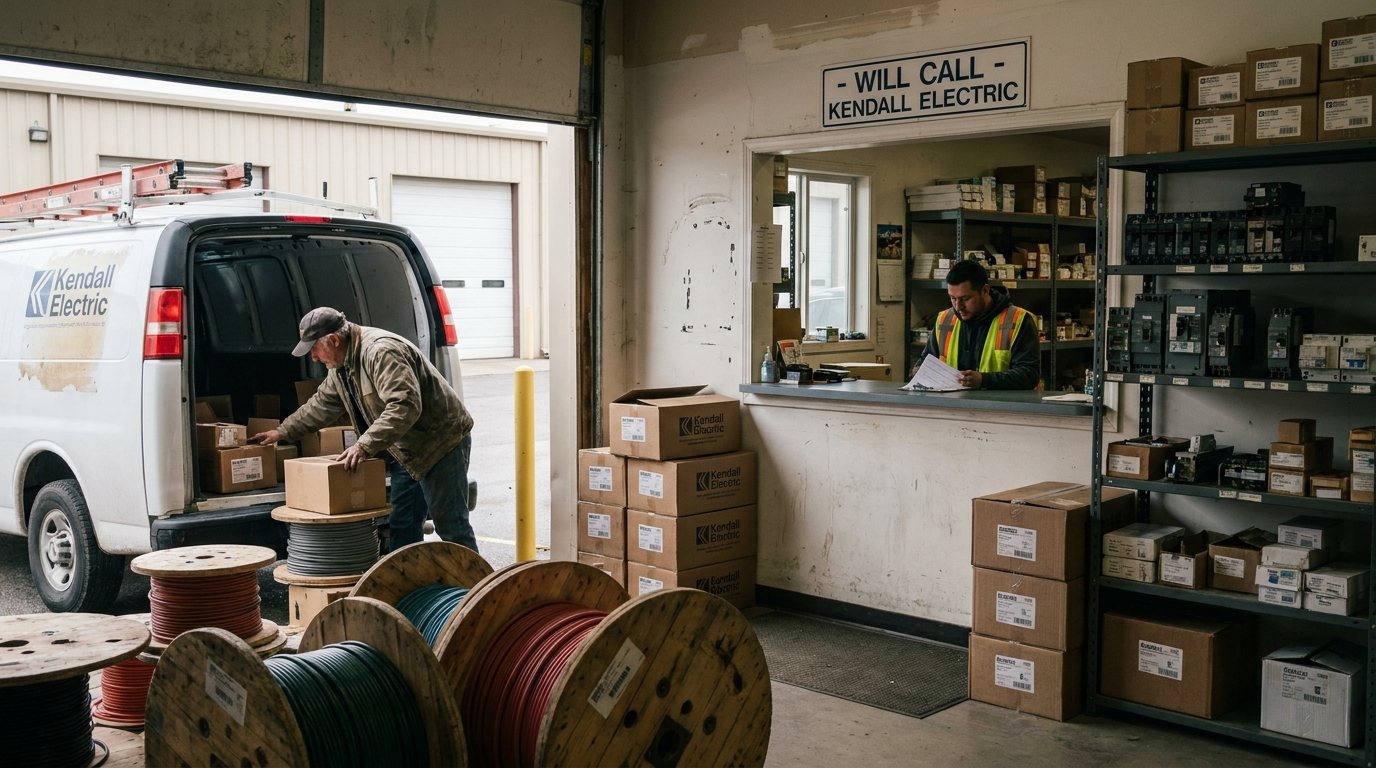
Kendall Electric has been, in its own words, "a valued member of the electrical distribution channel for five decades," which puts its roots in the early 1970s. It now operates as the flagship division of The Kendall Group, a holding structure that also owns IRIS (lighting), Merlo Energy, Galloup, Relay and Power Systems, Great Lakes Automation, and Kendall Lighting Center, according to the company's own site. Kendall Electric itself runs 60-plus branches out of five distribution centers across nine states, serving manufacturing, utilities, construction, machine builders, and system integrators.
Electrical distribution has spent the last fifteen years consolidating hard, and the dominant pattern is well known: a private-equity platform or a national player like Sonepar, WESCO, or Rexel buys a family-owned regional wholesaler, and the founders cash out. Kendall Group has grown too, by acquisition, but it has quietly run the opposite play.
Buying other owners, not just other branches
When Kendall Electric acquired Becker Electric Supply in 2019, adding eight branches across Ohio, Indiana, and Georgia, the messaging was pure continuity: customers were told their sales reps, product specialists, and accounts payable contacts would stay exactly the same. Two years later, Kendall did it again with Rumsey Electric, and this time the shared trait was explicit in the announcement: both companies were employee-owned, and leadership framed the deal as bringing "two of the country's best distribution networks together" on that common cultural footing. At the time, the combined Kendall Group spanned six divisions and more than 70 locations in nine states.
That is the unique insight worth naming plainly: Kendall Group's M&A engine is an ESOP acquiring other ESOPs. In a sector where consolidation almost always means a founder-owned business converting into a financial sponsor's portfolio company, Kendall has instead used acquisition to extend employee ownership outward, absorbing companies that already ran on the same model rather than replacing that model with one owned by outside capital. It is a slower way to grow. The pool of employee-owned electrical distributors willing to sell to another employee-owned distributor is a fraction of the pool of family owners willing to take a private-equity check. But it is a way of growing that keeps the incentive structure identical on both sides of the deal, which is likely why Kendall's post-acquisition announcements read less like corporate integration memos and more like reassurances that nothing will actually change.
Competing nationally without going national
The other half of Kendall's model is cooperative rather than proprietary. John Harman, president of The Kendall Group, chairs supplyFORCE, the program inside the AD (Affiliated Distributors) buying group that lets independent electrical distributors jointly service large, multi-branch national accounts, the kind of business that would otherwise flow automatically to Sonepar or WESCO by virtue of their footprint. In July 2026, AD moved to acquire supplyFORCE outright, with Harman telling the trade press that "independents will require increasingly more complex and technically advanced solutions" to keep winning that kind of work.
The strategic logic is straightforward once you see it: a regional employee-owned distributor cannot match a national player's branch count alone, so instead of either selling out for the scale or trying to out-build it, Kendall helps run the shared infrastructure that lets independents pool coverage for the accounts that demand it. Kendall doesn't need to own branches in every state a national customer operates in. It needs to belong to a network that collectively does, and it has positioned its own leadership at the center of that network's next phase.
The trade-off
None of this comes free. Growth-by-culture-fit means Kendall passes on acquisition targets that a PE-backed competitor would take without hesitation, and staying private means the company's actual scale, revenue, employee count, EBITDA, is simply not visible to the market the way a public or sponsor-owned rival's is. MDM's own "not disclosed" line for Kendall's FY2025 revenue is the plainest evidence of that opacity. For a company competing against businesses that publish quarterly numbers, operating without that scoreboard is itself a choice, one that only works if the ownership model keeps generating enough loyalty and continuity to make disclosure unnecessary.
Every distributor on the MDM list is, underneath the branch counts and revenue tables, a bet on how to organize people, catalogs, and warehouses well enough that customers never have to think about where the part came from. Kendall Group's version of that bet is that the ownership structure is the product.