
Scott Electric: How an Independent Distributor Stays That Way
Scott Electric ranks 36th among US electrical distributors on the 2026 MDM Top Distributors list. Here is the model behind an 80-year independent run.
Part of Distributor Playbooks — strategy teardowns of every company on the MDM Top Distributors lists.
Scott Electric lands at number 36 on the electrical vertical of Modern Distribution Management's 2026 Top Distributors list, down from 21st on the 2025 list, the trade publication's annual ranking of North America's largest wholesale distributors. MDM does not disclose a revenue figure for the company, which is itself a small tell: Scott Electric is privately held, family-rooted, and has spent eight decades declining to behave like the national chains it competes against.
A counter in Greensburg, not a network of them
Scott Electric was founded in 1946 in Greensburg, Pennsylvania, a county seat roughly 35 miles southeast of Pittsburgh, and its company history reads like a study in patience. A second location did not open until 1970, in the Pittsburgh area. A third followed in 1979, in Altoona. That is three branches in thirty-three years, in an industry where the distributors above it on the MDM list were often adding branches at that pace in a single decade.
The company's footprint today still centers on Pennsylvania, Maryland, West Virginia and Ohio rather than a coast-to-coast branch map. That is the first thing worth naming plainly: Scott Electric's strategy has never been geographic sprawl. It is density. Cracking the top 40 of a national ranking from a cluster of branches in the Appalachian corridor means the company is winning by depth of relationship and share of wallet inside a defined territory, not by planting flags in new metros.
The insight: an electrical distributor that also runs a print shop
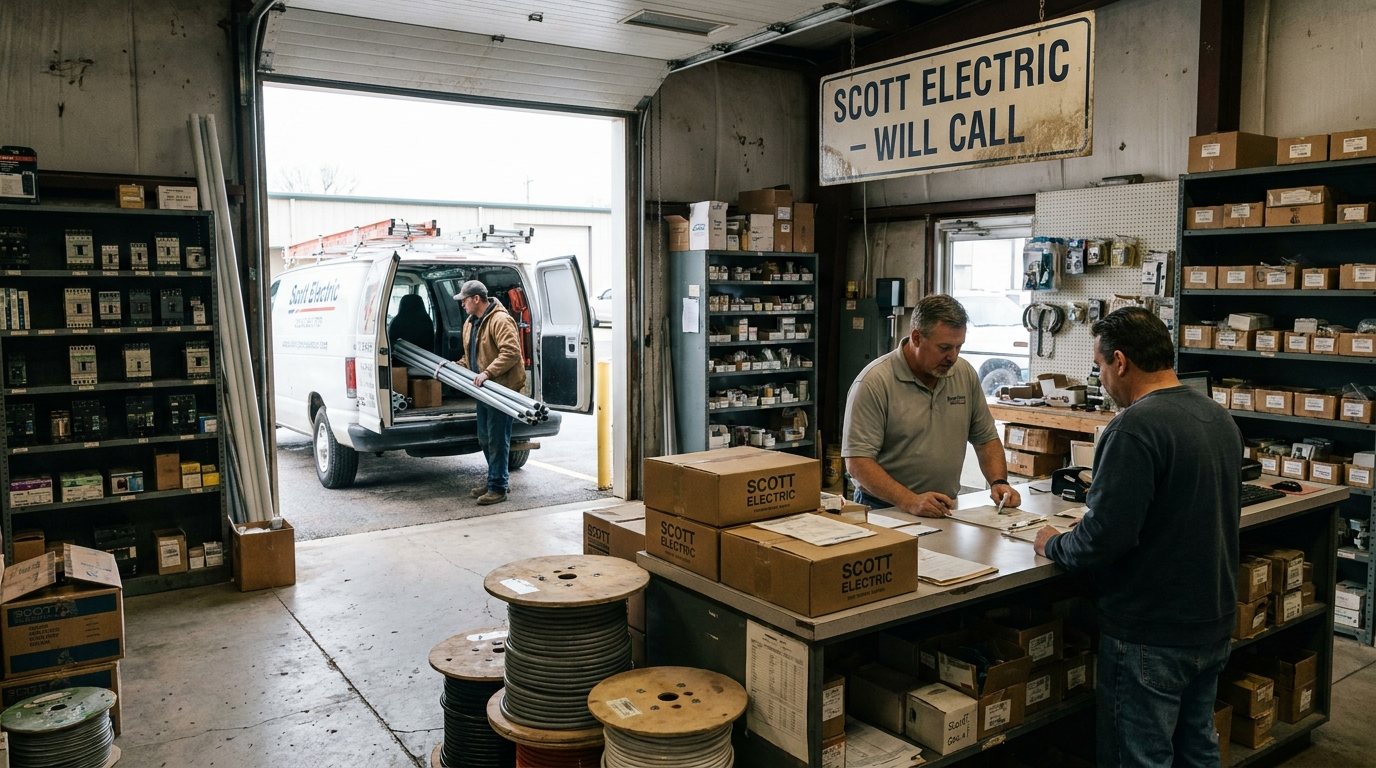
Here is the part of the story a competitor's strategy team would actually want to steal. According to the company's own LinkedIn profile, which describes Scott Electric as "one of the largest independent electrical distributors in the United States," its listed specialties go well beyond wire, conduit and switchgear. They include signs and engraving, screen printing, instant printing, tool rental and sales, and electrical safety supply, alongside a retail lighting showroom in Greensburg.
That is not a typo or a stray sideline. It is a deliberate bet that the contractor relationship a distributor builds at the counter can be extended sideways into everything else that contractor buys locally: branded apparel for the crew, job-site signage, safety gear, printed forms, rental tools for a one-off job. Most electrical distributors compete on fill rate, price file accuracy and technical support. Scott Electric competes on being the one stop a contractor never has reason to leave, because the same building sells the panel, prints the invoice pads, and screens the company's t-shirts.
It is a model that only makes sense for a distributor that stayed independent and stayed local long enough to know its customers this well. A regional office of a national roll-up does not add a screen-printing line to chase incremental margin from the same twenty accounts it has served since the Ford administration. A founder-era independent does.
The trade-off of staying independent
Electrical distribution has consolidated hard over the last three decades. National and multinational players built largely through acquisition now dominate the top of every MDM electrical ranking, offering national account programs, integrated e-commerce catalogs and combined buying power that no single-state independent can match line for line. Scott Electric's answer has been to not play that game. There is no visible string of tuck-in acquisitions in its public record, no rebrand under a private equity sponsor, no rapid multi-state buildout. The growth has been organic, branch by branch, decade by decade.
The honest tension in that choice: it caps how fast Scott Electric can grow and how much purchasing leverage it can bring to a national account bid. A distributor this size cannot out-discount a Sonepar or a WESCO on a fifty-state facilities contract. What it can do is out-know them on any given job in its own backyard, and sell that same customer four other things while it's at it. Ranking 36th nationally in electrical while running that dense, diversified, single-region model is the proof the trade-off has worked so far.
Why this matters more than it looks
The lesson generalizes past electrical distribution. In a channel where the biggest players compete on national scale, an independent's moat is rarely going to be matching that scale. It is going to be finding the adjacent lines of business the scale players will never bother chasing, because a screen-printing counter or a tool-rental rack is beneath their operating model but is exactly the kind of sticky, high-margin, relationship-deepening add-on a family-rooted regional player can run well. Scott Electric's real differentiator is not a product category. It is refusing to define itself narrowly as an electrical supply house at all.
Distribution's biggest advantages rarely show up on the label. They live in the branch list, the catalog depth and the decades of accumulated customer knowledge that a company like Scott Electric has quietly compounded since 1946.