
How TricorBraun Wins Without Selling a Drop of Cleaner
TricorBraun lands at #4 on MDM's 2026 JanSan Top Distributors list while selling no chemicals or paper goods at all, just the containers that hold them.
Part of Distributor Playbooks — strategy teardowns of every company on the MDM Top Distributors lists.
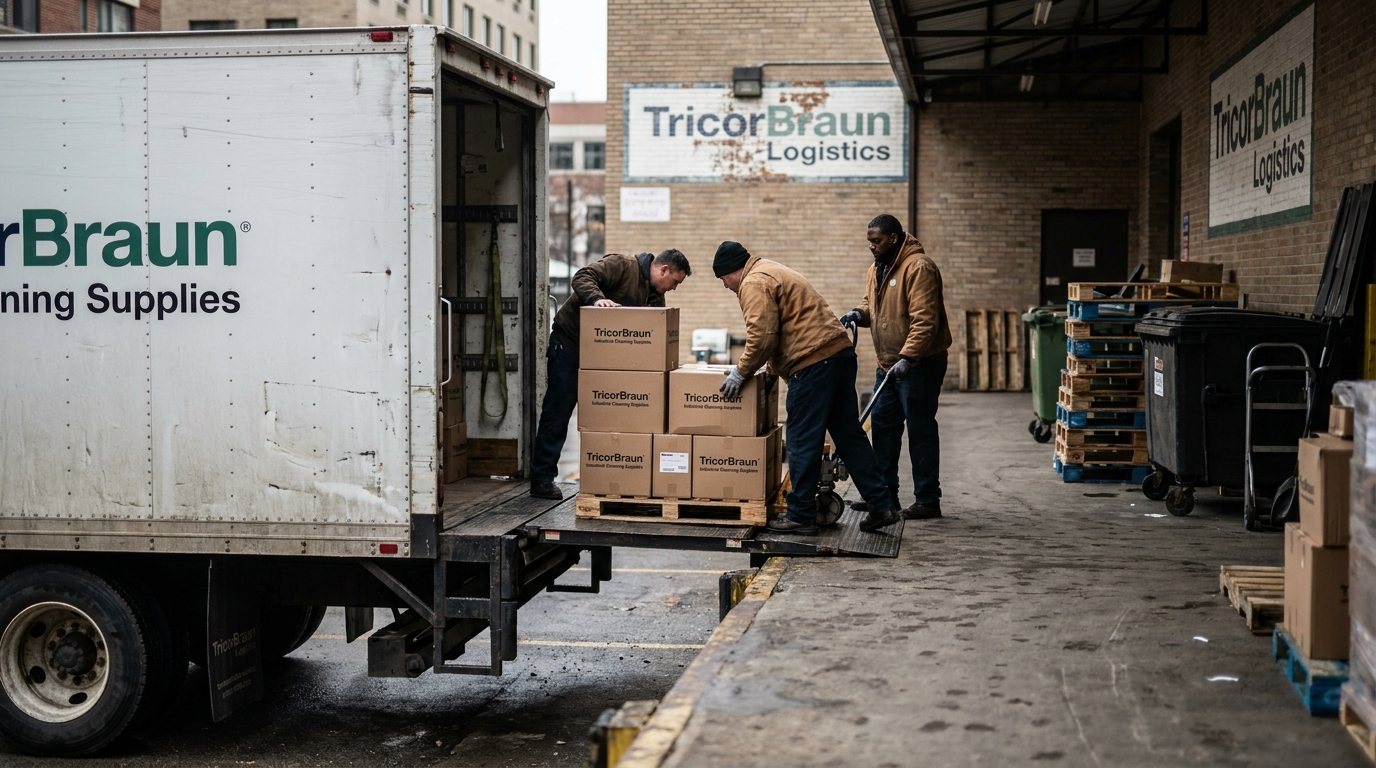
TricorBraun sits at #4 on Modern Distribution Management's 2026 Top Distributors list in the JanSan and industrial packaging category, a group MDM defines to include foodservice, janitorial-sanitation and industrial packaging suppliers together. That grouping is the whole story. TricorBraun doesn't sell a single mop, chemical drum, or case of paper towels. It sells the bottles, jugs, cans and closures that the companies making those products fill and ship. It is a jan-san distributor that has never touched a cleaning product.
The Product Is the Container, Not What's In It
Most companies on a MDM sector list compete on the same shelf as their peers: same chemicals, same paper, same fight over price and delivery windows. TricorBraun competes one layer upstream. It is a wholesale packaging distributor, buying blow-molded plastic bottles, glass jars, aluminum cans, and closures from manufacturers and reselling them, with design and engineering help attached, to brands across dozens of end markets. Household and industrial chemical companies are one customer segment among many that also include cosmetics, pharma, pet care, food and beverage, and wine. The jan-san placement on MDM's list isn't a description of what TricorBraun makes. It's a description of who buys from it. That is the unique insight worth naming plainly: TricorBraun's moat is that it never has to bet on any single end market, including the one it's ranked in here, because its real product is packaging infrastructure that sits underneath all of them at once.
A Century of Betting on the Same Layer
The company traces back to 1902 in St. Louis, according to its own company history, and has stayed in the same business ever since: sourcing and distributing rigid packaging rather than manufacturing it. That single-layer focus is what let it survive the Depression, two world wars, and the 2008 crash without ever needing to reinvent its core function. By 2008 it had grown to roughly 32 offices across North America and Asia. Today it operates more than 100 locations across the Americas, Europe, Asia and Australia, still organized around the same idea: be the broker and logistics layer between packaging manufacturers and the brands that need containers, in whatever quantity and specification a customer requires.
The Acquisition Machine, Not the Warehouse Network
TricorBraun's real growth engine over the last decade has been M&A, and the pace is the tell. Under CEO Court Carruthers, who ran the company from 2017 until stepping into a vice chair role in May 2025, TricorBraun completed roughly 30 acquisitions and tripled both revenue and EBITDA, according to the company's own leadership transition announcement. Each deal added either geography or category depth rather than raw volume in an existing lane: Package All for nutraceutical and healthcare, TricorBraun Flex for flexible packaging and digital printing, TricorBraun WinePak for wine bottle supply chains, CanSource for aluminum cans in 2023, and Craft Beverage Warehouse in 2024 for canned-beverage printing. The largest recent deal closed January 31, 2025: the acquisition of Veritiv's rigid containers business, formerly All American Containers, which added seven locations and more than 500,000 square feet of warehouse capacity serving food and beverage, personal care, wine and spirits, and industrial customers, per the completion announcement. None of these deals bought a category TricorBraun wasn't already in. They bought depth in categories it had already decided mattered.
What the Ownership History Actually Reveals
Here is the part of the story most packaging-industry profiles skip: TricorBraun has changed private equity hands four times without ever going public or selling to a strategic buyer. CHS Capital acquired it in 1999, sold it to AEA Investors in 2004, bought it back in 2006, then sold it to AEA again in 2016, where it remains, per Wikipedia's sourced ownership timeline. Most distributors that get flipped once eventually outgrow private equity entirely, either through an IPO or a sale to a strategic acquirer looking to bolt on a category. TricorBraun has instead become the kind of asset two sponsors keep trading between themselves. That's not a sign of stagnation. A business two separate PE firms have each owned twice is a business that reliably throws off the cash flow a leveraged buyer wants, even after 30-plus tuck-in acquisitions layered onto it. The M&A machine and the ownership churn are the same fact seen from two angles: a company built to be bought, sold, and grown by financial sponsors rather than to chase a public listing.
The Transition Test
Kevin Weadick took over as president and CEO in May 2025, arriving from the CEO seat at FleetPride and before that a run leading Grainger's Zoro business, a background in distribution and e-commerce rather than packaging manufacturing. That choice signals where AEA wants the next chapter to go: less about adding new packaging categories, more about squeezing digital and operational leverage out of the 100-plus locations Carruthers spent eight years assembling. Whether that shift changes the acquisition cadence, or simply changes what each acquisition is for, is the open question for anyone tracking where TricorBraun goes next.
Distribution rankings like MDM's rarely reward the company selling the flashiest product. They reward the one that figured out which unglamorous layer of the supply chain everyone else depends on, and then bought its way to owning more of it.