
U.S. Electrical Services: The Rollup That Kept Every Name
U.S. Electrical Services ranks #10 among electrical distributors on the 2026 MDM Top Distributors list. Here is how a near-failed rollup became a durable one.
Part of Distributor Playbooks — strategy teardowns of every company on the MDM Top Distributors lists.
U.S. Electrical Services sits at #10 among electrical distributors on Modern Distribution Management's 2026 Top Distributors list, the trade press's annual scorecard of North America's largest wholesale distributors. That placement understates how strange the company's origin story is. USESI was built in 2006 as a quick-flip private equity rollup, nearly came apart within a year, and survived by doing something almost no consolidator does: it stopped trying to erase the companies it bought.
A rollup built to be sold, not built to last
USESI was formed in 2006 by merging eight independent electrical distributors into a single holding company, according to the company's own history page. The stated intent, per that same history, was a fast financial flip: buy up regional wholesalers, staple them together, sell the combined entity for a multiple, move on. It is a familiar script in fragmented distribution categories, and it usually works because scale alone commands a premium.
It did not work here. By 2007, a year after the merger closed, the venture was reportedly close to failing. The company's history page is candid about this stretch, describing new ownership stepping in and a full leadership reset that did not actually take hold until 2011, when the current management team took over with a mandate to build, not flip. That five-year gap between the founding transaction and a functioning operating company is the part of the story a glossy About page usually skips.
The insight: consolidation without erasure
Here is the strategic choice that makes USESI worth studying rather than just noting. Most rollups spend their first eighteen months killing brand names, the acquired company's signage comes down and the parent's logo goes up, because unified branding is supposed to be where the synergy lives.
USESI went the other way. Two decades after that first merger, its 150-plus locations still operate under a roster of separate, regionally managed names: EW-NE, EW-CT, HZ Electric, Monarch Electric, Yale Electric, Maurice Electrical, Lade & Anlar, Standard Electric, Desert Electric, Walters Wholesale, WB Light, and US Renewable Solutions among them, each with its own division president reporting up to CEO Randy Eddy. Some of those names predate the internet by a century: Wiedenbach-Baker traces to 1913, Monarch Electric to 1928, Standard Electric to 1952, per USESI's own company timeline.
That is the opposite of the standard rollup playbook, and it is a deliberate bet rather than an accident of neglect. A regional contractor who has bought wire from Monarch Electric for thirty years keeps buying from Monarch Electric, not from an unfamiliar national brand. USESI centralizes the parts that customers never see, purchasing scale, back-office systems, e-commerce infrastructure, supply chain, while leaving the parts they do see almost untouched. It is consolidation for the balance sheet and continuity for the counter.
What the model asks in return
The trade-off is real. Running fourteen regionally managed brands instead of one national identity means duplicated back-office overhead in places, slower unified marketing, and a harder job for corporate leadership trying to instill one culture across division presidents who each answer for a legacy P&L. It also means USESI never gets the simple, single-brand growth story that a WESCO or a Rexel can tell. What it gets instead is retention: fewer acquired customers leave when the name over the counter never changes, and fewer acquired employees quit when their branch keeps its own identity and its own boss.
The model is still active, not a relic of the 2006 founding. In May 2024, USESI acquired Askco Electric Supply, a family-owned distributor in Glens Falls, New York, founded in 1974 and run by Jim Knapp and family, folding it into the Electrical Wholesalers and HZ Electric region while keeping the Askco name on the door. In May 2025 it added Swift Electrical Supply Company. Both moves follow the same pattern set in 2006: buy the relationship, keep the name, centralize everything behind it.
The current shape of the business
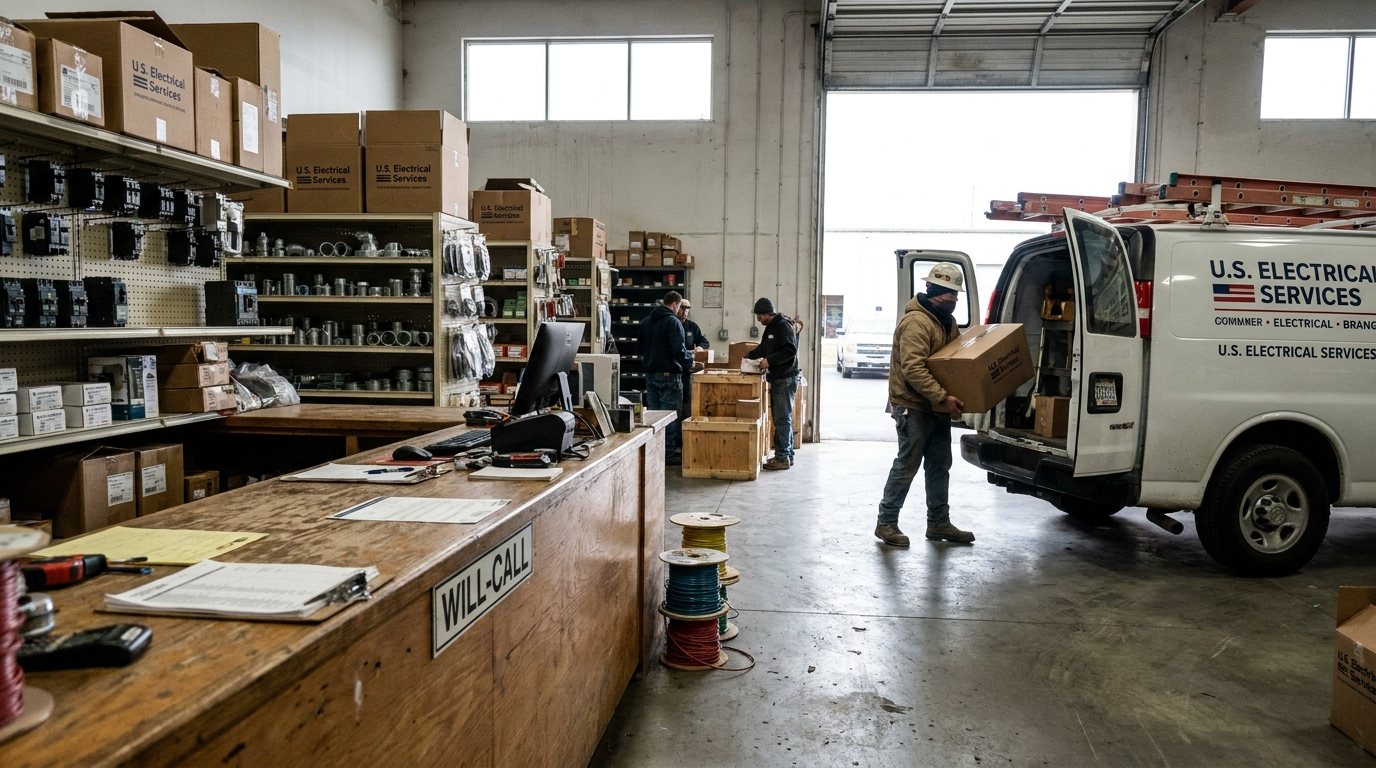
Today USESI runs from Middletown, Connecticut, with more than 2,000 employees across 14 states and a stated e-commerce catalog north of 300,000 SKUs, per the company's own site. It reports more than $1 billion in annual revenue, though MDM's 2026 report lists the figure as not disclosed, a common gap for privately held distributors that decline to share numbers with the trade press even as they compete for placement on its list. The company has also branded a renewable-energy arm, US Renewable Solutions, positioning at least part of the portfolio toward solar and storage work rather than pure legacy electrical supply.
| Era | What happened |
|---|---|
| 1913-1994 | Predecessor companies founded independently (Wiedenbach-Baker, Monarch Electric, Standard Electric, and others) |
| 2006 | Eight distributors merged to form USESI as a rollup |
| 2007 | Original venture nearly fails within a year of closing |
| 2011 | New leadership team takes over with a build-to-last mandate |
| 2013-2019 | Consolidation completes, new distribution centers and branches expand the Northeast and Mid-Atlantic footprint |
| 2024-2025 | Askco Electric Supply and Swift Electrical Supply Company acquired, brands retained |
The lesson for any distributor built through acquisition is not that USESI's approach is universally correct. Plenty of successful rollups do the opposite and win by forcing one brand, one price book, one culture. USESI's bet is narrower and more specific: in electrical distribution, where a contractor's trust in the counter staff often outlasts corporate ownership changes, the name on the building can be worth more standing than replaced.
Series note
Every distributor on the MDM list runs on the same unglamorous infrastructure underneath whatever brand is on the sign: a catalog that has to be right, a warehouse that has to ship on time, and data about both that has to hold up when the ownership structure changes and the name on the door does not.