
Werner Electric Supply's Quiet Climb Up the National Rankings
Founded in 1948 in Appleton, Wisconsin, Werner Electric Supply cracked MDM's 2026 electrical Top Distributors list by following industrial demand, not population.
Part of Distributor Playbooks — strategy teardowns of every company on the MDM Top Distributors lists.
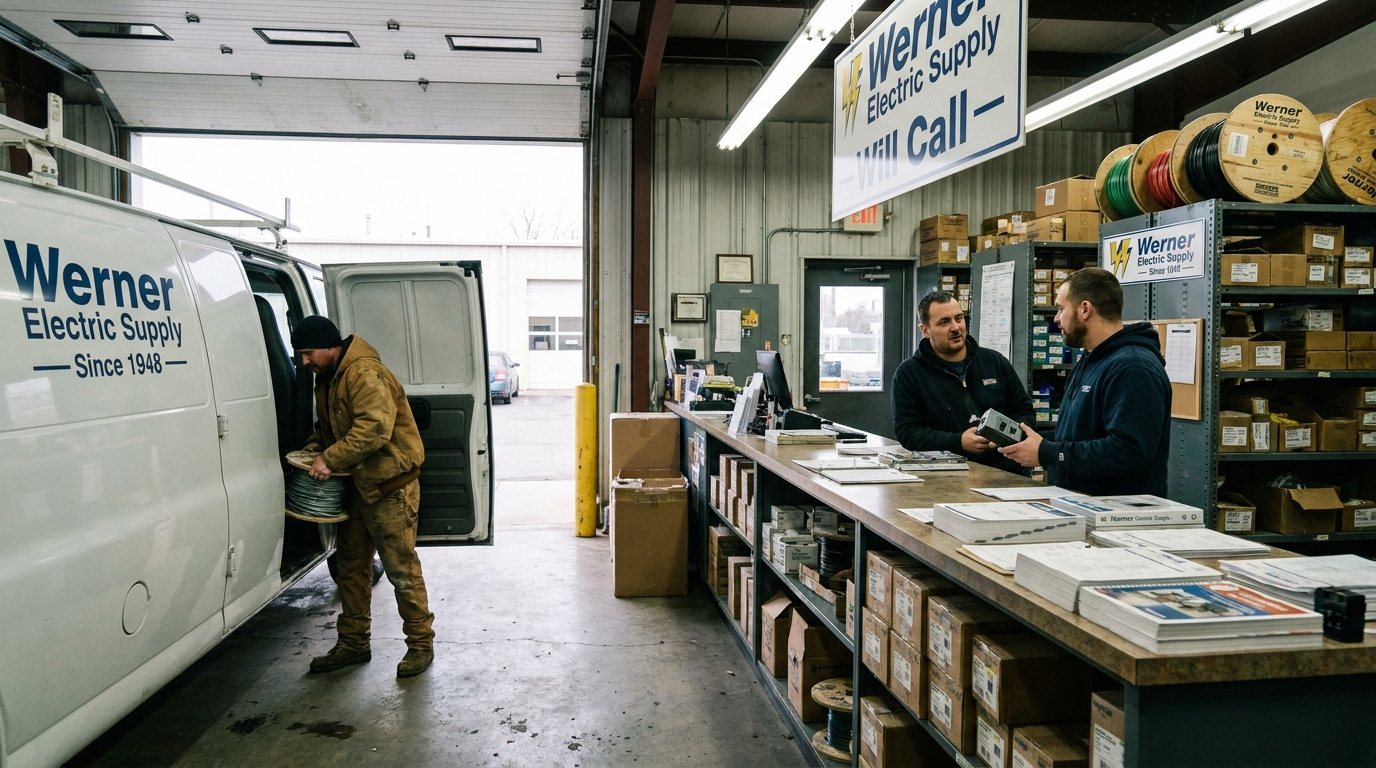
In November 2016, Werner Electric Supply marked the opening of a new branch in Fargo, North Dakota, by cutting a length of cable instead of a ribbon. It was a small, on-brand joke for a company that has spent 77 years selling exactly that kind of product to exactly that kind of customer. The gesture is also a decent proxy for how Werner has expanded: quietly, into places bigger distributors weren't chasing, one branch at a time.
Werner shows up at #30 on MDM's 2026 Top Distributors list for electrical, Modern Distribution Management's annual ranking of North America's largest distributors across 20 verticals. MDM lists the company's revenue as not disclosed, which is itself a small data point about how Werner operates: a private, low-profile regional player sitting inside a national ranking dominated by public and PE-backed giants who report revenue because they have to, not because they want to.
A 1948 start, a narrow specialty
Werner Electric Supply was founded in 1948 in Appleton, Wisconsin, and has run as a wholesale distributor of electrical products ever since, according to EDN's company profile and contemporaneous coverage of its Fargo expansion in The Forum. By 2017, under president Scott Teerlinck, the company operated 13 branches: ten across Wisconsin, plus outposts in Kingsford, Michigan, and Bismarck and Fargo, North Dakota. It stocked roughly 700,000 linear feet of cable and carried more than 4,500 unique SKUs, per that Forum reporting.
That inventory profile points at Werner's actual specialty. This isn't a general-contractor supply house competing on lighting fixtures and breaker boxes for every job site in town. Teerlinck told The Forum the company's growth was built on serving "machine builders and those manufacturers on the industrial side" — the OEMs, panel shops, and control-system integrators who need deep, immediate stock of wire and cable rather than a broad catalog of residential and commercial fixtures. That's a narrower, harder-to-serve customer than the average electrical distributor chases, and it's the kind of account that rewards depth of inventory over breadth of it.
Expansion that followed factories, not people
The geography is the tell. Most regional distributors grow by filling in population centers within driving distance of an existing branch. Werner's push into eastern North Dakota and western Minnesota went the other way: Teerlinck described Fargo as a regional hub specifically because it sat near industrial and agricultural manufacturing activity, not because it was a metro worth being in for its own sake. Bismarck opened in 2016, Fargo followed months later, and the company secured first right of refusal on adjacent space in Fargo's Butler Business Park for future growth — a bet that the industrial base there would keep needing more than one Werner location could handle.
That's a different playbook than the acquisition-fueled consolidation that built most of the electrical distributors above Werner on the MDM list. Werner didn't buy its way into new territory. It opened branches ahead of manufacturing demand it had identified, in geography its bigger, publicly reported competitors weren't prioritizing.
The unglamorous but telling rebrand
The most recent chapter is quieter still. The company's longtime domain, wernerelectric.com, now redirects to onewerner.com — a fact directly observable in the site's own HTTP response. Wayback Machine's earliest capture of the new domain dates to March 2025, which places the rebrand to "OneWerner" in roughly that window. It's the kind of move a company makes when it has grown into enough states and enough branches that a single unified brand name and web presence starts to matter more than the name it opened under in 1948.
That's the pattern worth naming plainly: Werner has spent nearly eight decades as a specialist, not a generalist, and it has grown by pushing into industrial pockets ahead of the competition rather than by rolling up competitors or advertising its scale. It shows up in a national top-30 ranking without a public revenue number attached to it, run by the same kind of low-visibility discipline that let a Wisconsin cable stockist end up serving manufacturers three states away.
The tension worth sitting with
Staying private and quiet has a cost. In a vertical where the largest players — Sonepar's various banners, WESCO, Rexel, Graybar — publish revenue, headcount, and acquisition activity as a matter of investor relations, a company like Werner is harder for suppliers, rivals, and even customers to size up. MDM's own list reflects that: rank without revenue. The tradeoff Werner has apparently chosen is to be judged on where its branches are and who trusts them with wire orders, rather than on a number in a press release. For a company that got its start supplying a single Wisconsin city, that's a fairly consistent 77-year bet.
Distribution's biggest advantages rarely show up in a press release. They show up in which branch has the cable in stock, which catalog data is right, and which distributor built its network around the customer nobody else bothered to chase. This series exists to trace those decisions, one distributor at a time.