Anglera vs Kaavio
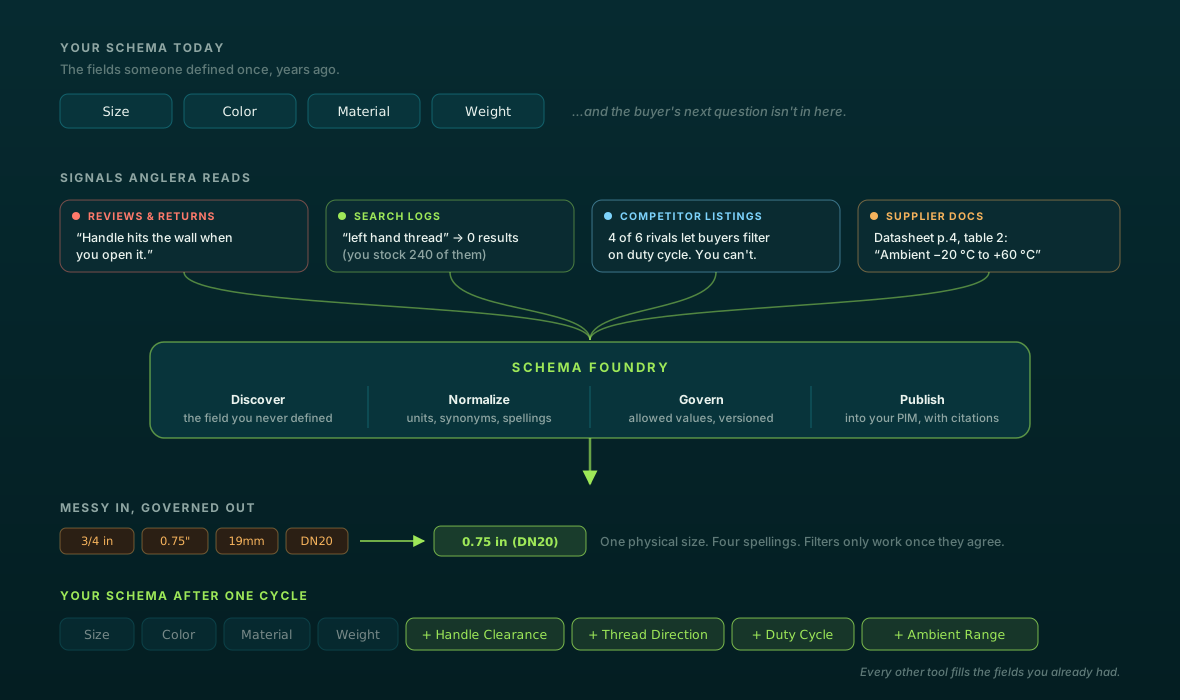
Kaavio and Anglera hunt in the same territory, and Kaavio's document pipeline is genuinely strong: it extracts and cross-validates data from supplier spec sheets and PDFs with source citations and confidence scores, and lets teams approve output before it goes live. Where the two diverge is the source of truth. Kaavio enriches from what suppliers publish; Anglera enriches against real buyer signals, meaning how buyers actually search, compare, and specify, so spec completeness and attribute coverage map to demand rather than to whatever the spec sheet happened to contain. Anglera also writes results directly back into the PIM you already run, including Akeneo, Salsify, and inRiver, with a roughly 30-day implementation, while Kaavio publishes no named PIM connectors and describes its deploy step generically. Finally, Kaavio is early: founded in 2024 with a 2.9 million dollar pre-seed led by Baukunst with Techstars and Looking Glass Capital participating, which is promising but worth weighing when you are standardizing enrichment across a 50,000 to 500,000-plus SKU multi-supplier catalog.
What Kaavio does
Kaavio is an AI-powered product content platform for B2B distributors and manufacturers that sources, validates, and structures product data from supplier spec sheets, PDFs, price lists, and web research into market-ready content. It outputs structured attributes for PIM systems, SEO-ready titles and descriptions, taxonomy classifications, comparisons, FAQs, and substitute recommendations, with source citations, confidence scoring, and human approval before publishing. It positions itself as a content acceleration layer between data sources and systems of record such as ERP, PIM, MDM, and CMS, without naming specific vendor connectors, and claims to handle catalogs from 20,000 to more than a million SKUs.
Kaavio vs Anglera, side by side
| Kaavio | Anglera | |
|---|---|---|
| Primary output | Validated attributes, SEO-ready titles and descriptions, taxonomy, comparisons, FAQs, and substitute recommendations generated from supplier documents | Buyer-search-aligned structured data: normalized attributes, taxonomy, and spec completeness written back into your PIM, not just marketing copy |
| Enrichment source | Supplier spec sheets, PDFs, price lists, and AI web research, cross-referenced with source citations and confidence scoring | Real buyer signals, meaning how buyers search, compare, and specify, layered on top of supplier and internal data |
| PIM integration | Positions as a content acceleration layer between data sources and systems of record; no named PIM connectors published | Writes results back to the PIM you already own: Akeneo, Salsify, inRiver, and others. PIM stores, Anglera does the work |
| Who it's built for | B2B distributors and manufacturers; claims support for catalogs from 20,000 to more than a million SKUs | B2B distributors, manufacturers, and retailers with 50,000 to 500,000-plus SKU catalogs and messy multi-supplier data |
| Validation and review | Conflict detection across sources, audit trails, and human approval before content goes live | AI workforce handles extraction and normalization at scale, verified against buyer demand so completeness targets reflect what buyers actually ask for |
| Time to value | Send a spreadsheet or part numbers and get enriched content back for review; free trial on your own data | Roughly 30-day implementation into your production PIM workflows |
| Company maturity | Founded 2024, San Francisco Bay Area; 2.9 million dollar pre-seed led by Baukunst with Techstars and Looking Glass Capital | Purpose-built for large-catalog B2B enrichment with a proven 30-day implementation playbook |