Anglera vs Ocula Technologies
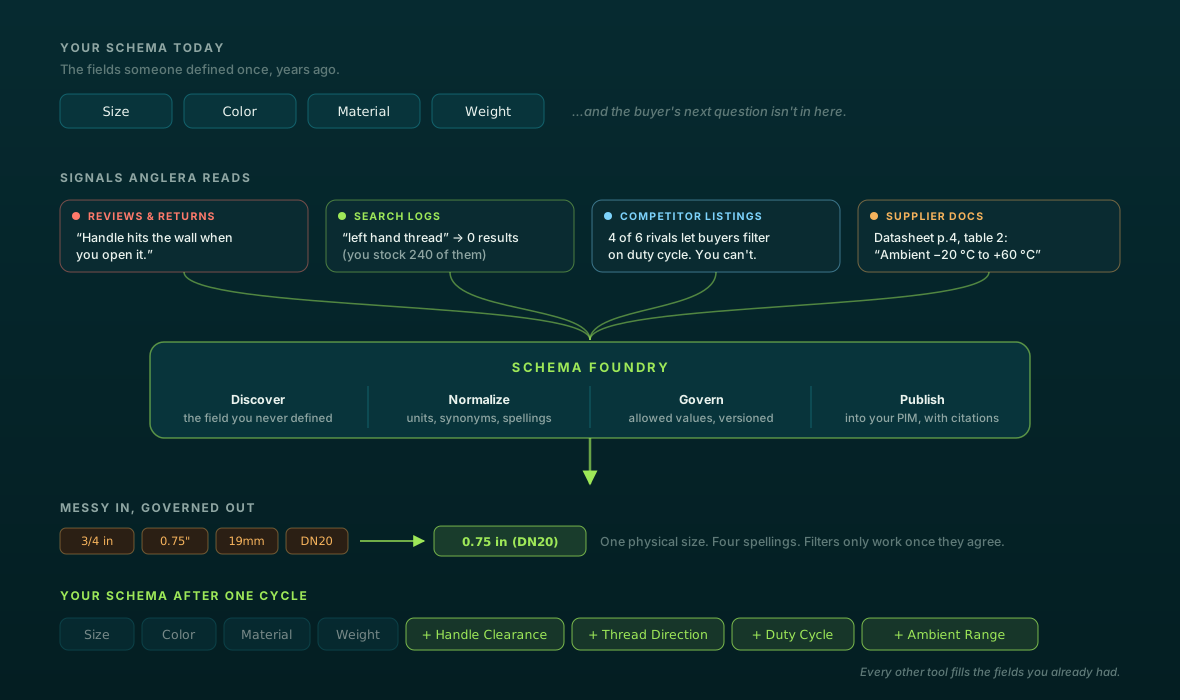
Ocula is genuinely strong at what it does: high-volume, SEO- and AI-search-optimized product page copy for consumer retail, with real named customers and results at retailers like AO.com and Boots. But its primary output is marketing copy and metadata, not structured product data. A B2B distributor or manufacturer with 50,000 to 500,000-plus SKUs of messy multi-supplier data needs attributes extracted and normalized, taxonomy fixed, and spec sheets completed before better copy matters, because B2B buyers search and compare on specifications, not prose. That structured layer is Anglera's core job: an AI workforce that enriches product data against real buyer signals, how buyers actually search, compare, and specify, and writes results back to your existing PIM such as Akeneo, Salsify, or inRiver, in roughly a 30-day implementation. If your problem is underperforming DTC product pages, Ocula is a credible pick; if your problem is incomplete, inconsistent catalog data feeding a B2B channel, Anglera fixes the data itself, not just the words on the page.
What Ocula Technologies does
Ocula Technologies is a UK-based AI platform that generates and optimizes ecommerce product page content at scale, producing product descriptions, titles, metadata, and keyword-optimized copy tuned for SEO, Google Shopping, marketplaces like Amazon, Walmart, Target, and Wayfair, and AI search engines such as ChatGPT and Perplexity. Its agentic workflow proactively refreshes listings based on seasonality and traffic signals, encodes brand voice, and pulls product data from PIM systems, spreadsheets, or by scanning any site. Customers are consumer retail brands and retailers, including AO.com, Boots, Coty, Castore, and Blain's Farm and Fleet.
Ocula Technologies vs Anglera, side by side
| Ocula Technologies | Anglera | |
|---|---|---|
| Primary output | SEO- and AI-search-optimized product page copy: descriptions, titles, metadata, keyword lists | Structured product data: extracted and normalized attributes, taxonomy, spec completeness, plus buyer-search-aligned content |
| Who it's built for | Consumer retail brands and retailers optimizing PDPs for traffic and conversion, from DTC to large retail | B2B distributors, manufacturers, and retailers with 50,000 to 500,000-plus SKU catalogs and messy multi-supplier data |
| Buyer-signal enrichment | SEO keyword research via tools like Semrush; optimizes for Google Shopping, marketplaces, and AI search visibility | Enriches against how B2B buyers actually search, compare, and specify products, so specs and attributes match real demand |
| PIM integration | Can ingest product data from PIM systems or spreadsheets as a content source; publishes copy to sites and channels | Writes enriched, structured data back into your existing PIM such as Akeneo, Salsify, or inRiver; Anglera is not a PIM and does not replace yours |
| Catalog data quality | Enriches incomplete product information mainly in service of better copy and listings | Treats data quality as the product: attribute extraction, normalization across suppliers, taxonomy cleanup, spec gap filling |
| Time to value | No-code integration that can scan any site; bulk generation claimed 30x faster than human copywriters | Roughly 30-day implementation from kickoff to enriched data flowing back into your PIM |