Anglera + PIMworks (Wonderkind/Adept)
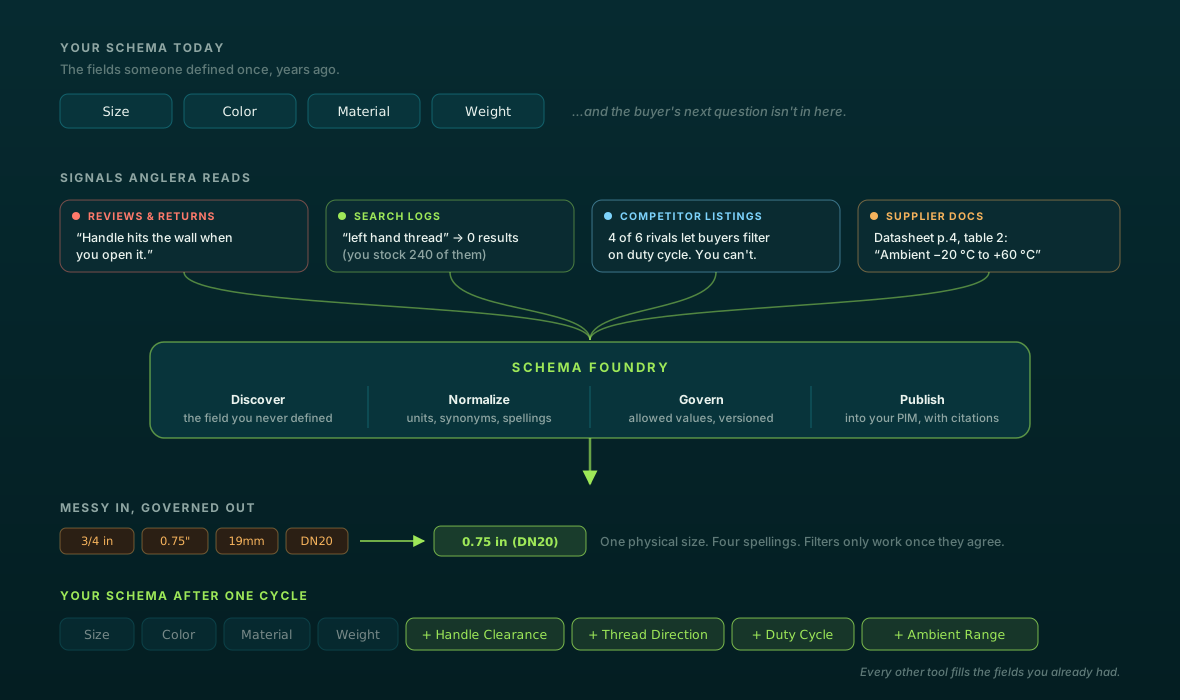
PIMworks is where product data lives and gets routed — it is not designed to deeply understand how a B2B buyer searches, compares, or decides. Its AI-assisted enrichment reformats and standardizes what you already have; it does not pull in buyer-signal intelligence to rewrite content around the actual purchase journey. Anglera sits alongside PIMworks, reads what is already centralized there, applies buyer-signal-driven enrichment across every SKU, and writes the improved content back — so distributors and manufacturers get intelligent enrichment without ripping out the PIM they already run on. Implementation takes roughly 30 days, with no new system for the team to learn.
What PIMworks (Wonderkind/Adept) does
PIMworks is a cloud-based Product Information Management (PIM) platform that centralizes product data, manages attributes and digital assets, and syndicates listings to marketplaces like Amazon, Walmart, and Shopify. It includes built-in workflow tools, role-based access, and AI-assisted content features aimed at ecommerce brands and retailers managing multichannel catalogs.
Pricing: Starts at approximately $499–$600/month; 14-day free trial available. Implementation costs typically $2,000–$10,000.
PIMworks (Wonderkind/Adept) vs Anglera, side by side
| PIMworks (Wonderkind/Adept) | Anglera | |
|---|---|---|
| Primary function | Centralize, organize, and syndicate product data across channels | Enrich every SKU with buyer-signal intelligence and write results back to the source of truth |
| Enrichment approach | AI-assisted content generation that reformats or standardizes existing supplier copy | Buyer-signal-driven enrichment — rewrites content around how buyers actually search, compare, and decide |
| Manual effort | Teams still configure rules, map attributes, and review syndication per channel | Automated enrichment pipeline; minimal human review beyond QA scoring |
| B2B distributor / manufacturer fit | Strongest fit for ecommerce brands and marketplace sellers; less purpose-built for B2B distribution catalogs | Purpose-built for B2B distributors, retailers, and manufacturers with complex SKU volumes |
| Time to value | PIM implementations typically take months to stand up and populate | ~30-day implementation running alongside your existing PIM |
| Role in the stack | The system of record — teams manage data inside PIMworks | Sits alongside the PIM; reads from and writes back to the existing system of record |