Akeneo vs Plytix: Which PIM Is Right for You?
Akeneo and Plytix are both PIMs, but they target very different buyers. Akeneo is built for mid-market and enterprise teams with complex data models, multi-locale rollouts, supplier contribution workflows, and governance requirements that demand a proper system of record. Plytix is built for small and mid-sized businesses that want one tool to centralize, create, and publish product content without an enterprise price tag or a months-long implementation project.
The comparison matters most at the moment of scale. A 10-person team managing 5,000 SKUs across a few channels will find Plytix's bundled DAM, unlimited users, and built-in feed syndication to be exactly the right footprint. A 200-person company managing 100,000 SKUs across a dozen locales with supplier contribution requirements and SSO mandates will outgrow Plytix quickly — Akeneo is where that team belongs.
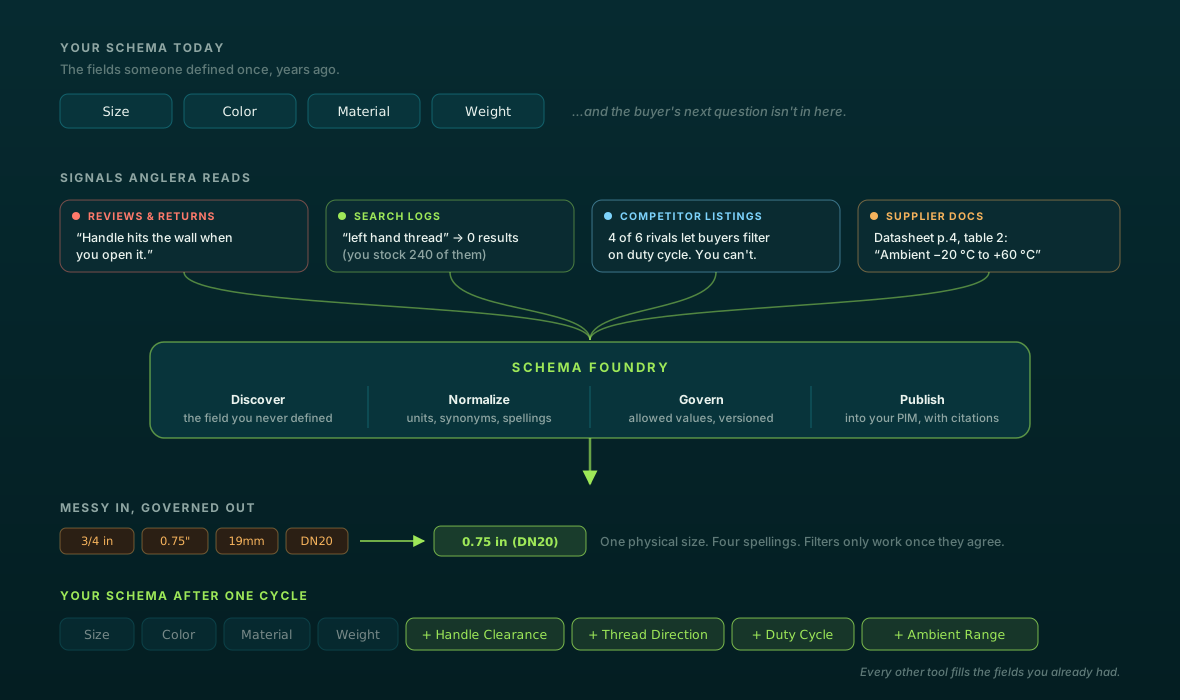
Neither platform, however, does the enrichment work your catalog actually needs: populating empty attributes, writing buyer-facing copy, scoring completeness against real buyer signals, and keeping everything current as suppliers update specs. Both Akeneo and Plytix assume you arrive with content that is already good. That gap — between data stored and data that converts — is where Anglera operates, regardless of which PIM you choose.
| Akeneo | Plytix | Anglera | |
|---|---|---|---|
| Target company size | Mid-market to enterprise. Designed for large, complex catalogs with multiple contributors, locales, and channel workflows — and a dedicated PIM administrator to manage them. | Small and mid-sized businesses. Built to be approachable for lean teams without specialist PIM knowledge or a lengthy onboarding project. | Works with both. Anglera connects to Akeneo or Plytix, enriches every SKU against buyer signals, and writes results back — no matter catalog size or team structure. |
| Pricing | Starts at $45,000/year (Growth package). Advanced and Premium tiers add analytics, DAM, SSO, and supplier data tools. No self-serve; requires a sales conversation. | Freemium entry point; paid plans start around $733/month. Unlimited users on all plans. Add-ons available for AI credits and extra distribution channels. | Priced per catalog, not per seat. Typical implementations go live in roughly 30 days. Contact Anglera for a quote based on catalog size and enrichment scope. |
| Built-in DAM and syndication | DAM (Akeneo Assets) is available at higher tiers, not the base package. Channel syndication is handled through its 250+ app store integrations rather than built-in feed management. | DAM and channel feed syndication are built into every paid plan. Designed as an all-in-one: you publish directly from Plytix to ecommerce channels and marketplaces. | Not a DAM or syndication tool. Anglera enriches the content that lives in your PIM so that whatever you store and distribute through Akeneo or Plytix is actually buyer-ready. |
| AI and content generation | AI-assisted enrichment added recently — it surfaces attribute suggestions and drafts copy field by field. A team member still reviews and accepts each output. The assist is real; the work remains manual. | Built-in AI generates and translates product descriptions on all paid plans. Useful for first-pass copy at volume; output quality depends heavily on the richness of your input data. | Enrichment is anchored to buyer signals — how real buyers search, compare, and decide — not just available supplier text. Anglera scores every SKU for completeness and readiness, fills gaps automatically, and re-enriches when the catalog changes. |
| User model and collaboration | Seat-based licensing. Collaboration workflows, supplier contribution portals, and role-based access controls are available at Advanced and Premium tiers. | Unlimited users on all plans. Collaboration is lighter-weight by design — suited for small teams rather than multi-department or supplier-facing workflows. | Operates as a background enrichment engine. Your experts define quality standards once; Anglera applies them at scale without adding headcount or per-seat cost. |
| Enterprise governance and integrations | SSO, advanced permission models, supplier data onboarding tools, PX Insights analytics, and 250+ marketplace, ERP, and commerce integrations via its app store. | Simpler permission model; integrations focus on ecommerce channel feeds. No SSO or enterprise security features on entry-level plans. | Adds a quality-scoring and enrichment layer on top of whichever governance stack you run. Reads from and writes back to your PIM — no rip-and-replace, no parallel system to maintain. |
How to choose between Akeneo and Plytix
Choose Akeneo if:
- You are a mid-market or enterprise company managing tens of thousands of SKUs across multiple locales or sales channels.
- You need supplier contribution workflows, SSO, or advanced role-based access controls.
- Your team includes — or plans to hire — a dedicated PIM administrator or an implementation partner.
- You can commit $45,000 or more per year to a system of record designed to grow with enterprise complexity.
- You need a large integration ecosystem (ERPs, commerce platforms, marketplaces) out of the box.
Choose Plytix if:
- You are an SMB or a lean team that wants a single tool for PIM, DAM, and channel syndication without managing multiple vendors.
- Budget is a genuine constraint — Plytix's unlimited-user model means no per-seat cost creep as the team grows.
- You want to go live in days rather than months, without a full implementation engagement.
- Your primary publishing workflow is feeding ecommerce channels and marketplaces, not managing complex internal governance processes.
- You are early-stage and the freemium tier gives you a way to evaluate fit before committing.
A note on ceiling: Plytix is a strong SMB choice precisely because it keeps things simple. If your catalog or team complexity grows — multi-locale data models, supplier portals, fine-grained permissions — you will likely outgrow it. Akeneo is built for that complexity from the start.
Whichever you pick, the data still has to get done
Akeneo's AI-assist helps a team member fill fields faster. Plytix's content generation drafts copy from the attributes you already have. Both tools assist your team; neither owns the enrichment work itself. Someone still has to decide what goes in each field, review what the AI suggests, and keep up with catalog changes.
Anglera does the work. Connect it to your Akeneo or Plytix instance, and Anglera gathers product data from supplier sources, fills missing attributes, writes and scores buyer-facing content against real buyer signals, and writes everything back to your system of record — typically within 30 days of implementation. When your catalog changes or a supplier updates specs, Anglera re-enriches automatically.
The logic is straightforward: your PIM stores the data. Anglera does the work. Whichever platform you choose for governance, publishing, and distribution, Anglera is the enrichment engine that makes that data worth storing — and worth buying from.
Frequently asked questions
Can Anglera integrate with both Akeneo and Plytix?
Yes. Anglera is PIM-agnostic — it reads from and writes back to your existing system of record, whether that's Akeneo, Plytix, or another platform. No migration or rip-and-replace required.
Does Akeneo's or Plytix's built-in AI remove the need for a separate enrichment tool?
Not quite. Akeneo's AI-assist and Plytix's content generation help your team work faster, but both still require someone to review and accept output field by field. Anglera automates the enrichment itself — gathering, filling, scoring, and maintaining content without ongoing manual effort from your team.
If we are already on Akeneo, should we consider adding Plytix?
No. Plytix and Akeneo serve the same function — they are both PIMs. Running both creates a redundant system of record. If you are on Akeneo and want to improve your product data, the right addition is an enrichment layer like Anglera, which works with your existing Akeneo instance rather than duplicating it.
How long does it take to implement Anglera alongside a PIM?
Roughly 30 days from kickoff to an enriched catalog. You do not need to complete a PIM implementation before starting — Anglera can connect to your PIM at any stage, and can even start from a flat file if your PIM is still being set up.
What is the main reason Akeneo costs so much more than Plytix?
Akeneo's pricing reflects enterprise-grade capabilities that Plytix does not offer: multi-locale data models, supplier contribution portals, PX Insights analytics, DAM at scale, SSO, and a 250+ integration ecosystem built for large-company workflows. Plytix's strength is simplicity and affordability — unlimited users and built-in syndication for a fraction of the cost, without the enterprise governance layer.