Akeneo vs. Rithum (ChannelAdvisor / CommerceHub): PIM or Channel Operations?
Akeneo and Rithum solve adjacent but fundamentally different problems. Akeneo is a PIM — it is the system of record where product content lives, gets organized, and gets enriched before it flows anywhere downstream. Rithum (the 2023 merger of CommerceHub, ChannelAdvisor, and Dsco) is a commerce operations platform — it takes that data and gets it listed, synced, and fulfilled across 420+ marketplaces and retail channels for 40,000+ brands and retailers.
The reason buyers sometimes compare them is that both touch product data and both connect to retail channels. But the overlap is surface-level. If you need a system of record for product content — a place to govern attributes, digital assets, translations, and completeness scores — Akeneo is purpose-built for that job. If you need to list products on Amazon, Walmart, Target, and hundreds of other channels while managing drop-ship networks and order routing, Rithum is the tool.
Most mid-market and enterprise operations eventually need both: Akeneo upstream to govern content quality, Rithum downstream to distribute at scale. The real question is rarely which one to pick — it is which problem to solve first, and what fills the gap between clean product data and scalable distribution.
| Akeneo | Rithum (ChannelAdvisor / CommerceHub) | Anglera | |
|---|---|---|---|
| Primary function | System of record for product content — centralizes, governs, and enriches product data across teams, locales, and channels. | Commerce operations — syndicates listings, automates feeds, and routes orders and fulfillment across 420+ marketplace and retail channels. | Works upstream of both — gathers, cleans, and enriches raw product data before it enters the PIM or gets pushed through feed layers. |
| Native data enrichment | AI-assisted attribute population, product completeness scoring, and workflow rules. Enrichment happens inside the PIM, driven by your team and supplier content. | Minimal native enrichment. Rithum assumes clean, complete data arrives from upstream — its job is distribution and compliance mapping, not content quality. | Automated enrichment at the SKU level — pulls from web sources, supplier content, and buyer signals; writes enriched attributes back to your PIM or feed source without manual intervention. |
| Channel and marketplace reach | 250+ integrations via the Akeneo App Store — storefronts, ERPs, and marketplace connectors. Emphasis is on downstream publishing and experience management. | 420+ direct marketplace and retailer connections (Amazon, Walmart, Target, Kroger, and more) with full feed management, compliance mapping, and drop-ship network access. | Channel-agnostic enrichment — produces structured, complete data suitable for any destination Akeneo governs or Rithum distributes to. |
| Order and inventory management | Not in scope. Akeneo manages product content, not transactions or fulfillment. | Core capability. Drop-ship order routing, inventory sync, and fulfillment automation across the Rithum network are central to the platform. | Not in scope. Anglera enriches product data; order and inventory operations stay with Rithum or your OMS. |
| Best-fit buyer | Mid-market to enterprise manufacturers, brands, and retailers with complex product catalogs, multiple locales, high attribute volumes, or a need for a governed content source of truth. | High-volume brands, retailers, and 3PLs selling across many marketplaces and drop-ship networks who need automated listing, feed compliance, and order operations at scale. | Any company whose product data is incomplete, inconsistent, or manually maintained — regardless of which platform stores or distributes it. |
| Pricing model | Starts at $45,000/year (Growth tier). Advanced and Premium tiers add collaboration tools, analytics, DAM, SSO, and supplier data capabilities. Sales-led; no self-serve pricing. | Custom enterprise pricing based on GMV and channel usage. Not publicly listed. | Priced per SKU enriched — no PIM seat fees, no GMV percentage. Pairs with existing platform investments rather than replacing them. |
| Implementation timeline | Typically 3–6+ months for a full PIM data model build and migration. Longer for large catalogs or complex localization requirements. | Variable. Channel onboarding can be phased, but complete feed automation and drop-ship setup typically takes months of mapping and integration work. | ~30-day implementation alongside either platform. Enrichment runs on top of your existing data model with no rip-and-replace. |
How to choose between Akeneo and Rithum (ChannelAdvisor / CommerceHub)
Pick Akeneo if:
- You need a governed system of record for product content across teams, locales, and channels.
- Your product data currently lives in spreadsheets, ERP exports, or siloed systems and needs a central home with proper attribute modeling.
- You have complex attribute sets, digital assets, or translation workflows that require structured, auditable management.
- You are a manufacturer or brand building a single source of truth before syndicating anywhere.
- Content governance — who can change what, when, and how — matters to your organization.
Pick Rithum if:
- Your core problem is getting products listed, compliant, and fulfilled across Amazon, Walmart, Target, and dozens of other channels at scale.
- You operate drop-ship programs or need automated order routing across a retail network.
- You are a high-volume brand or retailer already managing thousands of SKUs across multiple marketplaces and need feed automation, compliance mapping, and fulfillment throughput.
- Channel reach and operational efficiency at the distribution layer matter more than upstream content governance right now.
Consider both if: You are mid-market or enterprise and have both a data governance problem and a channel distribution problem — which is common. Akeneo governs and enriches product content upstream; Rithum syndicates and fulfills downstream. They are more complementary than competitive, and most companies running Rithum at scale benefit from a governed PIM feeding clean data into it.
Whichever you pick, the data still has to get done
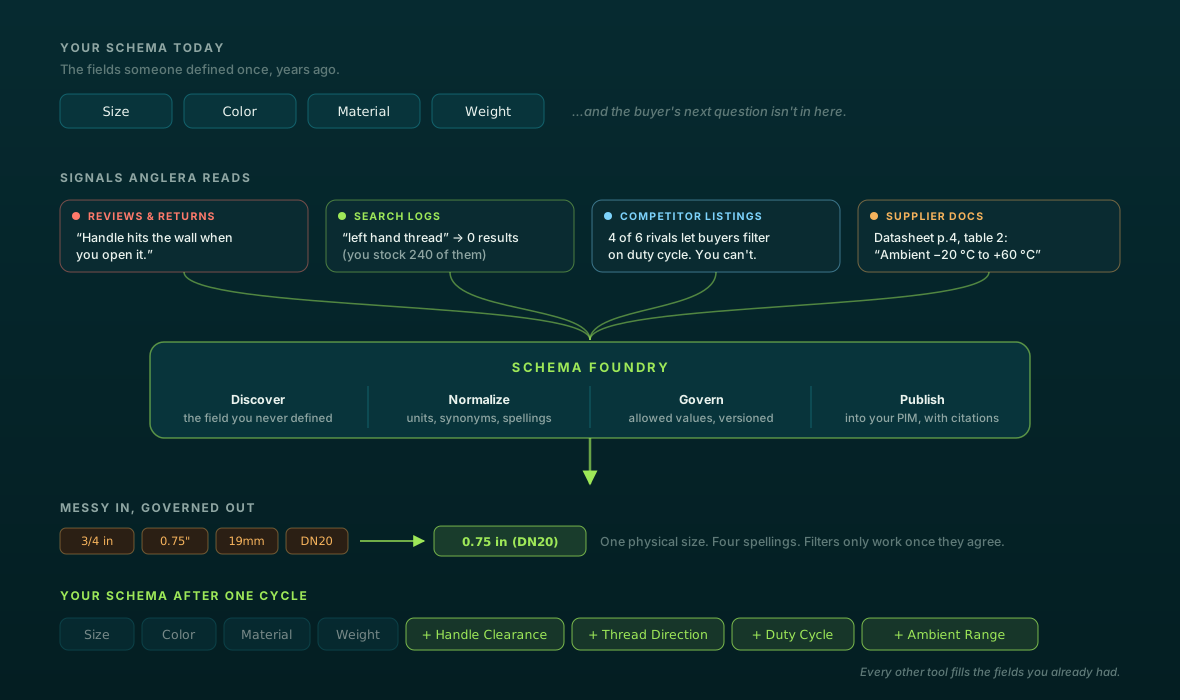
Neither Akeneo nor Rithum does the hard work of turning thin, inconsistent raw product data into rich, structured content that performs at the digital shelf. Akeneo expects your team to enrich inside the PIM; Rithum expects enriched data to arrive at the feed layer ready to go. The gap between incomplete supplier data and conversion-ready listings is where Anglera operates.
Anglera connects to your product data wherever it lives, runs automated enrichment at the SKU level against buyer signals and web sources, scores completeness against channel-specific benchmarks, and writes results back to Akeneo — or whichever source feeds your Rithum listings. Your PIM stays the system of record. Your feeds stay compliant. The enrichment work that was blocking go-live or suppressing listings stops being a bottleneck.
If you choose Akeneo, Anglera accelerates the enrichment workflows your team would otherwise do manually inside the PIM — attributes, descriptions, and completeness scores generated against buyer intent, not just supplier copy. If you choose Rithum, Anglera ensures the data flowing into your feeds is complete enough to pass channel compliance and win the buy box. Either way, implementation is ~30 days — no platform migration, no rip-and-replace, just enrichment running on top of the stack you already have.
Frequently asked questions
Are Akeneo and Rithum competitors?
Only superficially. Akeneo is a PIM — it manages and enriches product content and acts as the system of record. Rithum is a commerce operations platform — it syndicates listings and handles fulfillment across 420+ channels. Most enterprise stacks use one upstream and one downstream. Buyers comparing them are usually deciding which problem to solve first, not which tool to replace the other with.
Does Akeneo replace the need for Rithum?
No. Akeneo has integrations and can publish to channels, but it is not designed to manage 420+ feed templates, marketplace compliance rules, drop-ship order routing, or inventory sync at scale. If you are selling across many marketplaces, a dedicated syndication and operations layer like Rithum adds capabilities Akeneo does not try to cover.
Does Rithum enrich product data?
Not in any substantive way. Rithum's strength is distribution and operations — getting data where it needs to go, in the right format, at scale. The platform assumes clean and complete data arrives from upstream. Thin descriptions, missing specifications, and inconsistent attributes flow through to every channel as-is, showing up as suppressed listings and failed compliance checks.
Where does Anglera fit if I already use Akeneo or Rithum?
Anglera sits between your raw data sources and your system of record. It pulls product data from wherever it lives, enriches it against web sources and buyer signals at the SKU level, scores it for completeness and channel readiness, and writes the enriched attributes back to Akeneo — or whichever source feeds into Rithum. No platform migration required; implementation is ~30 days.
What does Akeneo's AI enrichment do, and is it sufficient?
Akeneo's AI-assisted enrichment helps teams populate attributes and score completeness inside the PIM. It is designed for human-in-the-loop workflows where a merchandising team reviews and approves each output. Anglera is designed for automated enrichment at scale — pulling from external web sources, scoring against channel-specific buyer signals, and writing back without requiring a manual review step for every SKU in the catalog.