Contentserv vs Rithum (ChannelAdvisor / CommerceHub): Which Platform Fits Your Stack?
These two platforms rarely compete directly. Contentserv (now branded Centric PXM) is a product information and experience management platform — it centralizes, governs, and distributes product data and digital assets. Rithum, formed in 2023 from the merger of ChannelAdvisor, CommerceHub, and Dsco, is a commerce operations engine — it syndicates listings, automates feeds, and manages drop-ship and order workflows across 420+ marketplace and retail channels. But buyers in retail, distribution, and manufacturing often evaluate both at the same time when they need to solve a data quality problem and a channel reach problem simultaneously.
The key question is sequencing: do you need a system of record for product data first, or do you need channel connectivity now? Contentserv answers the first question. Rithum answers the second. Buying both is not uncommon among large enterprises, but understanding which platform addresses your core bottleneck prevents you from over-building your stack and under-solving your actual problem.
This comparison covers the dimensions that matter most to a buyer making this call — channel reach, enrichment depth, digital asset management, fulfillment operations, and cost structure — so you can match the right tool to the right job.
| Contentserv | Rithum (ChannelAdvisor / CommerceHub) | Anglera | |
|---|---|---|---|
| Primary Function | PIM/PXM platform — centralize, govern, enrich, and distribute product information and digital assets from a single system of record across 1,000+ channels. | Commerce operations platform — syndicate product listings, automate marketplace feeds, and manage drop-ship and order workflows across 420+ retail and marketplace channels. | Enriches the product data that lives in your PIM or flows into your syndication engine — fills attribute gaps, normalizes taxonomy, scores content quality, and writes clean records back before distribution. |
| Channel Reach & Feed Management | Syndication to 1,000+ channels via built-in connectors, with digital shelf analytics to monitor content compliance and performance post-distribution. | 420+ marketplace and retail channel connections with automated feed optimization, repricing, and listing management purpose-built for high-SKU-count, high-GMV operations. | Channel-agnostic enrichment — ensures every attribute required by target channel specs is populated and accurate before feeds go out, reducing listing rejections and suppressed content. |
| Product Data Enrichment | Workflow tools and governance for teams to author and manage product content; AI-assisted copy generation in recent releases. Enrichment is a team-driven process inside the platform — it does not automatically fill gaps from external sources. | Feed transformation and mapping to channel specs, but no enrichment layer. Rithum assumes incoming product data is already complete and accurate; thin or missing attributes pass through as-is. | Automated enrichment at scale — crawls supplier and brand sources, fills missing attributes, normalizes values, and scores every SKU against buyer signal criteria. Runs before data reaches either platform. |
| Digital Asset Management (DAM) | Built-in DAM with rich media management, asset tagging, rights tracking, and automated image delivery across channels. A core part of the PXM suite, not a bolt-on. | No native DAM. Image and asset handling is limited to what passes through product feeds. Relies on an external DAM or direct retailer/marketplace image hosting. | Pulls and processes product images as part of enrichment — including image quality scoring and alt-text generation — complementing either platform's asset workflow. |
| Order, Inventory & Fulfillment | Not in scope. Contentserv is a content and experience platform; it does not handle order management, inventory sync, or fulfillment operations. | Core strength. Drop-ship management (via the Dsco network), order routing, inventory sync, and fulfillment automation across trading partner networks are central to the platform. | Not in scope for fulfillment. Anglera's focus is pre-distribution data quality — not order or inventory operations. |
| Implementation Complexity & Timeline | Enterprise deployment involving data modeling, DAM migration, taxonomy setup, and channel configuration. Typical timelines run 3–9 months depending on catalog size and integration complexity. | Faster to launch for channel syndication; feed templates and marketplace connectors accelerate go-live. Large drop-ship networks with many trading partners add implementation time. | ~30-day implementation. Connects to your existing product data source, runs enrichment, and writes results back — no platform migration required. |
| Pricing Model | Subscription tiers (Starter, Professional, Enterprise); pricing is not publicly disclosed and requires a direct quote based on modules selected, user count, and data volume. | Custom enterprise pricing based on GMV and channel count; not publicly listed. | Transparent per-SKU enrichment pricing. No seat licenses, no GMV-based fees, no module add-ons. |
How to choose between Contentserv and Rithum (ChannelAdvisor / CommerceHub)
Choose Contentserv if your primary bottleneck is managing and governing rich product content — especially in fashion, lifestyle, consumer goods, or luxury, where localized copy, digital assets, and brand consistency across channels are business-critical. It is the right system of record when product experience quality is a competitive differentiator and you want PIM, DAM, and syndication governed under one roof rather than stitched across three vendors.
Choose Rithum if your primary bottleneck is channel reach and operational efficiency — getting products listed, priced, and fulfilled across dozens of marketplaces and retail partners with minimal manual intervention. It is built for high-GMV, high-SKU operations where feed automation, marketplace performance management, and drop-ship connectivity are the constraint, not content quality. If you are already on ChannelAdvisor or CommerceHub, Rithum is the natural consolidation path.
Consider both if you are a large retailer or brand that needs to govern product content centrally and push it at scale to Amazon, Walmart, Target, and hundreds of other channels. The platforms serve genuinely different jobs, and enterprise teams with complex catalogs and broad channel footprints do run them in tandem. The integration question — how data moves from Contentserv into Rithum — is where data quality becomes the hidden third problem.
Whichever you pick, the data still has to get done
Neither platform does the enrichment work for you. Contentserv gives your team the governance workflows and tooling to enrich product content manually. Rithum assumes that whatever arrives in the feed is already complete and channel-ready. In practice, that assumption is almost never true: attributes are missing, values are inconsistent, copy is thin, and images are unscored.
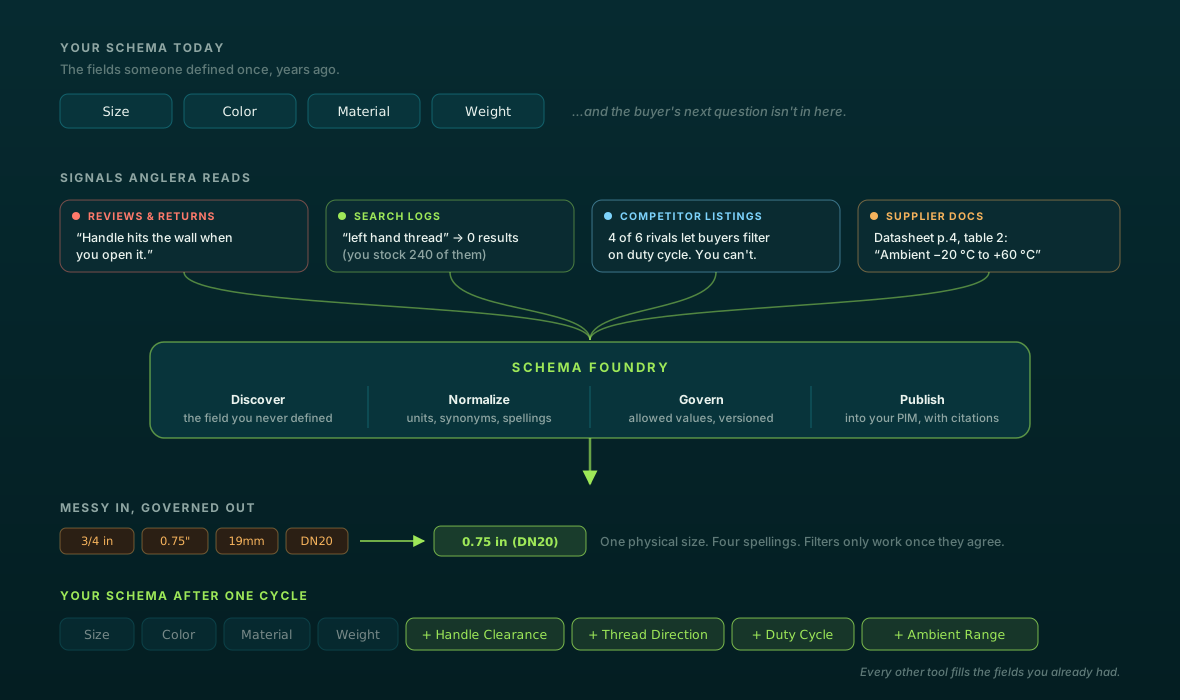
Anglera is the layer that closes that gap before data reaches either platform. In roughly 30 days, Anglera connects to your existing product data source — whether that is Contentserv, an ERP, a supplier data dump, or a flat file — crawls brand and supplier sites to fill missing attributes, normalizes taxonomy and values, scores every SKU against buyer signal criteria, and writes clean, complete records back. Your catalog arrives at Contentserv already enriched, which means less manual authoring work. Your feeds arrive at Rithum already complete, which means fewer listing rejections and suppressed content on Amazon, Walmart, and everywhere else.
Whichever platform you pick — or if you run both — Anglera does the enrichment work those platforms assume already happened.
Frequently asked questions
Does Contentserv replace Rithum, or can they work together?
They serve different jobs and can run side by side. Contentserv governs and authors product content from a central system of record. Rithum distributes listings, automates marketplace feeds, and manages drop-ship operations. Large enterprises with broad channel presence often run both — Contentserv as the content authority, Rithum as the distribution engine.
Is Rithum the same as ChannelAdvisor and CommerceHub after the merger?
Rithum was formed in 2023 from the merger of ChannelAdvisor, CommerceHub, and Dsco. The combined platform integrates channel syndication (ChannelAdvisor heritage), drop-ship and supplier connectivity (CommerceHub/Dsco heritage), and marketplace operations under one brand. Migration paths for legacy ChannelAdvisor customers are still rolling out, so if you are an existing customer, confirm which product surface you are actually buying.
Which platform is better for selling on Amazon and Walmart specifically?
Rithum has deeper marketplace-specific tooling — feed optimization, repricing, Buy Box analytics, and fulfillment automation built for high-velocity Amazon and Walmart operations. Contentserv can syndicate to those channels, but its strength is content governance and brand consistency, not marketplace performance management.
Can Anglera enrich data for both Contentserv and Rithum at the same time?
Yes. Anglera connects to your existing product data source — Contentserv, an ERP, a spreadsheet, or a data lake — enriches at the SKU level, and writes results to any downstream destination. Enriched records flow into Contentserv for governance and into Rithum feeds for distribution without duplication of effort.
How quickly does Anglera show results compared to a full PIM or syndication implementation?
Most customers see enriched, scored product records within 30 days of onboarding. Anglera connects to your existing system and begins writing results back — no platform migration, no re-implementation, and no dependency on a multi-month PIM or syndication rollout to get started.