Contentserv vs Unilog CX1 / CIMM2: A Fair Buyer's Comparison
Contentserv (now branded Centric PXM) and Unilog CX1 both promise to bring order to product data, but they are solving different problems for different buyers. Contentserv is an enterprise PXM governance platform built for brands and retailers that need to localize, approve, and distribute rich product content across hundreds of channels — with no native storefront of its own. Unilog CX1 is a purpose-built B2B distribution suite that bundles eCommerce storefront, PIM, CMS, and a managed library of 10M+ supplier SKUs into a single package aimed at mid-market distributors in trades like electrical, industrial, and HVAC.
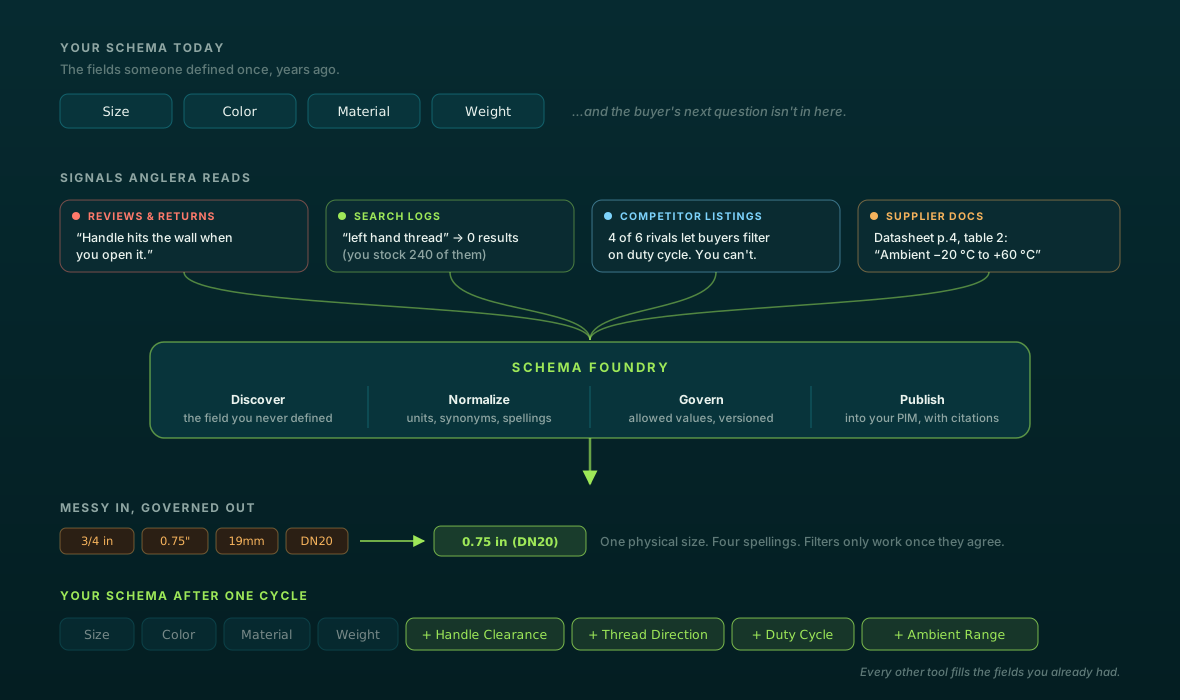
Choosing between them is less about which is "better" and more about what your stack already looks like and what job you need done. If you have a commerce platform and need a PXM layer to govern complex, localized content at scale, Contentserv is worth evaluating. If you are a distributor that needs to get online fast with storefront, product data, and ERP connectivity in one contract, Unilog CX1 is the closer fit. Either way, one thing neither platform does by default is the ongoing enrichment work — gathering attribute data, cleaning specifications, scoring completeness against buyer signals, and writing it all back automatically. That is where Anglera sits alongside whichever platform you choose.
| Contentserv | Unilog CX1 / CIMM2 | Anglera | |
|---|---|---|---|
| Primary buyer and vertical | Enterprise brands, retailers, and consumer-goods companies in fashion, lifestyle, luxury, and CPG that need governed, localized PXM across many channels. | Mid-market B2B distributors, manufacturers, and wholesalers in electrical, industrial, plumbing, and HVAC trades that want to launch or grow eCommerce. | Works alongside either buyer profile. Enriches product records at the catalog level regardless of vertical — distributors, brands, or manufacturers. |
| eCommerce storefront | No native storefront. Contentserv is a data and content governance layer designed to feed product information into downstream commerce systems. | Native B2B eCommerce storefront, CMS, and site search are core to CX1 — one of its main differentiators over standalone PIM tools. | Not a storefront. Enriches the product data that powers any storefront — completing attributes, normalizing specs, and scoring content quality before it renders to buyers. |
| Managed product content and SKU library | No pre-built supplier content library. Teams author, import, and govern content natively; supplier onboarding is a customer responsibility. | Maintained library of 10M+ SKUs from roughly 2,000 manufacturers, sold as content subscriptions. Gap-fill, taxonomy, and normalization services are available as add-ons. | Crawls supplier and retailer pages, scrapes structured data, and enriches any SKU in your catalog — including house brands, private-label, and items outside Unilog's library — and writes results back to your PIM. |
| DAM and rich media handling | Native DAM fully integrated with PIM. Teams link images, videos, and documents directly to product records and push assets to channels alongside content. | Basic media handling within CX1; not a full DAM. Media associated with managed library SKUs is included in content subscriptions. | Pulls product images and assets from supplier pages to fill gaps in existing records. Not a storage DAM — focused on sourcing and associating the right media to the right SKU. |
| ERP and tech stack integration | Open API; integrations to ERP, commerce, and channel partners are built via middleware or custom connectors. No pre-built distribution ERP connectors. | CX1 Connect provides pre-built connectors to common distribution ERPs and POS systems — a practical advantage for buyers already in Epicor, Infor, or similar stacks. | Connects to your PIM via API and works alongside whatever ERP integration is already in place. Reads records in, enriches them, writes clean data back — no ERP access required. |
| Implementation complexity and time to value | Multi-month enterprise implementation; typically requires an SI or certified partner. Data modeling, localization setup, and channel mapping all require scoping work. | Multi-month project scoped by catalog size, modules selected, and content service volume. Unilog runs managed onboarding, which can accelerate time to first launch. | Approximately 30-day implementation. Connects to the PIM already being deployed and begins enriching records early in the project — before go-live, not after. |
| Pricing model | Subscription tiers (Starter, Professional, Enterprise); pricing not publicly disclosed and requires a direct quote. Cost varies by modules, user count, and data volume. | Quote-based SaaS; third-party listings cite entry in the low hundreds per month, but real deployments include platform fees plus content subscriptions and managed services. | Subscription scoped to catalog size; no per-module licensing. Pricing is available on request and is designed to sit alongside an existing PIM budget, not replace it. |
How to choose between Contentserv and Unilog CX1 / CIMM2
Choose Contentserv if you are an enterprise brand or retailer — particularly in fashion, consumer goods, lifestyle, or luxury — that needs a single governed repository for rich, localized product content distributed across a large number of channels and markets. Contentserv earns its place when your complexity is in content governance: multi-language approval workflows, DAM integration, digital shelf analytics, and pushing consistent product experiences to 1,000+ destinations. You will need to bring your own commerce platform and your own content entry process.
Choose Unilog CX1 if you are a mid-market B2B distributor, manufacturer, or wholesaler — especially in electrical, industrial, plumbing, or HVAC — that needs to get an online channel running without assembling a best-of-breed stack from scratch. The bundled storefront, PIM, ERP connectors, and access to a large managed SKU library mean you can scope a single contract to cover most of your launch needs. If you are an AD member company or already in conversations with Unilog's content services team, the managed enrichment offering reduces your internal content workload substantially for catalog items already in their library.
A note on overlap: If your primary need is a governed PXM platform for omnichannel content distribution, Contentserv is the stronger specialist. If your primary need is an end-to-end B2B commerce platform with PIM built in, Unilog CX1 is the more practical choice. The two tools are rarely evaluated against each other in the same deal because the buyer profiles diverge — but if you are a distribution company that also has significant branded content requirements across many channels, it may be worth evaluating both before defaulting to CX1's lighter PIM.
Whichever you pick, the data still has to get done
Whichever platform you choose, it will assume your product data is already clean, complete, and attributed correctly. In practice, it rarely is.
Contentserv is a governance and distribution engine. It is excellent at routing content through approval workflows and pushing it to channels — but it does not gather the content in the first place. Incomplete specs, missing attributes, and unverified descriptions still need to be sourced, cleaned, and scored before they enter the platform. Unilog's managed library covers a large share of trade distribution SKUs well, but your house catalog, new product additions, private-label lines, and any item outside those ~2,000 manufacturer relationships still need attribute completion and ongoing maintenance as supplier data changes.
Anglera connects directly to your PIM via API — Contentserv, Unilog CX1, or any other system with an API. It crawls supplier sites and other sources to gather raw attribute data, normalizes and cleans it against your taxonomy, scores each SKU for completeness against buyer signal requirements, and writes the enriched records back to your PIM automatically. The result is that whichever platform you select is always operating on the most complete, accurate data available — not on whatever your team managed to enter manually last quarter.
Implementation takes roughly 30 days and runs in parallel with your PIM project, so enrichment is active before you go live rather than becoming a backlog item you address six months later.
Frequently asked questions
Is Contentserv the same as Centric PXM?
Yes. Contentserv rebranded to Centric PXM. The underlying platform, capabilities, and customer base are the same product under a new name. When evaluating vendors, you may encounter both names referring to the same system.
What is CIMM2 and how does it relate to Unilog CX1?
CIMM2 was Unilog's original product content management module name and is still referenced in older documentation and industry discussions. CX1 is the current unified platform branding that consolidates the eCommerce storefront, PIM, CMS, site search, and integration layer under one name. If you are evaluating Unilog today, CX1 is the current offering.
Can Anglera replace Unilog's managed content subscriptions?
They solve adjacent but distinct problems. Unilog's managed library provides broad pre-built coverage for SKUs from roughly 2,000 manufacturers — useful for getting a large trade catalog online quickly without manual data entry. Anglera enriches your specific catalog, including house brands, private-label products, new items, and anything outside Unilog's library, and keeps attributes current as supplier data changes over time. Many buyers use both: Unilog's library for initial breadth, Anglera for depth, accuracy, and ongoing freshness.
Does Anglera work with both Contentserv and Unilog CX1?
Yes. Anglera connects via API to either platform — or any PIM with an API. It reads current product records, runs enrichment against supplier and channel data, and writes the results back to the same records in your PIM. No separate data export or manual transfer is required.
Which platform is the better starting point for a distributor launching eCommerce for the first time?
Unilog CX1 is purpose-built for that scenario. The storefront, PIM, CMS, ERP connectors, and managed content library are all in one contract, which reduces the number of vendors and integration decisions a first-time eCommerce project requires. Contentserv is a stronger fit for teams that already have a commerce platform and are adding a dedicated PXM governance layer on top of it.