inriver vs Pimcore: Which PIM Is Right for Your Business?
inriver and Pimcore are both serious PIM platforms. Both centralize product data, govern it, and push it to channels. The choice between them, however, is less about feature lists and more about a foundational architecture decision: do you want a managed SaaS product that bundles PIM, syndication, and digital shelf analytics into one subscription, or an open-source platform that gives you full control over the code, the infrastructure, and the roadmap — at the cost of significant IT investment?
inriver is purpose-built for B2B manufacturers, brands, and distributors that want a composable, AI-assisted PIM with channel syndication and digital shelf performance monitoring handled by the same vendor. You pay a subscription and inriver manages the rest. Pimcore is an open-source platform used by over 118,000 organizations across 75 countries — chosen for its flexibility, its transparent pricing tiers, and its ability to function simultaneously as a PIM, DAM, MDM, and digital experience platform. You get full extensibility; you own the implementation effort.
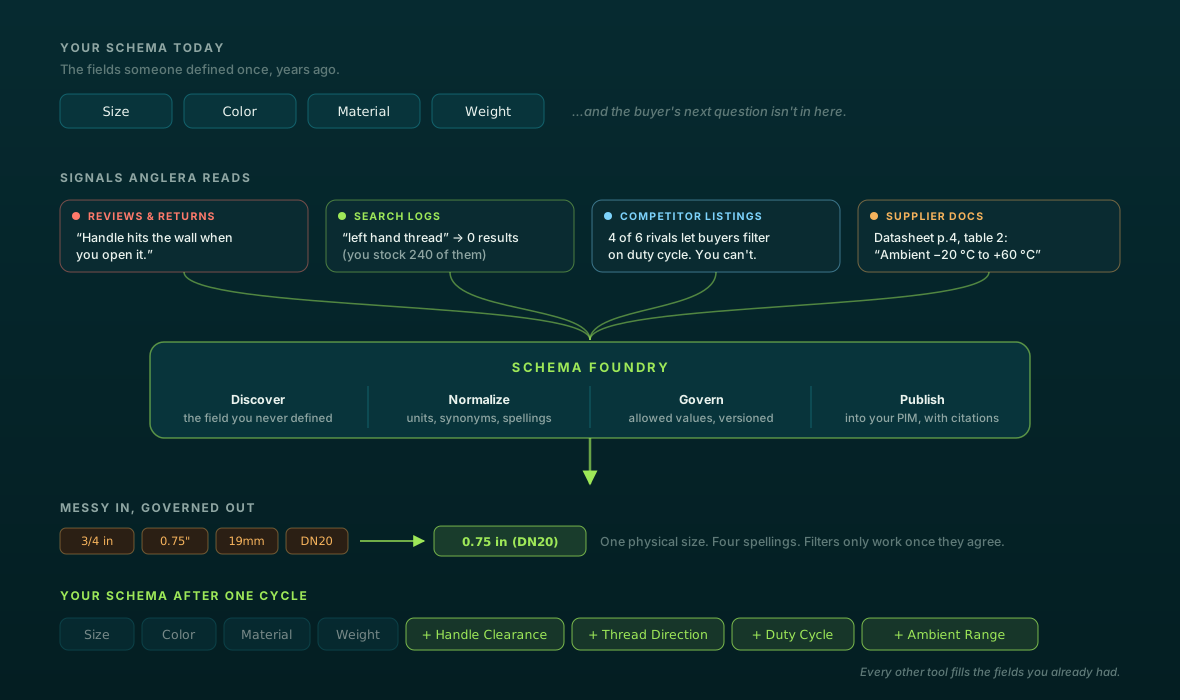
Neither platform solves the upstream problem they share: the product data going into them is rarely buyer-ready. Supplier content arrives as raw specs written for procurement, not for how buyers actually search and filter. Both tools give you a well-governed place to store and distribute that content. Neither automatically makes it better.
| inriver | Pimcore | Anglera | |
|---|---|---|---|
| Deployment model | Cloud SaaS only — vendor-managed infrastructure, automatic updates, no self-hosting option. You configure the platform; inriver operates it. | Open-source with multiple deployment paths: self-host on your own infrastructure (Community or Professional/Enterprise editions), or use Pimcore's managed PaaS offering starting at $39,900/year. | SaaS — connects to either deployment via API or file-based sync. No infrastructure requirements on Anglera's side; ~30-day implementation on top of whichever PIM you choose. |
| Pricing transparency | No public pricing. Core, Professional, and Enterprise tiers exist, priced by users, modules, and data volume — but you must go through a sales conversation to get a number. | Published tiers: Community Edition free (non-commercial); Professional $9,900/year; Enterprise $29,900/year; PaaS from $39,900/year. Pricing is visible before you talk to anyone. | Priced per SKU enriched — a separate line item alongside your PIM investment, not a replacement for it. |
| Syndication & channel distribution | Built-in syndication to retailers, marketplaces, and omnichannel destinations is a core differentiator — marketed as part of the complete product content lifecycle managed within one platform. | Handles data storage and distribution via APIs and custom connectors, but dedicated retail syndication is not a built-in module. Reaching retailers and marketplaces at scale typically requires third-party integrations or custom development. | Not a syndication tool. Anglera enriches the content that inriver or Pimcore then distributes — the channel receives better product data regardless of which platform moves it. |
| DAM & digital assets | DAM capabilities are present and tied to SKUs within the platform, but DAM is not inriver's primary differentiator — it supports product-related assets rather than serving as a standalone rich media management system. | Full-featured DAM is a first-class module and one of Pimcore's core strengths. Managing rich media at scale alongside product data in the same platform — with asset versioning, renditions, and metadata governance — is a native capability. | Does not manage digital assets. Anglera enriches product data attributes, descriptions, and copy — the structured content the PIM stores alongside those assets. |
| Implementation lift & IT requirements | SaaS model reduces infrastructure burden. Implementation still requires data modeling, workflow configuration, and integration work — typically several months for complex catalogs — but your team is configuring the platform, not building it. | Highly flexible, but developer-intensive. The open-source model's extensibility is also its implementation cost: timelines scale with customization scope, and organizations without strong internal development capacity frequently require a systems integrator. Total cost of ownership includes ongoing hosting and maintenance. | ~30 days from kickoff to enriched SKUs written back to the PIM. Anglera adapts to your existing data model rather than requiring a new one — no platform migration involved. |
| Data enrichment & buyer-signal scoring | AI features focus on content generation and workflow automation within the PIM — helping teams write and govern content against internal data rules and supplier inputs. Does not score SKUs against external buyer signals or benchmark against how customers actually search. | Stores, organizes, and governs product data but does not enrich it. Enrichment against buyer signals is assumed to have happened before data enters the platform. Pimcore's extensibility means you can build enrichment workflows, but they are not included. | Core function. Anglera gathers, cleans, enriches, and scores every SKU against buyer signals — how your customers actually search, compare, and filter — then writes the improved attributes and copy back to inriver or Pimcore as the system of record. |
| Digital shelf analytics | Built-in digital shelf analytics monitor content quality and channel performance post-distribution — a meaningful differentiator that keeps visibility in the same platform as the PIM rather than requiring a separate analytics tool. | No native digital shelf analytics. Performance visibility after content is distributed requires external tools or custom integrations built on Pimcore's APIs. | Anglera's buyer-signal scoring surfaces content gaps and completeness issues before content reaches the shelf — complementing inriver's post-distribution analytics, or filling that visibility gap for Pimcore users. |
How to choose between inriver and Pimcore
Choose inriver if you want a single managed vendor covering the full product content lifecycle — PIM, syndication, and digital shelf analytics — without an internal development team to build and maintain the platform. inriver is the stronger fit for mid-to-large B2B manufacturers, brands, and distributors that need omnichannel distribution and content performance visibility out of the box, and who are willing to pay for the convenience of a composable SaaS stack that does not require heavy IT ownership. The trade-off is pricing opacity and vendor dependency — you will not know your cost without a sales conversation, and the platform evolves on inriver's roadmap, not yours.
Choose Pimcore if you want open-source flexibility, transparent pricing, or a platform that handles PIM, DAM, and digital experiences in the same codebase. Pimcore is the stronger fit for organizations with real development capacity — internal teams or capable integrators — that need to customize deeply, control their own infrastructure, or avoid SaaS lock-in. The Community Edition lets you validate the platform before committing any budget. The Enterprise edition's $29,900/year list price is publicly visible, which simplifies procurement. The trade-off is that flexibility requires investment: plan for significant implementation effort and ongoing development resources, especially for complex catalogs.
A few signals that clarify the choice:
- If you have limited development resources and want a vendor to manage the platform end-to-end, inriver's SaaS model removes infrastructure burden that Pimcore does not.
- If DAM capability is a primary requirement — managing rich media alongside product data in the same system — Pimcore's native DAM module is a meaningful differentiator over inriver's more limited asset management.
- If built-in syndication to retailers and marketplaces matters and you do not want to build or buy a separate tool, inriver's lifecycle approach bundles that capability where Pimcore's does not.
- If pricing transparency is important to your procurement process, Pimcore's published tiers give you a real number before any sales engagement; inriver does not.
Whichever you pick, the data still has to get done
Both inriver and Pimcore assume your product data is already enriched — complete attributes, buyer-ready descriptions, and titles that match how shoppers actually search. In practice, data arrives from suppliers as raw specs, inconsistent field names, and copy written for procurement teams rather than for the digital shelf. Both platforms give you a well-governed place to store and distribute that content. Neither automatically makes it better.
Anglera is the layer that does that work. It connects to your inriver or Pimcore instance via API, reads your existing SKUs, enriches every attribute and description against buyer signals — how your customers actually search, compare, and filter — and writes the improved content back to the PIM record. Your system of record stays in place. The enrichment quality lifts across the catalog. The content inriver's syndication engine or Pimcore's distribution channels then push downstream is buyer-ready from the start, not just well-organized.
Whichever platform you choose, the enrichment problem does not solve itself. Anglera implements in ~30 days with no platform migration required — it works alongside the PIM you already run, or the one you are about to deploy.
Frequently asked questions
What is the main difference between inriver and Pimcore?
The most fundamental difference is deployment model and scope. inriver is a managed SaaS PIM that bundles syndication and digital shelf analytics into a single subscription — you configure it, inriver operates it. Pimcore is an open-source platform you deploy yourself (or via its PaaS offering) that covers PIM, DAM, MDM, and digital experience management in one codebase — you get full extensibility at the cost of significant IT investment. inriver trades flexibility for convenience; Pimcore trades convenience for control.
Is Pimcore really free?
The Pimcore Community Edition is free and feature-complete, but licensed for non-commercial use only. Commercial deployments require a paid edition starting at $9,900/year for Professional or $29,900/year for Enterprise. Beyond license cost, factor in hosting infrastructure, development resources for implementation and ongoing customization, and integrations — Pimcore's total cost of ownership depends heavily on how much your team builds versus buys.
Does inriver include syndication, or do I need a separate tool?
inriver includes built-in syndication to retailers, marketplaces, and omnichannel destinations as a core part of the platform — it is one of the features inriver explicitly markets as differentiating it from standalone PIMs. For many buyers, this removes the need for a separate syndication tool. Pimcore does not include native syndication at that level; reaching retail partners and marketplaces typically requires custom integrations or third-party connectors.
How does Anglera work with inriver or Pimcore?
Anglera connects to your PIM via API, reads your existing SKUs, runs enrichment against buyer signals — how your customers actually search, compare, and filter — and writes the improved attributes and copy back to the same PIM record. No migration is required. Anglera works alongside whichever platform you choose in roughly 30 days. Your system of record stays unchanged; the content inside it gets better.
Do I need a separate enrichment tool if I already have inriver or Pimcore?
For most B2B distributors and manufacturers, yes. inriver has AI-assisted content tools that operate on data already loaded into the platform, and Pimcore can be extended with custom enrichment workflows — but neither platform analyzes how buyers actually search and decide before generating or scoring product content. Supplier data still arrives raw and incomplete, and someone or something has to research, write, and fill every attribute against real buyer behavior. Anglera automates that work and writes the results back to whichever PIM you run.