inriver vs Rithum (ChannelAdvisor / CommerceHub): Which Platform Belongs in Your Commerce Stack?
inriver and Rithum solve adjacent but genuinely different problems. inriver is a PIM: it gives manufacturers, brands, and distributors a governed repository to build, manage, and distribute product content across channels. Rithum — the 2023 merger of ChannelAdvisor, CommerceHub, and Dsco — is a commerce operations platform focused on getting products listed and fulfilled across 420+ marketplaces and retail channels at scale. Comparing them head-to-head only makes sense when a buyer is assembling a stack and wondering whether they overlap.
The honest answer is that they do overlap at the edges — inriver bundles its own syndication, and Rithum includes light content mapping — but their centers of gravity are far apart. inriver wins on data governance and omnichannel content management for complex catalogs. Rithum wins on channel breadth, feed automation, and drop-ship operations. A sophisticated brand could reasonably run both.
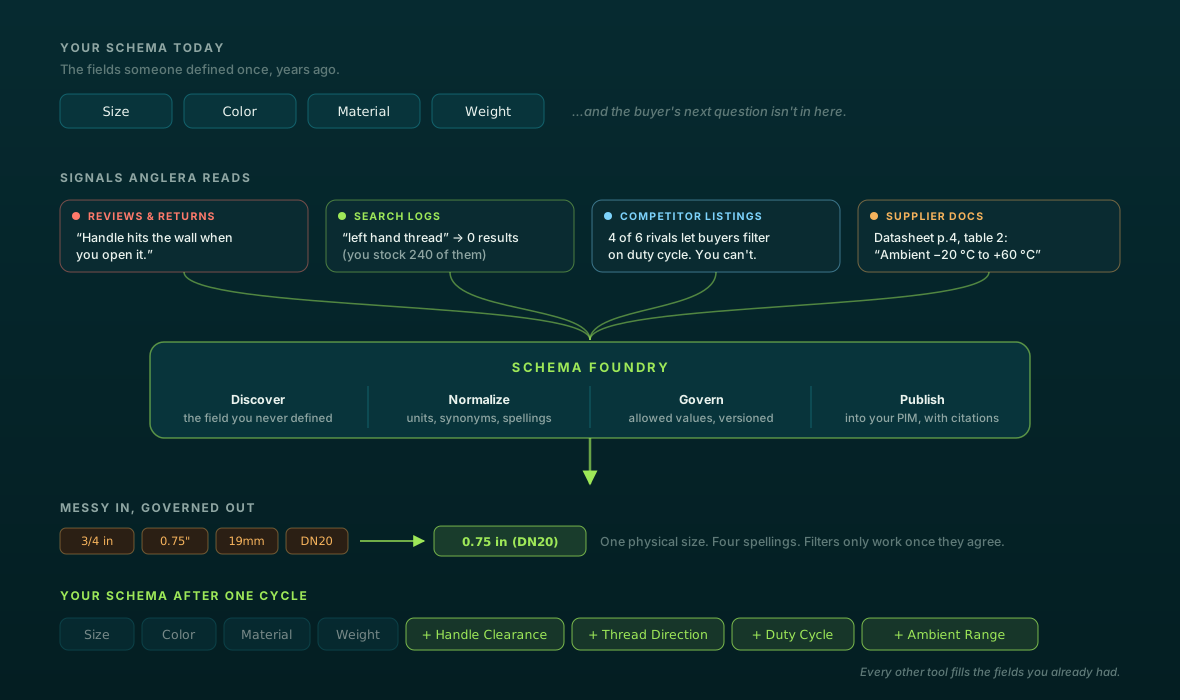
What neither platform provides is the upstream work that makes enrichment actually happen: researching missing attributes, cleaning inconsistent specs, scoring completeness against buyer signals, and writing the enriched record back to your master source of truth. That gap is where Anglera operates — as an enrichment layer that sits alongside either platform, or both, without replacing either one.
| inriver | Rithum (ChannelAdvisor / CommerceHub) | Anglera | |
|---|---|---|---|
| Primary job | Centralize, govern, and distribute product content — a single source of truth built for complex attribute models and omnichannel publishing | List products across 420+ marketplaces and retail channels, automate feeds, and manage marketplace and drop-ship fulfillment operations at scale | Enrich every SKU — gather missing attributes, clean inconsistencies, score completeness against buyer signals — then write the improved record back to whatever platform holds the master data |
| Content enrichment | Provides enrichment workflows and AI-assisted copywriting tools; digital shelf scoring surfaces gaps. Your team still executes the research and writing. | Minimal native enrichment. The platform handles field mapping and feed transformation — translating your existing data into each channel's required format — but it does not generate missing attributes or improve content quality. | Automated enrichment that neither platform generates: sourcing attributes from supplier sites, spec sheets, and web signals, then writing clean, complete data back to inriver or your Rithum feed |
| Channel syndication | Built-in syndication to major retailers and marketplaces; channel connections are fewer than a dedicated syndicator but integrated directly with the PIM governance layer | Core strength: 420+ marketplace and retail channel connections including Amazon, Walmart, Target, and major drop-ship programs. Largest dedicated channel network in the category. | Channel-agnostic — enriches once so every downstream syndication endpoint, whether through inriver or Rithum, receives richer, more complete listings |
| Fit for complex B2B catalogs | Purpose-built for complex B2B and industrial catalogs: deep attribute modeling, variant management, and structured supplier onboarding workflows make it strong for technical product depth | Strongest at breadth over depth — handles large SKU volumes across many channels efficiently but is less suited to highly technical attribute structures or industrial specification management | Fills the research gap specifically for complex B2B SKUs: technical specs, compliance data, and structured attributes that internal teams cannot gather at catalog scale |
| Digital shelf and analytics | Built-in digital shelf analytics track content completeness and channel performance inside the same platform — no separate tool required | Channel performance dashboards and marketplace analytics focused on listing health, buy-box position, and sales metrics rather than content quality scoring | Buyer-signal scoring that identifies which attribute gaps are costing conversions, creating a prioritized enrichment queue so effort goes where it moves the needle |
| Implementation timeline | Enterprise implementation typically spans several months — data modeling, supplier onboarding, workflow configuration, and integrations require significant setup investment | Feed and channel integrations can move faster for simpler catalogs; complex ERP, drop-ship, or marketplace integrations extend timelines considerably | ~30-day implementation. Plugs into whichever platform is already live without replacing it — scoped to complement, not compete |
| Pricing model | Subscription tiers (Core, Professional, Enterprise) priced on users, modules, and data volume; custom quotes only — no public pricing | Custom enterprise pricing based primarily on GMV and channel usage; no public pricing | SKU-based; scales with catalog size rather than channel volume, user count, or GMV |
How to choose between inriver and Rithum (ChannelAdvisor / CommerceHub)
Choose inriver if your primary challenge is governing a complex product catalog — especially in B2B manufacturing, industrial distribution, or multi-brand retail where attribute depth, supplier onboarding, and a governed single source of truth matter more than raw channel count. inriver earns its implementation investment when you need structured data governance, digital shelf monitoring, and syndication managed from a single composable platform.
Choose Rithum (ChannelAdvisor / CommerceHub) if your priority is channel reach: selling across Amazon, Walmart, Target, and dozens of additional marketplaces simultaneously, automating feed submissions, and running drop-ship or marketplace fulfillment programs at scale. Rithum is the stronger choice when the core problem is where products appear and how orders flow rather than how well the underlying content is structured before it gets there.
Consider both if you run a large branded catalog that needs deep governance and a reliable master record (inriver) alongside the broadest possible channel distribution (Rithum). This combination is common among established manufacturers and brands that have outgrown whatever syndication their PIM ships with but still need the PIM's governance layer to stay in place.
The one scenario where neither alone is sufficient: when the catalog itself has significant gaps — missing specs, inconsistent attributes, incomplete descriptions — that neither platform is designed to fix. Both inriver and Rithum assume the data arrives ready to govern or distribute. If it does not, that problem needs to be solved before either platform can deliver full value.
Whichever you pick, the data still has to get done
Whichever platform you choose — or both — the same upstream gap remains. inriver gives your team a governed place to store and publish product data. Rithum gets that data in front of buyers across 420+ channels. Neither platform generates the enriched attributes that make listings win: researched specs, complete descriptions, structured technical data scored against what buyers actually search for.
That is Anglera's job. Anglera reads your existing catalog, identifies what is missing or inconsistent, gathers attributes from supplier sites, spec sheets, and web signals, scores every SKU against buyer signals, and writes the enriched record back to your master source of truth — in roughly 30 days. If you are on inriver, Anglera writes back to inriver. If you route through Rithum, Anglera feeds cleaner data into your channel submissions upstream of the feed. If you run both, Anglera enriches once and both platforms benefit downstream.
The positioning is deliberate: Anglera is not a PIM and not a syndication platform. It does the enrichment work that inriver and Rithum both assume already happened — so your PIM stores richer data, and your channel submissions convert at higher rates, without rebuilding the stack you already have.
Frequently asked questions
Does inriver replace the need for Rithum?
Not for most buyers operating at marketplace scale. inriver includes built-in syndication, but its channel network is smaller than Rithum's 420+ connections. Brands with significant Amazon, Walmart, or drop-ship volume often layer Rithum on top of inriver rather than relying on inriver's native syndication alone.
Does Rithum enrich product data or just distribute it?
Rithum handles feed transformation and field mapping — translating your existing data into each channel's required format — but it does not generate missing attributes or improve content quality. The platform assumes clean, complete data arrives upstream. If your catalog has gaps, those gaps go out to every channel.
Where does Anglera fit if we already have both inriver and Rithum?
Anglera sits upstream of both. It enriches your catalog and writes the improved data back to inriver, which then syndicates through Rithum to your channels. The result is cleaner, more complete listings everywhere without rebuilding or replacing the stack you already have in place.
Which platform is better suited for a B2B industrial distributor?
inriver is the stronger fit for technical B2B catalogs — its attribute modeling, supplier onboarding workflows, and governance capabilities are built for deep product complexity. Rithum becomes more relevant when that same distributor also sells through Amazon Business, retail channels, or large drop-ship programs at volume and needs a dedicated channel operations layer.
How long does it take to go live on each platform?
inriver implementations typically take several months due to data modeling, supplier onboarding, and integration complexity. Rithum timelines vary — simpler feed setups can move faster, but ERP and drop-ship integrations add time. Anglera is designed to complement either: its ~30-day implementation is scoped to work alongside an existing platform rather than replace it, so it can start delivering enriched data before the larger implementation is fully settled.