Plytix vs Rithum (ChannelAdvisor / CommerceHub): An Honest Comparison
Plytix and Rithum are solving different problems, which makes this comparison unusual. Plytix is a Product Information Management (PIM) platform — its job is to be the single source of truth for your product content: attributes, digital assets, AI-generated copy, and outbound feeds. Rithum (the 2023 merger of ChannelAdvisor, CommerceHub, and Dsco) is a commerce operations platform — its job is to automate listings, feeds, order routing, and fulfillment across 420+ channels at scale. One is a content hub; the other is a distribution and operations engine.
That distinction matters because many teams end up needing both, not one or the other. A mid-market brand might store product content in a PIM and push operations through Rithum. An SMB just starting out might find that Plytix's built-in syndication covers enough channels to avoid Rithum entirely. The decision hinges on your scale, your operational complexity, and whether your primary bottleneck is content quality or channel reach. Either way, neither platform enriches your data — that gap is where Anglera comes in.
| Plytix | Rithum (ChannelAdvisor / CommerceHub) | Anglera | |
|---|---|---|---|
| Primary purpose | Centralize and manage product content — attributes, digital assets, AI-generated copy — and push feeds to ecommerce channels. Plytix is a PIM with syndication built in. | Automate product listings, feed management, order routing, and drop-ship fulfillment across 420+ marketplace and retail channels. Rithum is operations-first, not content-first. | Enriches and scores the product data that either platform stores or syndicates — filling missing attributes, cleaning inconsistencies, and flagging completeness gaps before content goes live. |
| Channel reach and syndication | Feed syndication to selected ecommerce channels and marketplaces; the number of available channels depends on your pricing tier and add-ons. Well-suited for SMBs publishing to a manageable channel set. | 420+ marketplace and retail channel connections for 40,000+ brands and retailers. Purpose-built for teams that need to list, update, and fulfill across a large, shifting channel mix at high volume. | Enriches product attributes — titles, descriptions, specs, images metadata — so listings meet each channel's content quality requirements before syndication fires. Better data in means fewer rejected feeds. |
| Target market and scale | Built explicitly for small and mid-sized businesses. Unlimited users on all plans keeps costs predictable; catalog-size tiers let SMBs start small and grow without switching platforms. | Mid-market to enterprise brands, retailers, and suppliers managing high-volume, multi-channel operations. The GMV-based pricing model reflects an enterprise sales motion. | Works alongside either platform; ~30-day implementation regardless of team size. Pricing scales with SKU volume, so SMBs and enterprise teams both get a fit. |
| Product content and AI | Built-in AI content generation and translation; integrated Digital Asset Management (DAM). You can author, enrich, and localize content inside Plytix without a separate tool. | Feed and listing optimization focused on channel compliance and performance — not a content authoring or enrichment environment. Rithum moves products; it does not build them. | Goes deeper than AI copy generation: structured attribute enrichment, buyer-signal scoring, completeness grading, and write-back to your PIM or catalog. Complements Plytix's AI layer and fills the gap Rithum leaves entirely. |
| Order and inventory management | Not in scope. Plytix is a product content platform; order routing, inventory sync, and drop-ship workflows sit outside its remit. | Core capability. Rithum handles drop-ship order management, inventory synchronization, and supplier onboarding — the operational layer that runs after a listing goes live. | Not in scope for Anglera either. Anglera focuses on data enrichment upstream of both listing and fulfillment. |
| Pricing transparency | Freemium entry point; paid plans start around $733/month with catalog-size tiers. Pricing is published. Add-ons for AI credits and extra distribution channels are available. | Custom enterprise pricing based on GMV and channel count. No public rate card; expect a sales process to get numbers. | Separate line item from either platform; pricing is based on SKU volume and enrichment scope. Contact Anglera for a fit check. |
| Implementation complexity | Self-serve SaaS with guided onboarding; SMBs can typically get up and running without professional services. Integrations rely on APIs and standard feed connectors. | Enterprise implementation with significant integration work — connecting suppliers, retailers, and marketplace APIs across a complex operations stack. Professional services are typically involved. | ~30-day implementation that connects to your existing PIM, ERP, or commerce platform. Anglera reads your current catalog, enriches it, and writes back — no rip-and-replace required. |
How to choose between Plytix and Rithum (ChannelAdvisor / CommerceHub)
Choose Plytix if you are an SMB that needs one platform to manage product content, digital assets, and outbound channel feeds — and you want AI copy generation and unlimited users without managing multiple tools. Plytix makes the most sense when your primary bottleneck is getting product content organized and published, not running high-volume marketplace operations.
Choose Rithum if you are a mid-market or enterprise brand, retailer, or supplier that needs to scale listings and automate order and fulfillment workflows across a large number of channels. Rithum earns its keep when operational complexity — drop-ship, inventory sync, channel compliance at volume — is the real problem. It is not the right fit if your primary need is content management or enrichment.
Consider using both if you need a product content hub (Plytix) and a high-volume channel operations engine (Rithum). These platforms are not direct competitors. Many Rithum customers still need a PIM upstream; Plytix can serve that role for SMBs, or a more enterprise-grade PIM (Akeneo, Salsify, Contentserv) can serve it at larger scale.
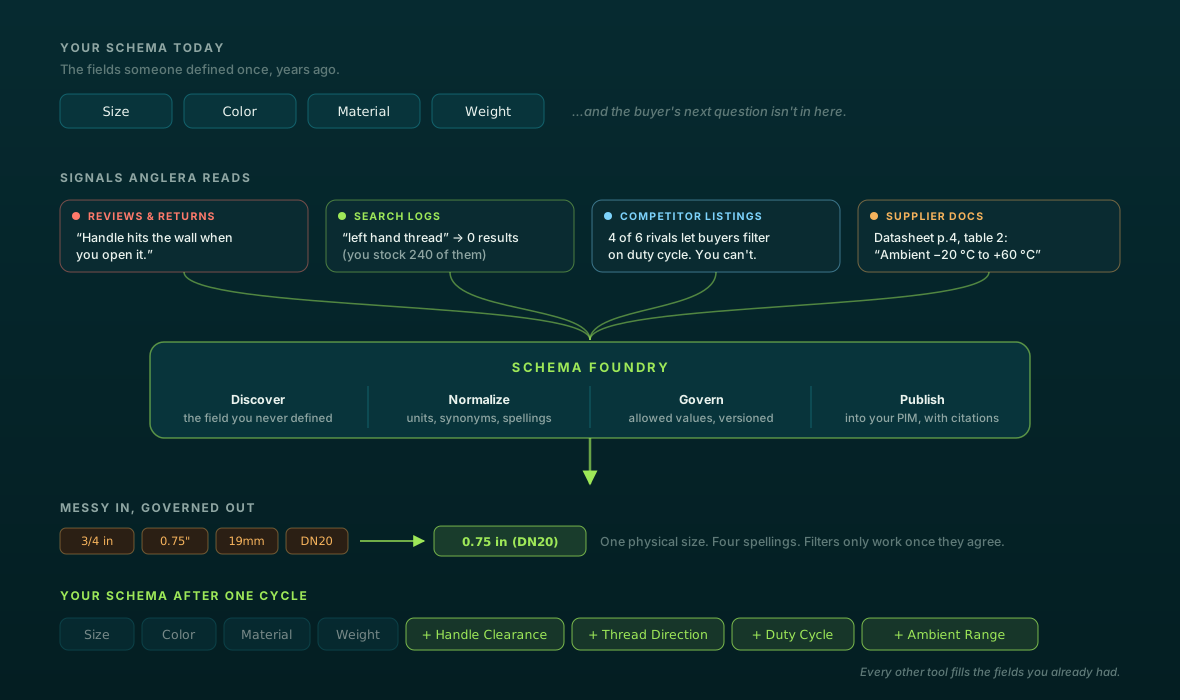
The honest gap in both cases: Neither Plytix nor Rithum enriches your product data in any structural sense. Plytix gives you a place to store and AI-generate content. Rithum moves that content out. Neither platform audits attribute completeness against buyer signals, fills missing specs, or scores your catalog for conversion readiness. That is the work that tends to happen manually — or not at all — until a team adds an enrichment layer.
Whichever you pick, the data still has to get done
Anglera is not a PIM and not a syndication platform, which means it sits comfortably alongside either Plytix or Rithum — or both.
If you pick Plytix: Plytix stores your product content and publishes feeds. Anglera enriches that content before or alongside publication — pulling missing attribute data from supplier sites, manufacturer pages, and structured sources; scoring each SKU against buyer signals; and writing the enriched records back to Plytix so your published feeds reflect complete, accurate data. Plytix's AI can generate copy; Anglera ensures the underlying attributes that copy is built from are actually correct and complete.
If you pick Rithum: Rithum expects clean, channel-ready product data coming in. What it receives is what it syndicates. If your catalog has incomplete specs, missing images, or inconsistent attribute formatting, Rithum faithfully distributes those problems to 420 channels. Anglera runs upstream — enriching your catalog in your PIM or source system, then ensuring what Rithum receives is complete and channel-compliant. The result is fewer rejected feeds, higher listing quality, and better conversion on the channels Rithum reaches.
In both scenarios, Anglera implements in approximately 30 days and writes enriched data back to your existing source of truth — no platform switch required.
Frequently asked questions
Are Plytix and Rithum direct competitors?
Not really. Plytix is a Product Information Management (PIM) platform — it stores, organizes, and publishes product content. Rithum is a channel commerce operations platform — it automates listings, feeds, and fulfillment across 420+ channels. Some SMBs will find Plytix's built-in syndication sufficient and never need Rithum; larger teams often use a PIM (including Plytix) alongside Rithum rather than choosing one.
Can Plytix handle the same channel volume as Rithum?
At SMB scale, Plytix's feed syndication covers a meaningful set of ecommerce channels and marketplaces. But Rithum's 420+ channel connections, drop-ship order management, and supplier network represent a different order of magnitude of operational infrastructure. If you need to list, sync inventory, and route orders across dozens of channels at high volume, Rithum is built for that; Plytix is not.
Does Rithum include a PIM?
No. Rithum's core capabilities are channel feed management, listing automation, order routing, and inventory synchronization. It is not designed to be the system of record for product content. Brands using Rithum at scale typically maintain a separate PIM or ERP to manage product attributes, and Rithum consumes that data for distribution.
What is Rithum — is it the same as ChannelAdvisor or CommerceHub?
Rithum is the combined company formed by the 2023 merger of ChannelAdvisor and CommerceHub (which had previously acquired Dsco). The Rithum platform combines capabilities from all three — ChannelAdvisor's marketplace and retail channel management, CommerceHub's supplier and drop-ship network, and Dsco's EDI and supply chain connectivity. The ChannelAdvisor and CommerceHub brand names are still widely recognized, but the unified entity and platform is now Rithum.
Where does Anglera fit if I already use Rithum or Plytix?
Anglera sits upstream as the enrichment layer. If you use Plytix, Anglera enriches the attributes and content stored there so published feeds are complete and accurate. If you use Rithum, Anglera enriches your catalog in your source system before Rithum syndicates it — reducing rejected feeds and improving listing quality across every channel Rithum reaches. Anglera connects to your existing stack and writes enriched data back; it does not replace either platform.