
Apparel is being reranked by AI shopping agents. Is your catalog readable?
AI shopping agents now rerank apparel by fit, fabric, and care data, not just keywords. Here's what thin product data costs you and what fixes it.
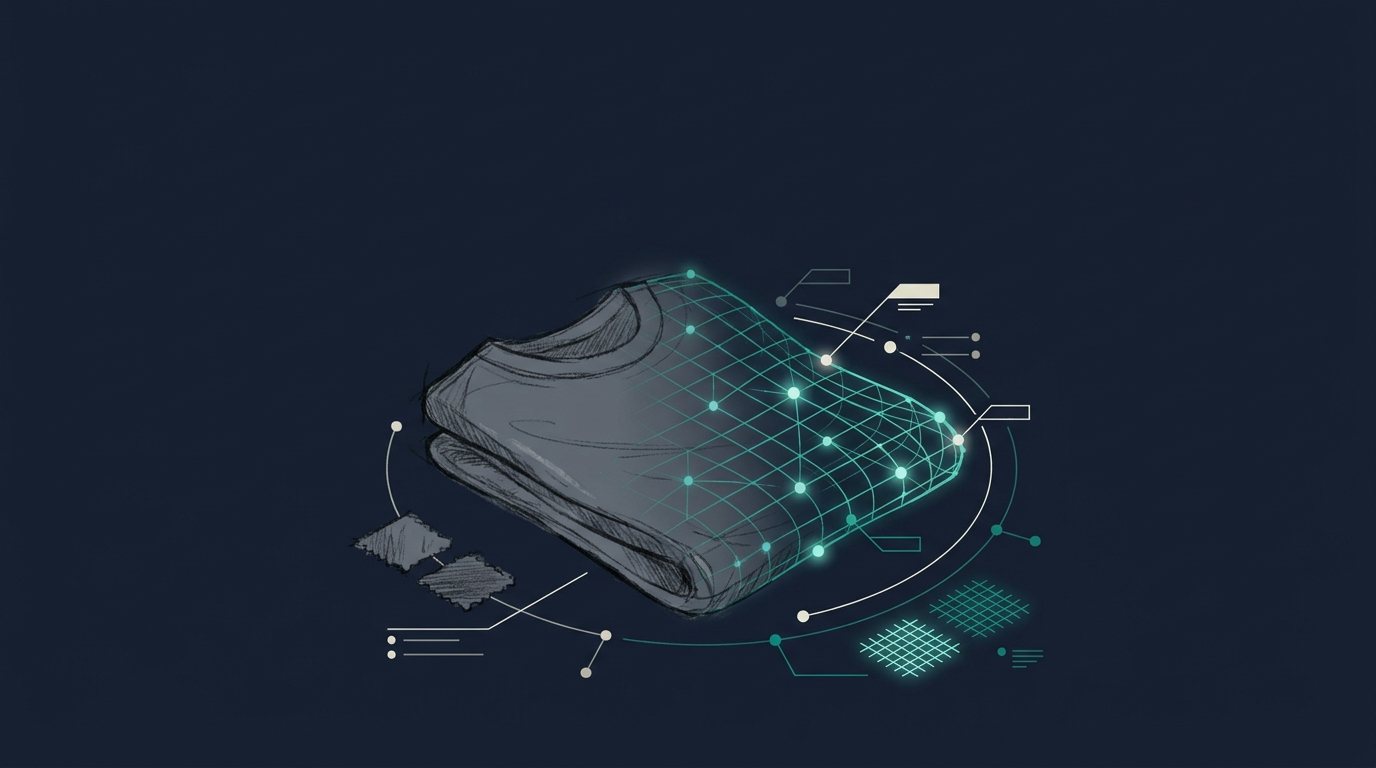
Shoppers stopped typing "women's rain jacket" into a search box a while ago. They're asking ChatGPT, Google AI Mode, or Gemini to "find me a packable rain jacket that runs true to size and won't overheat on a humid hike," and an agent is quietly comparing your product data against three competitors before a human ever sees your site. If your catalog can't answer that question in structured form, you don't lose the sale politely. You just never show up.
The traffic shift is already measurable
This isn't a future-tense trend. Adobe's Digital Insights team found AI-referred traffic to U.S. retail sites jumped sharply through 2025, with retail posting some of the largest year-over-year gains of any industry Adobe tracks, and those visitors converting at meaningfully higher rates than typical traffic once they arrive. OpenAI has been building toward this directly: its own writeup on powering product discovery in ChatGPT describes required feed fields (title, description, price, availability, and more) that can get a product "disqualified from search or checkout" if missing or invalid — not deprioritized, disqualified.
Google's side works the same way. AI Mode pulls from the Shopping Graph, which is populated by Merchant Center feeds and verified against Schema.org Product markup on the page itself. When the two disagree on price, availability, or rating, Google's guidance is to deprioritize both listings rather than guess which one is right.
The mechanism is consistent across engines: agents don't read your homepage copy or your hero banner. They read structured fields, and they compare those fields against a shopper's stated constraints. No structured field, no comparison, no recommendation.
Why apparel gets hit harder than most categories
Apparel queries are unusually specific. "Under $300," "ships by Friday," "true to size," "machine washable," "good for humid weather" — these aren't vibes, they're filters. An agent can only apply a filter to a field that exists.
Search Engine Land's guidance on optimizing for ChatGPT shopping makes the apparel case directly: custom variant fields that mirror how buyers actually phrase things ("snapback cap in navy," a fabric weight, a fit callout) create separation from competitors who only list generic color and size. Retailers that leave fit, material composition, and care instructions blank aren't being modest about their product pages. They're making themselves impossible to compare.
That's the quiet failure mode of apparel data. A shirt with a title, one photo, and a price still "works" for a human scanning a grid. The same shirt is unreadable to an agent trying to answer "is this true to size" or "will this shrink in the wash," because the answer isn't a marketing sentence, it's a field: fiber content by percentage, a shrinkage note, a fit category.
Raw feed vs. enriched: a women's jacket, side by side
| Attribute | Raw feed (typical) | Enriched for AI agents |
|---|---|---|
| Title | Women's Rain Jacket | Women's Packable Rain Jacket, Waterproof 2.5-Layer Shell |
| Fabric | (blank) | 100% recycled nylon, 2.5-layer waterproof laminate, 10K/10K rating |
| Fit | (blank) | Regular fit, true to size; sizing runs small in shoulders per size chart |
| Care | (blank) | Machine wash cold, hang dry, no fabric softener |
| Use case | (blank) | Hiking, commuting, packs into own pocket |
| Availability | In stock | In stock, size Medium, ships in 1 business day |
| Reviews context | 4.3 stars | 4.3 stars; verified buyers note "runs small," 68% recommend sizing up |
The left column is a product page a person can technically browse. The right column is a product an agent can actually reason with, because every claim a shopper might ask about now has a corresponding field.
Ask an AI to recommend one, and watch what happens
Try this yourself: ask ChatGPT or Google AI Mode to "recommend a packable women's rain jacket, true to size, machine washable, under 150 dollars." The agent will pull candidates by cross-referencing price, fit language, care instructions, and availability across brands. A product missing any one of those fields either gets silently skipped or shows up with a caveat ("size and care information unavailable") that reads as a red flag next to a competitor's complete listing. Run the same query for a men's shirt or a kids' base layer and the pattern repeats: fit and fabric data decide who makes the shortlist.
What machine-readable apparel content actually requires
The baseline is no longer a nice title and a hero photo. It's a consistent set of structured fields, repeated correctly across every variant, every size, every color, every season:
- Fiber content and fabric weight, not just "cotton blend"
- Fit category and a true-to-size note, ideally tied to real size-chart or return data
- Care instructions in a standard, parseable format
- Use case and occasion tags that match how shoppers actually phrase requests
- Current price, availability, and shipping timing, matched exactly between your site's schema markup and your feed
- Review signal that surfaces fit and quality patterns, not just a star average
Most catalogs have this data somewhere, scattered across a PIM, a spreadsheet a merchandiser keeps updated, and tribal knowledge no field captures at all. The gap between "we have the data" and "every SKU has the data, consistently, in the field an agent reads" is where visibility gets lost.
Anglera sits on top of your PIM or commerce platform, whatever it is, and continuously scores, gap-fills, and enriches product content so every SKU carries the fit, fabric, care, and use-case fields agents actually query against. Your PIM stores the data; Anglera does the work of keeping it complete and machine-readable at scale, without a rip-and-replace migration. It plugs in alongside what you already run and closes the gaps that make apparel catalogs invisible to AI shopping agents.