
Arbill: A Family-Owned Safety Distributor's Pivotal Bet
Arbill charted at #19 in Safety on the 2025 MDM Top Distributors list and does not appear on the 2026 lists. Here's how a third-generation glove laundry became a safety-outcomes company.
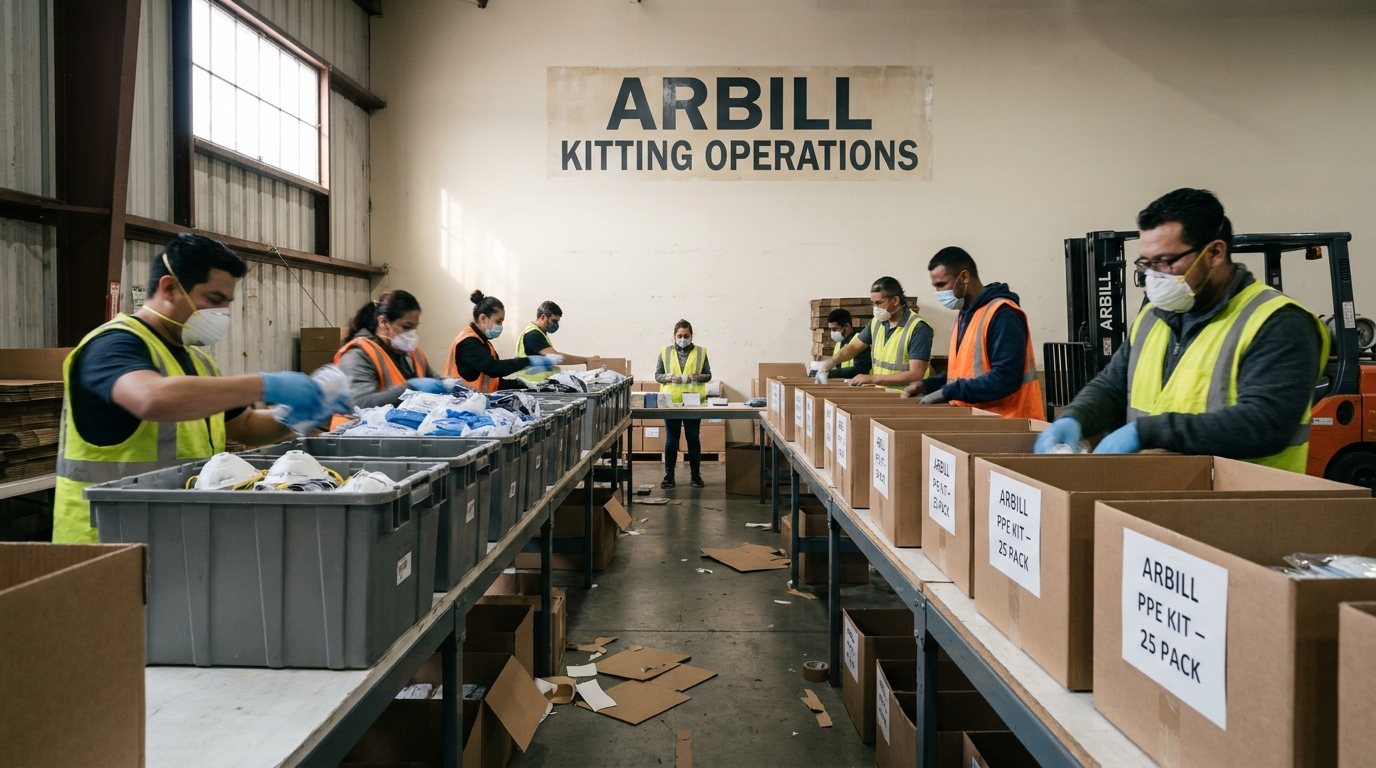
Part of Distributor Playbooks — strategy teardowns of every company on the MDM Top Distributors lists.
Arbill charted at #19 on the Safety list in Modern Distribution Management's 2025 Top Distributors report, the trade publication's annual ranking of North America's largest distributors across 20 verticals, and does not appear on the 2026 lists. It was a modest showing by revenue next to the PPE giants on that list, and that is exactly what makes Arbill worth studying. It is still family-run, three generations in, in a safety-distribution sector where most independents of its vintage have long since sold to a strategic buyer or a private equity platform.
A glove laundry, not a safety company
Arbill did not start as a safety business. Robert Bickman founded it in Philadelphia in 1945 as an industrial laundry service, one that cleaned and reconditioned work gloves for factories rather than selling new ones. The pitch was maintenance, not merchandise: keep the gloves your plant already owns usable a little longer. That is a service model, not a product model, and it matters later.
His son Barry Bickman joined full-time in 1964 and spent the next decade pushing the company toward the business most readers would recognize. In 1973 he started importing and distributing leather gloves outright, turning a laundry operation into a distributor. The 1971 creation of OSHA gave that shift a tailwind: a company already fluent in hand protection was well positioned to become a full PPE supplier as compliance requirements multiplied through the 1980s, according to Arbill's published company history.
The third generation's bet: sell safety, not equipment
Julie Bickman Copeland, Barry's daughter, joined the family business in 1995 and took over as CEO in 2005, per Arbill's leadership page and her Temple University alumni profile, which credits her as the company's third-generation owner. She inherited a business with the structural problem every industrial PPE distributor still fights: thin margins on a commodity product, bought by purchasing managers who compare unit prices and little else.
Her response is the unique insight in this story, and Arbill names it plainly: the company reframed its own question from "why are we selling safety equipment" to "why aren't we selling safety," according to an account of the repositioning by strategist Kaihan Krippendorff. The product became a wrapper around something bigger. In 2008 Arbill launched EHS Managed Services, bundling PPE with OSHA compliance consulting and training under a program it calls SafetyCare.
The sharper move sat underneath the product change: Arbill stopped pitching purchasing managers, who have no budget authority over consulting spend, and started pitching CFOs, who think in terms of incident cost, workers' comp exposure, and liability avoidance rather than per-unit price. That single buyer-swap took a business selling into a market with roughly 30 percent gross margins and let it compete instead on risk reduction, where the willingness to pay is structurally different. Within six months of the repositioning, SafetyCare accounted for 10 percent of the sales pipeline, per the same account, and it has grown into a materially larger and higher-margin share of the business since.
Family-owned and women-owned, against the grain of a rolled-up category
Arbill also carries an ownership fact that stands out mechanically in this vertical: it markets itself as the largest woman-owned safety-only company in the United States, holding Women's Business Enterprise National Council and SBA WOSB certifications that make it eligible for supplier-diversity spend most competitors cannot touch. Combined with the family thread from Robert to Barry to Julie, that is two distinguishing characteristics layered on top of each other, in a category where national safety and PPE distribution has consolidated hard into strategic and private-equity-backed roll-ups over the past two decades. Staying independent and family-led while its addressable market keeps changing hands is itself a strategic stance, whether or not Arbill frames it that way.
Recent moves keep the services thesis intact
The last two years show the same instinct at work. Arbill joined OMNIA Partners as a cooperative purchasing vendor in 2024, widening its access to institutional and public-sector buyers without adding a sales headcount for each one. It launched a PPE vending and inventory-locker program the same year, a play that turns commodity glove and eyewear replenishment into a data-generating touchpoint rather than a line item nobody watches. And in 2025 it introduced TruSense, a real-time forklift hazard-detection system, extending the safety-outcomes pitch from PPE and training into plant-floor technology. Each of these is a small bet in the same direction: make safety something Arbill monitors and manages, not just something it ships in a box.
| Generation | Years active | Pivotal move |
|---|---|---|
| Robert Bickman (1st) | 1945– | Founded as an industrial glove laundry |
| Barry Bickman (2nd) | 1964–1990s | Shifted to importing and distributing gloves; rode OSHA's 1971 creation into full PPE |
| Julie Copeland (3rd) | 1995–present, CEO since 2005 | Reframed the business from product to outcome; launched SafetyCare and targeted CFOs over purchasing managers |
The tension worth naming
Selling outcomes instead of gloves is a good story, but it is also a harder one to scale than a catalog SKU count. Consulting and managed services require the kind of technical and safety-engineering talent that does not hire as fast as a warehouse picker, and every EHS engagement is more custom than the last vending machine restock. Arbill's bet is that the margin and the customer stickiness are worth that operating complexity. Its climb on MDM's safety list through 2025 suggested the bet was paying off, though Arbill does not appear on MDM's 2026 lists. The model was never going to let Arbill out-scale distributors that compete on breadth alone.
Distribution rewards the companies willing to make the unglamorous work, catalog depth, service reliability, the data behind every SKU, look like the whole point instead of the overhead. This series exists to take a closer look at how the best of them do it.