
How SPI Health and Safety Grew by Buying, Not Building
SPI Health and Safety ranks #16 on MDM's 2026 Safety list. Its real edge is a five-decade acquisition engine and a pipeline built to absorb it, not branch count.
Part of Distributor Playbooks — strategy teardowns of every company on the MDM Top Distributors lists.
Most American distributors chasing MDM's rankings never cross paths with SPI Health and Safety, because SPI has spent five decades building density in Quebec and the rest of Canada rather than south of the border. That regional focus hasn't stopped it from landing at #16 on Modern Distribution Management's 2026 Top Distributors list for the Safety category, a ranking of North America's largest distributors across 20 product verticals. The company's real story is not how many storefronts it opened. It's how many companies it bought.
A fire-extinguisher business, expanded twelve categories over
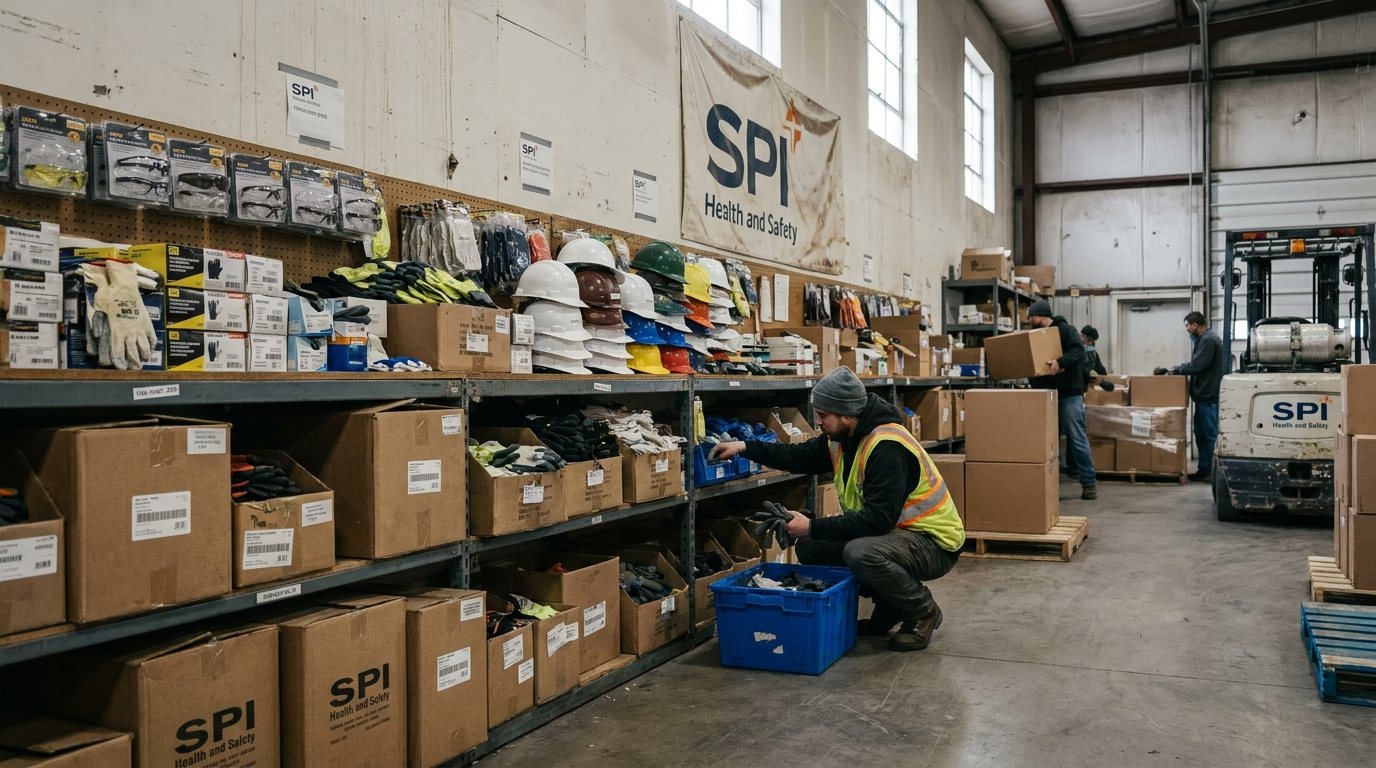
SPI's origin is almost quaint next to its current footprint. Founded in 1972 by Paul Tremblay, the company started by selling and refilling fire extinguishers for local businesses, according to a Valtech case study on SPI's digital transformation. That single-product beginning is a useful baseline for measuring how far the company has traveled: today SPI's MDM profile lists it as a Canadian leader in occupational health and safety products spanning roughly a dozen categories, from fall and respiratory protection to protective footwear and headwear, layered with fire-protection services, technical consulting and safety training. Products became a platform for services, and services became the reason customers stay.
The growth engine is acquisition, not branch-building
Look at the number of physical locations and the story understates itself. Look at the acquisition count and the strategy comes into focus. SPI's own newsroom describes its 2024 purchase of Rubicon Safety, made official after a two-year partnership, and its purchase of online safety-training provider SSTenligne as the 24th acquisition since the company's 1972 founding. That is not a company that occasionally bolts on a competitor. It's a company that has treated M&A as its primary growth lever for most of its existence, averaging roughly one deal every two years and accelerating in the past decade.
The targets tell you what SPI values. Some deals bought geography it didn't have. Others bought capability. A partial timeline:
| Year | Acquisition | What it added |
|---|---|---|
| 2018 | Treen Safety (Worksafe) | Entry into Western Canada, per medindia's coverage of the deal |
| 2021 | CONFIAN | Specialized safety-equipment expertise |
| 2024 | Rubicon Safety | Full integration after a prior partnership |
| mid-2020s | SSTenligne | Online occupational-safety training, its 24th deal overall |
That last one matters more than its size suggests. Buying an e-learning provider instead of another regional PPE reseller signals SPI sees training delivery, not just product SKUs, as part of what a safety distributor sells.
Digital infrastructure as the integration layer
Rolling up 20-odd companies only works if the back end can absorb them without customers noticing friction. SPI rebuilt its commerce stack accordingly, moving onto a modern B2B platform paired with inRiver product information management. According to the Valtech case study, the rebuild produced a 71% revenue increase, a 57% improvement in conversion rate and a 67% jump in transaction volume, alongside faster page loads and a large increase in registered-user adoption. An Optimizely field-notes writeup of the same effort frames it as an omnichannel push spanning both B2B punchout access for large accounts and direct-to-consumer sales, on top of vendor-managed inventory programs for its bigger industrial customers. For a company that grows by absorbing other distributors' catalogs, a fast, centralized way to merge and publish product data isn't a nice-to-have. It's the plumbing that makes the acquisition strategy repeatable.
The insight: succession without a sale
Here's the part that doesn't show up on the About page. Distribution niches like safety and PPE have been favorite hunting grounds for private equity roll-ups over the past decade, with outside capital buying regional players and stitching them into national platforms built for an eventual exit. SPI ran the same consolidation playbook on itself, all 24-plus deals of it, without selling control to a financial sponsor. Martin Tremblay came back to run the company as president and CEO in 2016 after founding his own venture in 2007, according to SPI's own announcement of his return. In 2020 he promoted Kim Levesque, then 16 years into her tenure at the company, from chief operating officer to president, a move confirmed in SPI's newswire release. By 2026, Levesque had been elevated again, this time to president and CEO, with Tremblay stepping back into an executive chairman role rather than out the door entirely.
That's a rarer sequence than it sounds: a company that consolidated an entire regional category through serial M&A, then handed the operating reins to a long-tenured internal executive instead of a buyer's designated operator. SPI bought its way to scale and still promoted from within to run it.
Every distributor on MDM's list wins or loses on some combination of what it stocks, where it sits and how fast it can absorb the next thing it buys. SPI's answer happened to be a spreadsheet-deep catalog and a data pipeline built to swallow other companies' product lines faster than the fire-extinguisher business anyone remembers it as.