
Burlington: From One New Jersey Coat Shop to a $11B Chain
Burlington ranks #45 on NRF's Top 100 Retailers list with $11.48B in 2025 sales. Here is how a small coat outlet in New Jersey became an off-price giant.
Part of Retailer Playbooks — history-first profiles of every company on the NRF Top 100 Retailers list.
Burlington sits at #45 on the National Retail Federation's Top 100 Retailers 2026 list, with $11.48 billion in 2025 U.S. retail sales, compiled with Kantar. That number belongs to a company that started as a single leased factory building and a bet that a Brooklyn couple could out-negotiate the coat business. The path from there to here runs through a trademark fight, a private equity buyout, and a growth strategy that quietly depends on other retailers going out of business.
A Librarian's Idea and a Factory Building
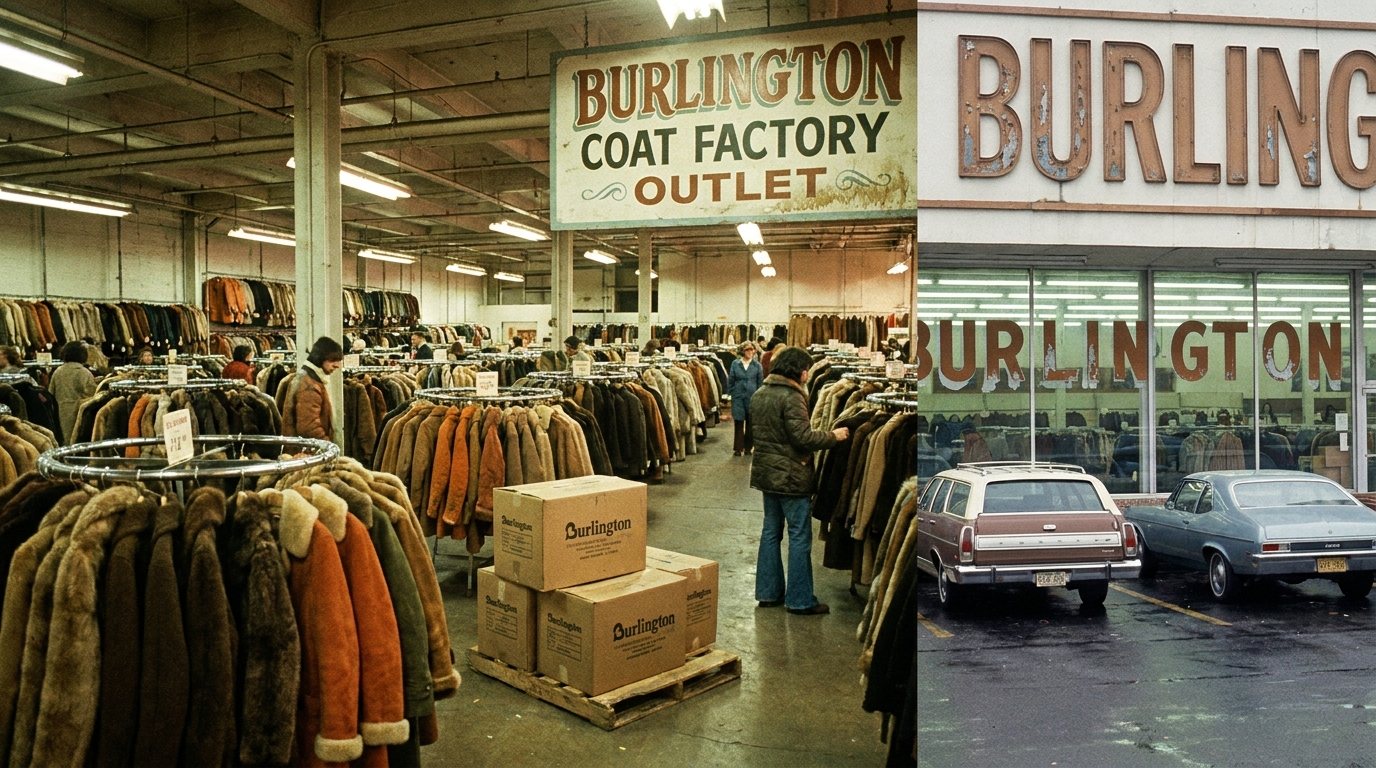
Monroe Milstein had been running a wholesale and retail outerwear business with his father Abe since 1946, a trade the family had worked since Abe started it in 1924. In 1972, Monroe's wife Henrietta, a librarian by training, pushed him to buy a former coat factory and retail outlet in Burlington, New Jersey, for $675,050. She put in roughly $75,000 of the down payment from her own savings, according to FundingUniverse's company history. The store sold winter overcoats at 30 to 40 percent below standard retail. First-year sales hit $1.5 million.
Milstein saw the trap almost immediately: a store that only sells coats only sells well in cold months. The response became the template for the next fifty years. Burlington Coat Factory pushed into clothing, accessories, linens, a baby department, shoes, and eventually furniture, all while keeping the stripped-down "warehouse" feel of the original store and leasing existing buildings instead of constructing new ones. That combination, cheap real estate plus broad and opportunistic merchandise, is still the entire off-price playbook.
Scaling Through the 1970s and 1980s
A second store opened in Copiague, Long Island, in 1975, and Monroe's son Lazer, who became the legal owner, negotiated Saturday closures so the business could observe the Sabbath, an accommodation that mattered in an era when blue laws still shaped what stores could and couldn't do on weekends. Federal antitrust changes that same year eliminated manufacturer price-fixing on apparel, which handed off-price chains like Burlington a structural tailwind: brands could no longer dictate a floor price, and discounters could buy overstock and canceled orders at real discounts and pass them on.
By 1983 the company had 31 stores and roughly $300 million in sales, and it went public as Burlington Coat Factory Warehouse Corporation. Growth compounded from there: a 438,000-square-foot national distribution center opened in 1990, sales crossed $1 billion in 1993 with 185 stores running, and that same year Burlington opened its first international location in Mexico.
A Name It Didn't Get to Keep Clean
For nearly three decades, Burlington Coat Factory's signage carried an odd disclaimer: "Not Affiliated with Burlington Industries." The textile manufacturer Burlington Industries had objected to the name overlap, and the settlement required the retailer to distance itself in print for years. The company finally shed both the disclaimer and the "Coat Factory" name in 2009, rebranding simply as Burlington, a tacit admission that coats hadn't been the point for a long time.
Private Equity, a Round Trip to Wall Street, and a New CEO
In 2006, Bain Capital bought the company for $2.06 billion. The Milstein family, who still held nearly 30 million shares, walked away with about $1.3 billion, and Monroe stepped back from the business he'd built. Tom Kingsbury took over as president and CEO in 2008 and ran the company through the leveraged-buyout years, guiding it back onto public markets in October 2013, when the stock jumped more than 40 percent on its first day of trading with 503 stores across 44 states and Puerto Rico. Burlington joined the Fortune 500 in 2016. Michael O'Sullivan, arriving from Ross Stores in 2019, has run the company since, through a pandemic that briefly closed every store and a subsequent boom in off-price shopping.
The Growth Engine Nobody Puts on a Slide
Here's the part that doesn't show up in a store tour: a meaningful share of Burlington's recent expansion has come from picking through the wreckage of other retailers' bankruptcies. When Bed Bath & Beyond liquidated every U.S. location in 2023, Burlington bought the leases on more than 40 of the shuttered stores. When Conn's collapsed in 2024, Burlington picked up 15 more. This isn't a side hustle, it's a real estate strategy: rather than compete for prime space at full market rent, Burlington waits for a big-box chain to fail and then absorbs its footprint at a fraction of the original cost. The company that survived by refusing to depend on one product category also refuses to depend on ordinary commercial real estate markets. It grows on the debris of retail failure, which is a genuinely strange and underappreciated position for a company with 1,115 stores and Fortune 500 status.
That scavenging instinct, more than any single merchandising decision, explains how a coat outlet with $675,050 of borrowed and saved money became the third-largest off-price retailer in the country behind TJX and Ross Stores. Off-price retail runs on other people's inventory. Burlington figured out early that it could also run on other people's real estate.
Retail history is full of companies that got big by building. Burlington got big, in part, by outlasting.