
Cadence Petroleum Group: From Service Station to Roll-Up Platform
Cadence Petroleum Group made MDM's 2026 Top Distributors list in Lubricants & Fuels. Here's how a 1947 family oil business became a PE roll-up engine.
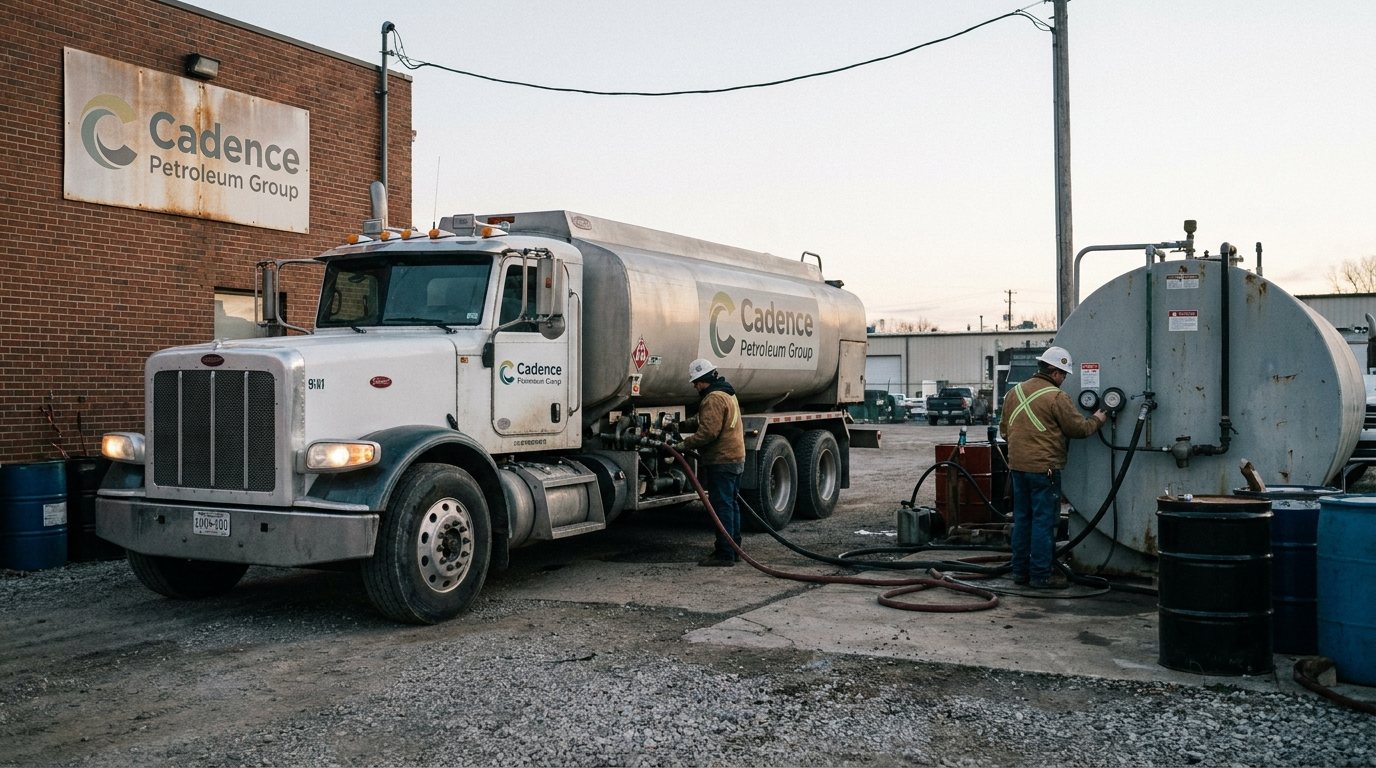
Part of Distributor Playbooks — strategy teardowns of every company on the MDM Top Distributors lists.
Cadence Petroleum Group shows up in Modern Distribution Management's 2026 Top Distributors list under Lubricants & Fuels, the annual ranking MDM runs across 20 verticals of North American distribution. The company behind that placement started as one man pumping gas in Asheboro, North Carolina, in 1947. It is now a private-equity-owned platform that has closed roughly a deal a quarter for most of the last decade. That arc, family station to roll-up machine, is the whole story.
The Pugh Family Built the Base
John Quincy Pugh, Jr. opened the first Pugh's Service Station in Asheboro in 1947. Pugh Oil Company grew that single stop into a network of roughly 20 service stations, and in the 1980s the family launched Pugh Lubricants as a separate distribution arm. Four generations of Pughs ran it, and by the mid-2010s it had become one of the largest independent lubricant distributors in the Southeast, per the trade outlet Jobbers World's profile of the company. That is the normal, admirable version of a distribution story: a family finds a niche, holds it for seventy years, grows it branch by branch.
Cadence is what happened after the family sold.
Two Private Equity Owners in Four Years
On November 22, 2016, private equity firm Tenex Capital Management bought Pugh Lubricants and used it as a platform company, the industry term for a base business a PE firm buys specifically to bolt acquisitions onto. Tenex renamed the combined entity Cadence Petroleum Group in 2018 and 2019 and immediately went shopping: Apollo Oil in Kentucky (1972-founded, added March 2017), Veteran's Oil in Alabama and Georgia (September 2017), Halco in Georgia (December 2018), Mid-South Sales across four states (January 2019), and Davison Fuel & Oil in Alabama (2020). Five divisions, twenty locations, one thesis: buy family-owned regional lubricant distributors before someone else does.
Then, on October 8, 2020, Tenex sold Cadence to Wellspring Capital Management, a New York private equity firm that has run more than 50 platform investments and 80-plus add-on deals since 2005, according to Wellspring's own announcement of the acquisition. Wellspring's managing partner Alex Carles called it a chance to build on the firm's track record in petroleum distribution. Two ownership changes in four years is not a scandal in PE-backed distribution; it is closer to the operating model. But it is worth naming plainly, because it means the strategy a reader is about to see below was not designed by one management team pursuing a long arc. It was designed by two successive financial sponsors executing the same playbook on the same chassis.
The Roll-Up Has Not Slowed Down
Wellspring kept buying: Stockman Oil in South Carolina (February 2021), Frost Oil across Arkansas, Missouri, and Oklahoma (August 2021), and then a fresh wave in 2025 and 2026 that shows the pace has, if anything, accelerated.
| Acquisition | Region | Approx. date |
|---|---|---|
| B-J Supply | not disclosed | April 2025 |
| Glockner Oil Company | Piketon & Columbus, OH | Dec 2025 |
| BOC Oil Company | North Charleston, SC | Dec 2025 |
| Hoosier Penn Oil | Indiana | 2025-2026 |
| Southeast Energy | Danville, VA | April 2026 |
Cadence's own site now puts the combined company at 34 locations across 22 states with more than 1,000 employees, and describes itself as the number one U.S. distributor for Valvoline, Phillips 66, and Castrol, and a top-five distributor for Shell and Chevron. The Glockner deal announcement is a good window into how the roll-up actually gets pitched to sellers: Glockner started in 1968 as a Quaker State sub-distributor run out of a trailer with one pickup truck, and Cadence's business-development chief told the outgoing GM the fit worked because "Glockner is a perfect fit to strengthen our Ohio footprint," built on "people, growth, and customer service," not on cutting the acquired brand loose.
The Insight: The Family Never Actually Left
Here is the detail that does not show up on the corporate page. Tyson Pugh, from the family that sold the original business to Tenex in 2016, is Cadence's SVP of Business Development today, and he is the executive quoted defending both the Wellspring deal and the newest tuck-ins. The Pughs did not cash out and disappear. A member of the founding family is now the person on the other side of the table, calling the family-owned sellers Cadence acquires and making the same pitch a Tenex or Wellspring dealmaker once made to him: keep your name, keep your people, join a bigger network.
That is the real mechanic behind Cadence's roll-up, and it is not obvious from the outside. Rolling up regional, family-owned energy distributors is an inherently trust-sensitive business; a seller who built a company over fifty years wants to know the buyer will not gut it. Most PE-backed platforms solve that with a glossy pitch deck. Cadence solved it by keeping a Pugh in the room. The company that once sold to private equity now uses its own founding family's credibility to convince the next generation of family sellers to do the same thing. It is succession by acquisition rather than succession by inheritance, and it is quietly one of the more effective structures in a sector where the sellers, more than the assets, are the hard part of the deal.
What It Means for the Category
Lubricants and fuels distribution is fragmented enough that MDM tracks it as its own vertical, and fragmentation is exactly what private equity buys. Cadence's bet is that the fragmentation does not close on its own: there will be a next Glockner, a next Hoosier Penn, run by a founder's grandchild who is tired or ready to retire and wants the buyer to actually mean it when they promise continuity. Whether Cadence stays under Wellspring or changes hands a third time, that supply of willing family sellers, and a Pugh on staff to talk to them, is the asset the deal thesis actually depends on.
This is the fourth installment in Distributor Playbooks, a series on the operating models behind the companies MDM's Top Distributors list ranks each year. The lubricants a Cadence truck delivers only matter if the catalog behind them, brand, viscosity grade, container size, container material, is right before the truck ever leaves the yard.