
SC Fuels: 95 Years Old, Family-Branded, Berkshire-Owned
SC Fuels built a West Coast fuel and lubricants network over 95 years, then joined Pilot and Berkshire Hathaway in 2021 and kept acquiring anyway.
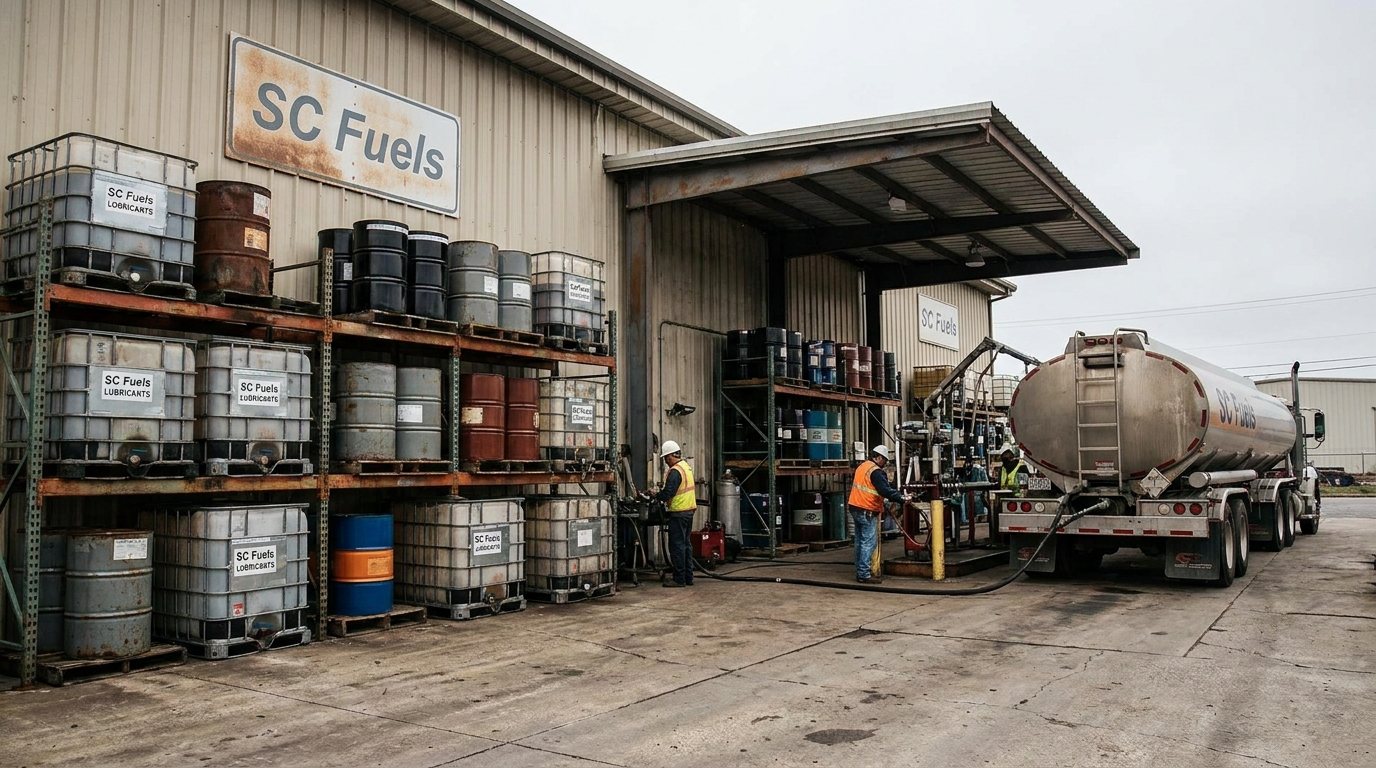
Part of Distributor Playbooks — strategy teardowns of every company on the MDM Top Distributors lists.
In 1930, a company called Signal Oil opened for business in Tustin, California, selling petroleum to an economy of citrus groves and early trucking routes. Ninety-five years and three name changes later, that company shows up as SC Fuels on Modern Distribution Management's 2026 Top Distributors list in the Lubricants & Fuels category, alongside Brenntag, Colonial Group, and Pilot Thomas Logistics. The company still calls itself family-owned. It has not, strictly, been family-owned since 2021.
The name changed four times before the ownership did
SC Fuels' timeline reads like a company that kept re-inventing itself without ever leaving Southern California. Frank Greinke bought Signal Oil at some point after its 1930 founding and renamed it Greinke Petroleum. In 1976 it became Southern Counties Oil Company. It moved headquarters to Orange, California in 2000, and in 2005 shortened its public name to SC Fuels, the brand MDM ranks today. Each rename tracked a period of growth rather than a crisis: fleet card infrastructure in 1972, a Texas acquisition in 2008, Coast Oil Company in 2011, DeWitt Petroleum in 2015. This is a company whose central skill has always been absorbing smaller regional fuel and lubricants operators and keeping their cardlock sites running without interruption.
That skill is worth naming plainly, because it is the actual moat. SC Fuels does not refine anything and does not brand its own crude. What it owns is a fleet-card and cardlock network, unbranded wholesale fuel supply relationships, and delivery routes that touch more than 11,000 customers a year, from small contractors to Fortune 500 fleets, according to the company's own account of its business. In a commodity product, the distributor's value is the plumbing: who has a card reader at the right intersection, who answers the phone when a fleet manager's diesel account runs dry on a Friday. SC Fuels built that plumbing one acquisition at a time for the better part of a century.
2013 was the tell, most people just didn't notice
The detail that gets skipped in most retellings is a 2013 transaction: SC Fuels completed a land and asset exchange with Pilot involving Maxum Petroleum's California holdings, years before anyone called it a partnership. By the time SC Fuels and Pilot Company formally "joined forces" on November 30, 2021, the two had already been counterparties. The 2021 deal, announced by SC Fuels, was framed around minimal overlap between the two networks: Pilot's interstate travel-center business and SC Fuels' West Coast wholesale, cardlock, and lubricants operation barely competed for the same customer. SC Fuels kept its name, its leadership team, and its day-to-day operations. What it gave up was independence at the ownership layer.
That layer kept moving. Berkshire Hathaway had taken a roughly 40 percent stake in Pilot back in 2017, agreed to a further 40 percent in 2023, and on January 16, 2024, completed the purchase of the Haslam family's remaining interest, a deal covered by CSP Daily News, taking Berkshire to full ownership of Pilot Travel Centers. SC Fuels rode along as a wholly owned piece of that structure. So the company marketing itself on its own website as one of the oldest family-owned petroleum distributors in the country is, as of that date, a Berkshire Hathaway asset two ownership layers down. Both things are true. The tension between them is the interesting part: the brand still sells continuity and independence to fleet customers who value exactly that, while the balance sheet behind it belongs to the largest conglomerate in America.
The roll-up didn't stop, it got better funded
What makes this more than a footnote is what SC Fuels did with the position. Rather than settling into a supply arm of a bigger parent, it kept acquiring on its own account. In October 2025, SC Fuels closed on Downs Energy's cardlock, fueling, and lubricants assets in Southern California, adding more than 50 cardlock locations. Sherry Thomas, Pilot's vice-president of wholesale, framed it as "nearly two centuries of exceptional service" combining under one roof, explicit branding of the century-plus heritage as the selling point of the deal itself. Being inside Berkshire's capital base did not end the acquisition habit that built SC Fuels in the first place. If anything, it removed the financing constraint that limits most family-scale regional distributors from ever doing a fourth or fifth deal.
| Year | Event |
|---|---|
| 1930 | Founded as Signal Oil, Tustin, CA |
| 1976 | Renamed Southern Counties Oil Company |
| 2005 | Shortened to SC Fuels |
| 2008–2015 | Acquires United Fuel and Energy (TX), Coast Oil, DeWitt Petroleum |
| 2021 | Joins Pilot Company |
| 2024 | Berkshire Hathaway completes 100% ownership of Pilot |
| 2025 | Acquires Downs Energy's cardlock and lubricants assets |
For a fleet manager comparing cardlock networks, none of this ownership history changes what shows up at the pump. For a competitor's strategy team, it is the whole story: a regional consolidator that used ninety years of local trust to build a network, then used one large parent's balance sheet to keep consolidating past the point most independents run out of runway.
Ninety-five years of SC Fuels' history is really a history of one product, one act at a time: a catalog of fuel grades and lubricant specs, a network of cardlock sites, and the unglamorous discipline of keeping both current no matter who signs the checks upstream. This series looks at the operators who treat that discipline as the whole business.